Published : 26 Sep 2026, 08:37 PM
Updated : 26 Sep 2026, 08:43 PM


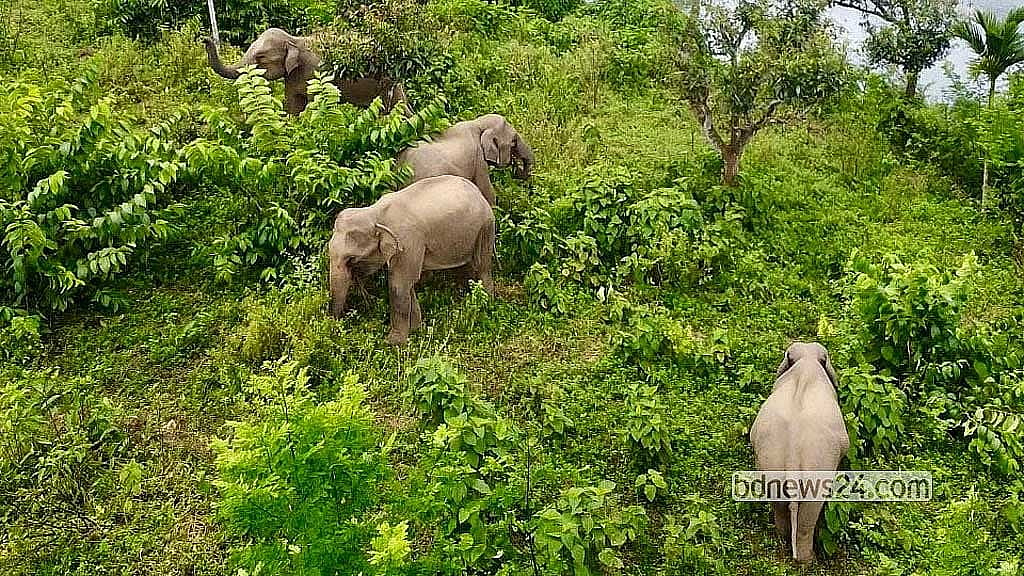
Environment Minister Abdul Awal Mintoo has said 146 elephants died in Bangladesh between 2016 and 2025, citing Forest Department data.
Speaking at a discussion on elephant conservation at the Parjatan Bhaban in Dhaka’s Agargaon on Saturday, Mintoo said the country’s wild elephants are facing a severe crisis.
Bangladesh had an estimated 268 elephants in 2016, he said, adding that shrinking habitats and movement corridors, deforestation, food shortages, roads and railways, climate change and electric traps are fuelling rising human-elephant conflict.
“Asian elephants require vast areas for movement, yet Bangladesh is a densely populated country. Consequently, elephant conservation is a complex task that cannot be accomplished by any single institution alone.”
He called for greater coordination among the Forest Department, law-enforcing agencies, local administration, infrastructure authorities, conservation organisations, researchers, and local communities.
At the meeting, titled “Elephant Conservation: Existing Challenges and the Way Forward”, Mintoo also called for proper records and regular monitoring of captive elephants, including their licensing, numbers and condition.
He said allegations of torturing elephants under the guise of training, as well as their use in circuses and other commercial activities, should be examined through appropriate legal and institutional processes.
Adequate medical care and responsible treatment should also be ensured for elephants under human care, he added.
Expressing concern over elephant poaching and trafficking in remote border areas of the Chittagong Hill Tracts, Mintoo called for stronger coordination between the Forest Department and Border Guard Bangladesh (BGB) to improve surveillance.
“When planning the construction of infrastructure, such as border roads, it is crucial to incorporate provisions for the safe passage of elephants and other large wildlife by taking into account the elephants' traditional migratory routes.
The minister said measures would be strengthened to protect elephant habitats and movement corridors, ease human-elephant conflict through local community engagement, and identify conflict-prone areas for early warning systems.
Numbers, locations, licensing and welfare of captive elephants would be regularly monitored, he added, alongside coordinated initiatives among government agencies, conservation organisations, researchers, legal experts and local communities.
The meeting was jointly organised by the Bangladesh Environmental Lawyers Association (BELA), IUCN Bangladesh, the Creative Conservation Alliance, Arannayk and the Deep Ecology and Snake Conservation Foundation.