


Published : 13 Apr 2015, 01:44 AM
Updated : 19 Oct 2022, 06:41 PM


In a press briefing at its Dhaka office on Sunday, the World Bank predicted that Bangladesh’s growth would come down to 5.6 percent this fiscal.
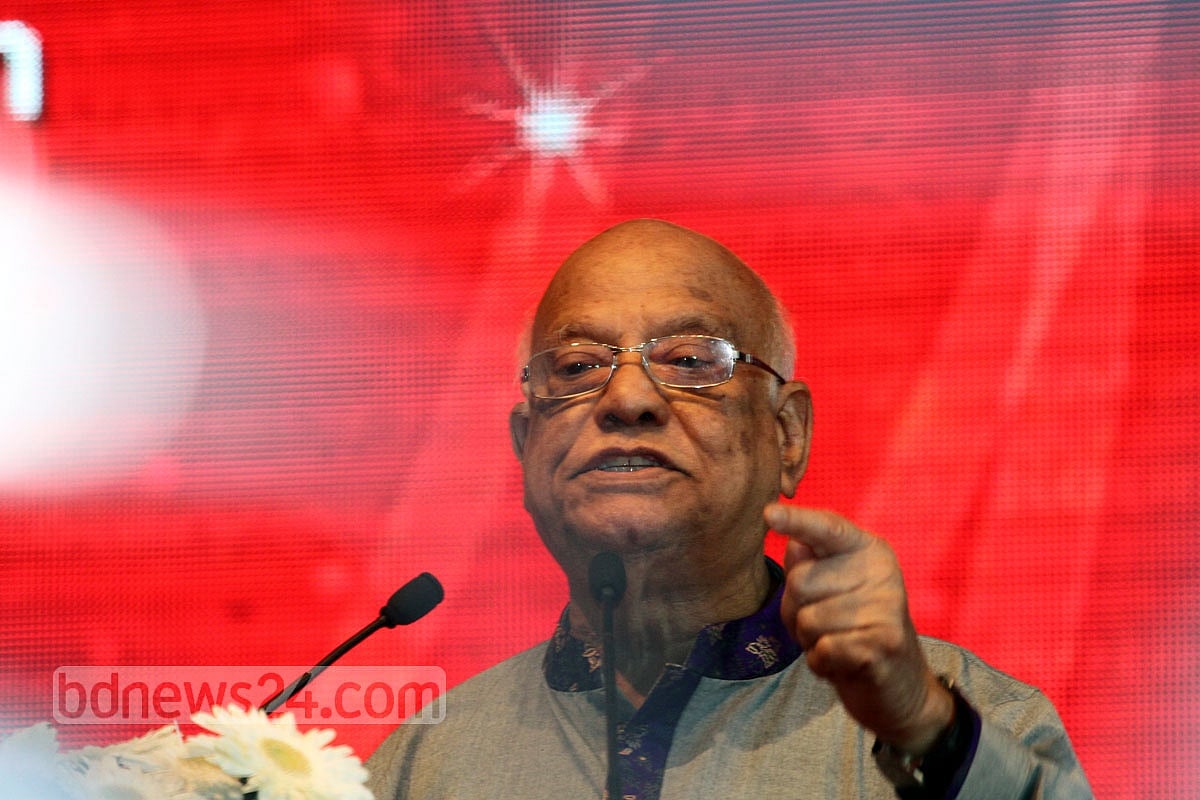
“The World Bank, IMF and ADB are always wrong in their projections. IMF is the worst. The ADB does that like the government to some extent,” Muhith said.
“Yes, I heard about that. I don’t pay much heed to them,” the minister told journalists at his secretariat office in the afternoon.
The former consultant to the Washington-based global lender World Bank then went on to raise allegations of ‘wrong’ projections against international donors.
Although government officials criticised World Bank during the standoff with Bangladesh government over Padma bridge graft allegations three years back, Muhith advocated bringing the donor back into play.
The government targeted a growth of over 7 percent for this fiscal. However, it is now believed to be less than that due to political instability.
The IMF had predicted it would come down to 6 percent while the WB’s new projection sees it even lower.
“The government’s projection on growth is close to 7 percent. I am not saying 7 percent but close to it,” Muhith said.
He blamed BNP Chairperson Khaleda Zia for hurting the economy by enforcing a crippling transport blockade and a series of shutdowns over the past three months.
The World Bank has put losses caused by the agitation at the start of this year at Tk 171.5 billion, or 1 percent of GDP, and that it would slow down growth.
“My assessment is that foreign direct investment was most affected by Khaleda Zia’s torture. They [Foreign investors] had just started coming in. Right at that time, Khaleda had to start those (programmes) in January.”
The minister went on to compare Khaleda’s actions to those of an ‘enemy of the state’.
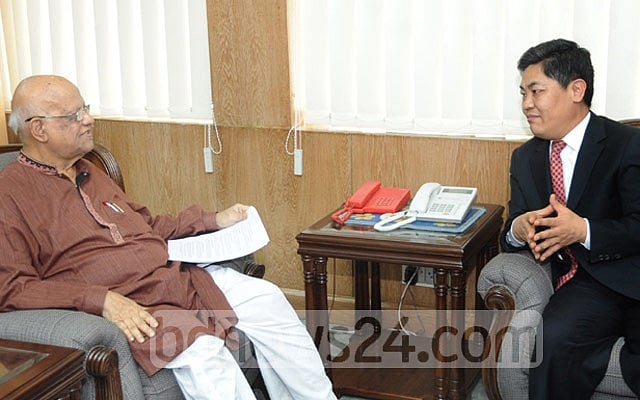
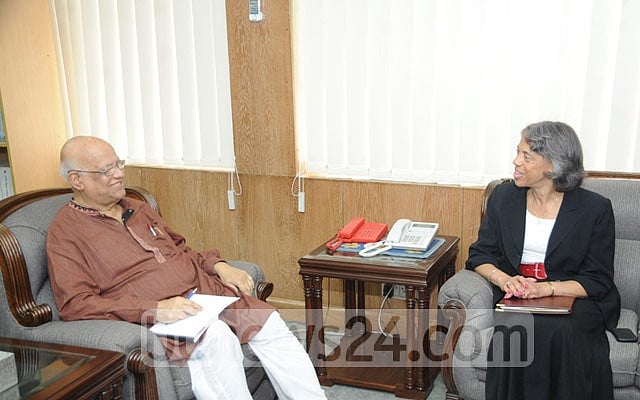
Muhith had sat with Chinese Ambassador Ma Mingqiang, ADB Executive Director Kazuhiko Higuchi, US Ambassador Marcia Stephens Bloom Bernicat separately since morning before meeting journalists.
“I told [Bernicat] that Bangladesh did not get any funds from Millennium Development Account,” the minister said.
“I also said it is very sad that our garment export to the US market has gone down for the first time. We are sad about it.”
However, the minister told reporters that he did not bring up the issue of GSP facility.
“The commerce minister will talk it over with the ambassador.”
Muhith further said that Bernicat wanted to know what were the barriers to Bangladesh becoming a middle-income economy.
“I said we strongly believe that the purchasing power of the people will have to be raised. Poverty has to be eradicated.
“At the same time, we are putting emphasis on human resource development, education, sanitation, health and increasing rail links.”
A laughing Muhith added Grameen Bank and Muhammad Yunus also came up during the talks.
“As usual, professor Yunus is the last point. She wanted to know how Grameen Bank was doing?
“I said Grameen Bank was doing well. The problems that are there, they are because of Mr Yunus.”
Muhith said he admitted to Bernicat that they could not appoint a chairman and managing director to the bank.
But, he also told the envoy that Nobel Laureate Yunus was the reason.
“His [Yunus] friends are filing cases one after another. Nevertheless, the cases are now finished. “Mr Yunus has changed society. Women have been empowered. Society has changed.
“But his only problem is the organisation he made he will not let go of it.”
When asked for a possible timeline of election of the bank’s board of directors or appointment of a managing director, finance minister said it will not happen until he is back from the US.
Muhith is scheduled to return on Apr 26 after attending spring meetings of the World Bank and IMF.
The finance minister said he discussed financial assistance with the Chinese ambassador.
“China has proposed to give aid on soft terms. In many cases, they take down payments. We said they could now do away with the down payment system in some cases. They said down payments can be made from grants.”
He added that the Chinese were happy after getting work of the Padma bridge project and that they had talked about Karnaphuli tunnel.













