Published :
24 Feb 2014, 10:21 PM
Updated :
08 Aug 2022, 06:31 PM
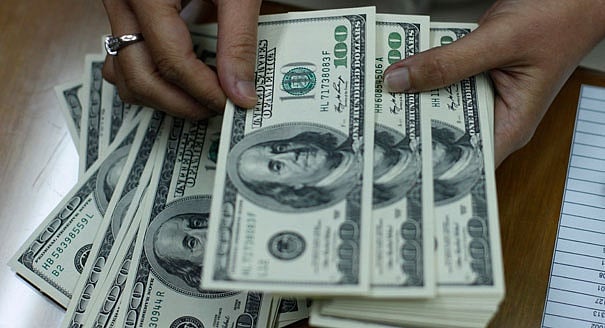
The US currency was traded at Tk 77.75 in the interbank money market on Monday against Tk 77.93 late March last year, remaining stable in between.
The exchanged rate has been stable for such a long time for the first time since the floating rate of interest was introduced in 2003.
Bankers and economists said the exchange rate had such a long stable run because the central bank kept buying the greenback to maintain the ‘positive’ inflow of remittance and export earnings.
Economists, however, term the central bank’s dollar buying ‘a sort of intervention’ in the rate.
According to Bangladesh Bank data, it purchased $3.2 billion from the market in the first seven and a half months of the current financial year (FY) beginning on July 1. During the previous FY, the central bank had bought $4.8 billion.
Economist and former advisor to the caretaker government AB Mirza Azizul Islam considers keeping the exchange rate stable through purchase of the US bills ‘positive’.

He told bdnews24.com on Monday: “I think the central bank was right. Though in the floating market, Bangladesh Bank is not supposed to intervene in the rate, it had no other alternative.”
“Hadn’t (the central bank) gone for the purchase, taka would have appreciated against dollar, having a negative impact on export earnings and remittance inflow.”
Islam said the central bank measures helped the export earnings attained ‘good growth’ despite political instability and the devastating Rana Plaza collapse and Tazreen Fashions fire.
“Remittance had been seeing negative growth since the beginning of the current FY. The situation would have worsened without the market intervention,” he said.
Asked about the reasons for dollar purchase, Bangladesh Bank Forex Reserve and Treasury Management Department General Manager Kazi Saidur Rahman said the supply of the greenback in the local market increased with the rise in export earnings and fall in import expenditure.
“So the central bank purchased dollars to maintain stability in the market. Now the market is stable.”
The central bank introduced the floating exchange rate in 2003, ending its direct intervention in the rate.
Reserves $19.1 bln
The foreign exchange reserves at the central bank reached record $19.1 billion on Monday.
Mirza Azizul Islam said the purchase of US bills from the market was contributing to the rise in the forex reserves.
According to Export Promotion Bureau, earnings from overseas sale of Bangladeshi commodities in the first seven months of the current FY registered a 15.08 percent growth over the same previous period.
However, the remittance inflow during July-Jan period declined by 8.09 percent.