


Published : 18 Jul 2022, 06:51 PM
Updated : 26 Jul 2022, 07:10 PM


This time, the distributors will notify the customers about the load-shedding in advance with timetables on their websites, or through loudspeakers.
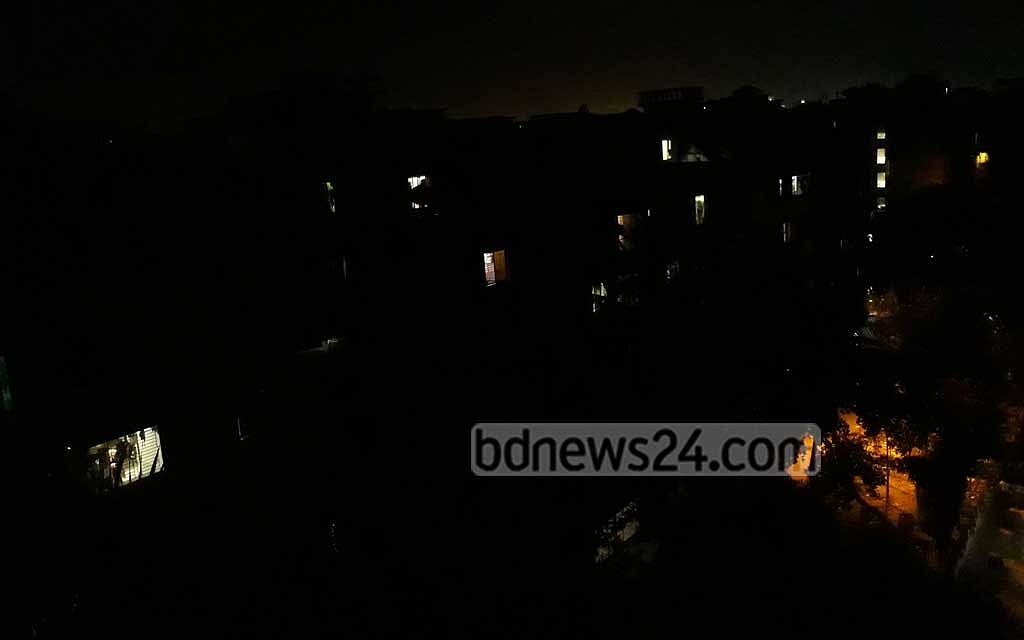
The daily rotating blackouts (or brownouts in the daytime) will begin on Tuesday as part of tough measures to save fuels that also include keeping the power plants run by costly diesel closed.
In the first week of the outages, authorities will monitor whether the nationwide blackout in the off-peak hours is enough or if it is necessary during the peak hours from 5 pm to 11 pm, State Minister for Power, Energy and Mineral Resources Nasrul Hamid said on Monday.
“I don’t think one hour of area-based load-shedding will cause a serious problem,” Nasrul said, adding that the government was prioritising uninterrupted supply to industrial and commercial customers.
“We must realise that all the countries across the globe are facing a fuel crisis somehow,” he said, referring to the Russia-Ukraine war that has pushed the global economy to the brink of a recession amid the recovery from the effects of the coronavirus pandemic.
Nasrul reiterated that the government is not thinking about raising fuel prices now. “Price adjustment is not a solution to the problem. We need to see how much [fuel] we need to save.”
During a meeting at the Prime Minister’s Office earlier on Monday, the government decided to suspend power generation from diesel-run plants. Fuel stations will also be closed for a day every week.
Speaking to reporters at his office later, Nasrul said Bangladesh Petroleum Corporation will sit with the owners of the refuelling stations to finalise the decision on keeping them closed for a day every week.
He urged all to be frugal about using air-conditioners and turn the devices off at mosques after daily prayer sessions.
After the meeting at the PMO, Tawfiq-e-Elahi Chowdhury, the prime minister's energy adviser, compared the current situation in the country to that during the Liberation War, as economists warn that a deficit in the dollar reserves could trigger a Sri Lanka-style crisis.
“We have to face this crisis with patience. Everyone should be economical in their use of electricity and energy," Tawfq said.
THE CRISIS
Gas accounts for 50.84 percent of power generation, furnace oil 27.69 percent, coal 7.89 percent, diesel 6 percent and others 7.58 percent, according to data released in July by the Power Development Board.
Imports account for almost all of Bangladesh's fuel oil stock and 90 percent of the transport sector and 34 percent of power generation are dependent on fuel imports.
The government has also reduced the number of LNG purchases due to the increase in prices.
The rapid rise in the value of the dollar, which has crossed Tk 100 again, has also caused costs of imports, including fuel, to increase and put a strain on Bangladesh's foreign exchange reserves.
As the volatile global energy market puts an increasing strain on foreign currency reserves, the Bangladesh Petroleum Corporation says the 'sluggishness' of banks in opening letters of credit and clearing past transactions could hinder fuel imports.
Banks are holding off on opening LCs because of the dollar crisis, said BPC Chairman ABM Azad. If the situation persists, he fears the trust of suppliers may erode, which in turn could destabilise the country's energy security.
TIMETABLES
The new energy-saving policy is likely to create a shortfall of around 1,500 megawatts of power a day.
To offset the deficit, distributors will ration power as per the government decision and make lists of areas with specific times for the outages.
On Monday night, Dhaka Power Distribution Company published a timetable on its website for the possible blackouts that will take place on Tuesday.
The outages will occur between 10 am and 10 pm to save 100 MW of power, according to the notice.
Most of the 36 areas under DPDC will experience a one-hour outage once on Tuesday. In some places, outages will occur two times.
The DPDC covers most of the capital and parts of Narayanganj. It has more than 1.5 million customers.
Other distributors were yet to publish their lists.
Saiful Hasan Chowdhury, a spokesman for the Power Development Board, said they would publish the timetable by Tuesday.
Debashish Chakrabarty, a member of the largest distributor, Rural Electrification Board, said they would prioritise alerting the customers through announcements via loudspeakers and leaflets instead of timetables on their website.
He also said they were trying not to disrupt supply to industries.
The REB distributes nearly 7,500 MW of electricity out of the country’s total production of around 12,500 MW.
A customer care executive at West Zone Power Distribution Company said he was unaware of any plans to make a timetable.
The other distributors could not be reached for comments.













