Published : 30 Jan 2022, 08:41 AM
Updated : 18 Jul 2022, 02:20 PM


Cosey remained firm. A hard no.
But “Mr Kip” — Brigham Kiplinger, principal ofGarrison Elementary School in Washington, DC — swatted away the “no.”
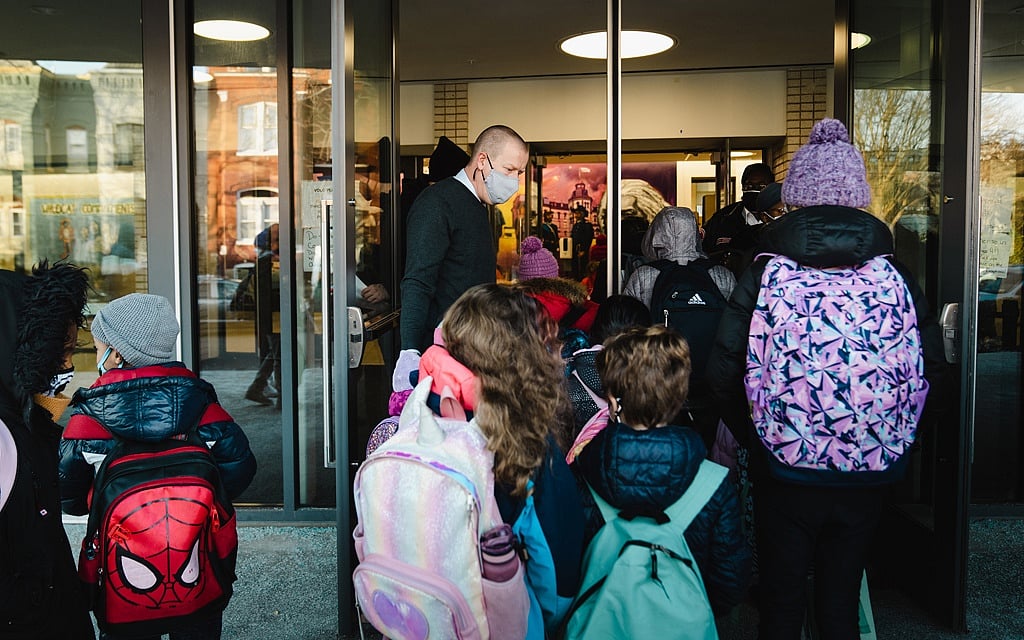
Since the federal government authorised thecoronavirus vaccine for children ages 5-11 nearly three months ago, Kiplingerhas been calling the school’s parents, texting, nagging and cajoling daily.Acting as a vaccine advocate — a job usually handled by medical professionalsand public health officials — has become central to his role as an educator.“The vaccine is the most important thing happening this year to keep kids inschool,” Kiplinger said.
Largely through Kiplinger’s skill as a parent vaxwhisperer, Garrison Elementary has turned into a public health anomaly: Of the250 Garrison Wildcats in kindergarten through fifth grade, 80% have had atleast one shot, he said.
But as the omicron variant has stormed through USclassrooms, sending students home and, in some cases, to the hospital, the rateof vaccination overall for America’s 28 million children ages 5-11 remains evenlower than health experts had feared. According to a new analysis by the KaiserFamily Foundation based on federal data, only 18.8% are fully vaccinated and28.1% have received one dose.
The disparity of rates among states is stark. InVermont, the share of children who are fully vaccinated is 52%; in Mississippi,it is 6%.
“It’s going to be a long slog at this point to get thekids vaccinated,” said Jennifer Kates, a senior vice president at Kaiser whospecialises in global health policy. She says it will take unwaveringpersistence like that of Kiplinger, whom she knows firsthand because her childattends his school. “It’s hard, hard work to reach parents.”
After the Pfizer-BioNTech vaccine was authorised foryounger children in late October, the out-of-the-gate surge in demand lasted ascant few weeks. It peaked just before Thanksgiving, then dropped precipitouslyand has since stalled. It hovers at 50,000 to 75,000 new doses a day.
“I was surprised at how quickly the interest in thevaccine for kids petered out,” Kates said. “Even parents who had beenvaccinated themselves were more cautious about getting their kids vaccinated.”
Public health officials say that persuading parents toget their younger children vaccinated is crucial not only to sustainingin-person education but also to containing the pandemic overall. With adultvaccination hitting a ceiling — 74% of Americans ages 18 and older are fullyvaccinated, and most of those who aren’t seem increasingly immovable —unvaccinated elementary school children remain a large, turbulent source ofspread. Travelling to and from school on buses, traversing school hallways,bathrooms, classrooms and gyms, they can unknowingly act as viral vectorscountless times a day.
Parents give numerous reasons for their hesitation.And with their innate protective wariness on behalf of their children, they aresusceptible to rampant misinformation. For many working parents, the obstacleis logistical rather than philosophical, as they struggle to find time to gettheir children to the clinic, doctor’s office or drugstore for a vaccine.
In some communities where adult opposition to vaccinesis strong, local health departments and schools do not promote the shots forchildren vigorously for fear of backlash. Pharmacies may not even bother tostock the child-size doses.
Despite the proliferation of COVID-crowded hospitals,sick children and the highly contagious aspect of omicron, many parents — stillswayed by last year’s surges that were generally not as rough on children asadults — do not believe the virus is dangerous enough to warrant risking theirchild’s health on a novel vaccine.
Health communication experts additionally blame thatview on the early muddled messaging around omicron, which was initiallydescribed as “mild” but also as a variant that could pierce a vaccine’sprotection.
Many parents interpreted those messages to mean thatthe shots served little purpose. In fact, the vaccines have been shown tostrongly protect against severe illness and death, although they are not aseffective in preventing infections with omicron as with other variants.
And caseloads of children in whom COVID has beendiagnosed only keep rising, as a report last week from the American Academy of Paediatricsunderscores. Dr Moira Szilagyi, the academy’s president, pressed for greaterrates of vaccination, saying, “After nearly two years of this pandemic, we knowthat this disease has not always been mild in children, and we’ve seen somekids suffer severe illness, both in the short term and in the long term.”
Recognizing the urgency, proponents of COVID shots areredoubling their efforts to convince parents. The American Academy ofPaediatrics has put together talking points for paediatricians and parents.Kaiser has its own parent-friendly vaccine-information site. Patsy Stinchfield,a nurse-practitioner who is the incoming president of the National Foundationfor Infectious Diseases, keeps up an exhaustive speaking schedule, answeringCOVID vaccine questions from parents, teenagers, paediatricians and radio talkshow hosts.
Johns Hopkins Bloomberg School of Public Health hasposted a free, online training course to help give pro-vaccine parents languageand ways to approach their resistant friends. It provides vaccine facts,resources and techniques to engage them.
One tip is to share personal stories about COVID, toground the purpose of the vaccine in real-world experience. Another is tonormalise COVID vaccination by proudly telling friends and family when childrenget COVID shots.
Rupali Limaye, an associate scientist at Bloomberg whostudies vaccine messaging and developed the course, said that giving parentstools to persuade others about COVID shots could improve uptake rates,particularly now that some hesitant parents are rejecting the advice ofpaediatricians. Peer “vaccine ambassadors,” as she calls them, have more timeand exert less of a power dynamic than harried doctors. “This is a supersensitivetopic for a lot of people,” Limaye added.
Since November, Kiplinger, who has been Garrison’sprincipal for five years, has been working through a daily call list ofparents. He says he understands their apprehension because he went through thesame mental gymnastics before deciding to get his two young sons vaccinated.
He badgers in any way he can: At lunchtime he asksstudents to raise their hand if they have gotten a COVID shot, applauds themand urges the others to keep prodding their folks.
“I’m a real pain in the ass,” he admitted. “I lovinglyharass them.”
COVID has been especially brutal on Black and Hispanicfamilies, whose children comprise about 80% of the school’s population.Kiplinger understands that as a white man, he has limited standing to ask theseparents to trust vaccines and so has been wrangling Black paediatricians tosupply medical information as well as endorsements.
“Given the history of understandable medical mistrustin communities of colour, hesitancy is natural and understandable,” he said.“But to keep our Wildcats safe and in school, we’ve got to push through thenatural fear of the new and unknown and take every measure we can.”
Many parents told him they couldn’t take off work totake their children to get shots. So Kiplinger coordinated with a city programto hold COVID vaccine clinics in the school’s cafeteria during thecaregiver-friendly hours of 3:30 pm to 7 pm. He attends each one, greetingfamilies, holding and hugging children as they close their eyes and extendtheir arms.
Cosey, the Garrison parent who staunchly resistedKiplinger’s entreaties for weeks, had worried that the vaccine could exacerbateher son’s many allergies. “It took me a little minute to do a lot moreresearch,” she said.
Earlier this month, she took both children to a schoolclinic. Yes, her paediatrician had encouraged her, but she also gives credit toKiplinger. She laughed. Her fifth grader has been at Garrison sincekindergarten. “Mr Kip is more like family, so when I say he was nagging, it’s agood nag,” she said.
At the school’s clinic, “Mr Kip took a millionpictures,” she added. “He was just superexcited that I decided to come in.”
Kiplinger is determined to convert the remainingvaccine holdouts at Garrison. At the most recent vaccine clinic, he stood by asa mother argued over the phone with her husband. “The mom and her four Wildcatswanted the shots, but for the dad it was a ‘no.’ It broke my heart,” he said.
“But we have another clinic coming up soon,” he added,“and I’m hoping that maybe he’ll come around.”
© 2022 The New York Times Company