


Published : 10 Feb 2022, 05:05 PM
Updated : 18 Jul 2022, 02:23 PM


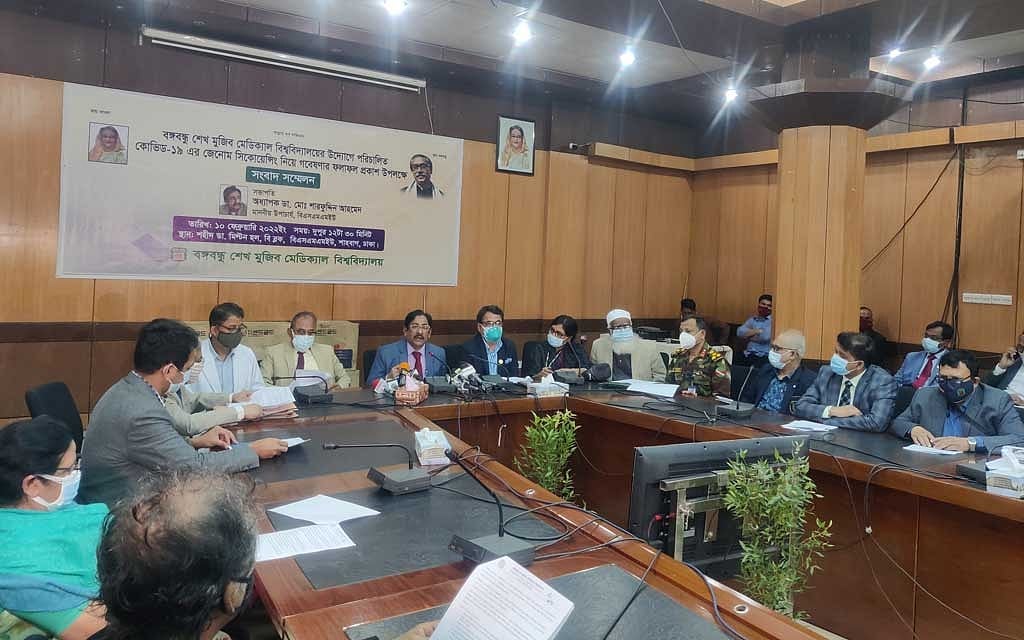
The Institute of Epidemiology, Disease Control and Research, or IEDCR, conducted the research across the country while Bangabandhu Sheikh Mujib Medical University, or BSMMU, took samples from hospitalised revealed the findings on Thursday.
The IEDCR report included results of genome sequencing from 238 samples collected from all eight divisions from Jan 1 to Jan 31. It collected 83 samples from Dhaka.
As many as 51 samples were collected from Chattogram, 34 from Rajshahi, 26 from Khulna, 15 from Barishal, 10 from Sylhet, 14 from Rangpur and five from Mymensingh.
The researchers sequenced genome of 148 of these samples and found omicron in 118, or 80 percent, of the patients. The rest of the cases were of the delta variant.
The IEDCR study found 39 percent of the patients with BA.1 subvariant of omicron and 41 percent with BA.2. Its Chief Scientific Officer Dr ASM Alamgir told bdnews24.com on Thursday the BA.2 subvariant is more infectious than BA.2.
When BA.1 was dominant, infections fell within four to six weeks, but with BA.2 dominant among the coronavirus patients, it takes seven to eight weeks for the cases to fall, according to him.
“Infections will fall slowly now for this reason,” he added, urging all to get vaccines and follow the health rules properly.
He also warned it is a wrong idea that vaccines will always prevent infections. “Vaccination will cut severity of the disease, number of patients at hospitals and the death toll. And if you follow the health rules properly, you will be protected from all the variants.”
The BSMMU research is based on genome sequencing of 937 COVID-19 samples from patients taken in the past month. Its Vice-Chancellor Dr Md Sharfuddin Ahmed said on Thursday omicron was found in 88 percent of the cases.
The omicron variant was found in 20 percent of the samples collected between Dec 8, 2021 and Jan 8, 2022. At the time, the BSMMU researchers detected only one case of the BA.1 subvariant and 80 percent of cases were of the delta variant. “We had expressed our concern that the omicron variant would multiply in the coming month,” Dr Sharfuddin said.
Between Jan 9 and Feb 9 the researchers detected the omicron variant in 82 percent of hospitalised patients and outpatients, and the delta variant in the remaining 18 percent. The omicron subvariants BA.1, BA.11 and BA.2 were detected.
“The omicron variant is much more contagious than the delta variant,” Dr Sharfuddin said. “There were more mutations found in the omicron variant than the delta variant, most of which were in the spike proteins. Most of the vaccines target the spike protein. As the composition of the spike protein has changed, even those who have received the vaccine have a chance to get infected.”
Dr Sharfuddin also highlighted several other factors of the pandemic situation, including that the omicron variant was now the dominant strain of the virus in Bangladesh, though it had been the delta variant only a small time ago.
Even people who had received two doses of the COVID-19 vaccine were now catching this variant, he said. The vaccine does, however, reduce the severity of the disease, he noted.
Patients have been found who have contracted the coronavirus three times because of the omicron variant, according to him.
Of the hospitalised patients, 65 percent had contracted the omicron variant, while 35 percent had the delta variant.
Due to milder symptoms, omicron patients were generally recovering faster. The common symptoms for the omicron variant were headaches and clogged noses. Those who contracted the omicron variant were also less likely to be hospitalised.













