TRANSIT ISSUEDebapriya against invoking WTO
It will be difficult for Bangladesh to protect its interests if it selectively refers to WTO provisions on freedom of transit without full understanding of the fees that a country may charge to cover the costs of providing the transit facility, a WTO expert says.
bdnews24.com News Service
bdnews24.com
Published :
14 May 2011, 08:16 AM
Updated :
10 Aug 2022, 04:48 PM
Sheikh Shahariar Zaman
bdnews24.com Senior Business Correspondent
Dhaka, May 14 (bdnews24.com)—It will be difficult for Bangladesh to protect its interests if it selectively refers to WTO provisions on freedom of transit without full understanding of the fees that a country may charge to cover the costs of providing the transit facility, a WTO expert says.
From the negotiation point of view, it will not be prudent for Bangladesh to arbitrarily invoke WTO rules in transit issues, said Debapriya Bhattacharya.
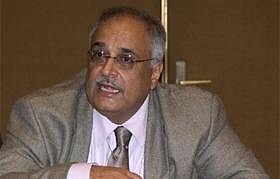
Debapriya, a former ambassador of Bangladesh to the WTO and currently a distinguished fellow at the Centre for Policy Dialogue (CPD), spoke to bdnews24.com in an exclusive interview.
"Bangladesh-India relationship is a very sensitive one and transit facility provided to India has to be substantially profitable - economically and financially – for Bangladesh to make the initiative politically viable," he added.
"It will be advisable to work out the issues bilaterally or in a sub-regional framework so as to enjoy more flexibility to maximise the economic benefits," Debapriya told bdnews24.com.
Alternatively, Bangladesh should fully and faithfully use all the rights provided to it by the WTO, he maintained.
"Initial ambition level of economic and financial benefits should be higher for Bangladesh rather than saying transit fee will cover only so-called basic costs," he said.
It is particularly confusing when Indians are on record saying that they are agreeable to pay "reasonable fees", Debapriya added.
WHY INVOKE WTO NOW?
"GATT Article V on freedom of transit has been around for the last six decades, but India never invoked it to obtain transit access through Bangladesh," the former WTO ambassador said.
Why did not Bangladesh also ever invoke it for obtaining transit access to Nepal and Bhutan through India, Debapriya questioned.
There is no precedence that a country compels another to provide transit facility through WTO Dispute Settlement Panel to secure the service, he said.
The lone case of Columbia-Panama was more about enlarging the points of entry.
Incidentally, Article V does not provide an explicit definition of the term "freedom of transit", although it appears trans-shipment comes under its purview, he pointed out.
"It thus leaves us to choose between an "exclusive" interpretation (transit from country A through country B to country C) and "inclusive "interpretation (transit from country A through country B to country A)," said Debapriya.
MFN AND NT
If Bangladesh-India transit issue is exclusively based on WTO provisions, Bangladesh (and India) will have to extend "most favoured nation" (MFN) status to all other interested member countries of WTO without any discrimination, Debapriya said.
It will imply all other countries, say Myanmar, can seek similar treatment regarding access and costs from Bangladesh to get its goods to India, he said.
"The same may apply to Pakistan if it wants to send its goods through India to Bangladesh."
Similarly, under "national treatment (NT)" provision, no discrimination can be made between domestic agents and the international ones in terms of access and costs.
Arguably, Bangladesh will be constrained to charge higher transportation fees for "goods in transit", discriminate by origins of carriers (flags of vessel) and cause no "unnecessary delays or restrictions".
This aspect may become a barrier in developing Bangladesh's trucking industry as the prime carrier of Indian transit goods, pointed out Debapriya.
Basing the bilateral transit on WTO provisions would imply that for resolution of all disputes arising out of operationalisation of the facility, the relevant countries have to resort to the dispute settlement mechanism of the WTO in Geneva, he added.
TRANSIT FEES
Traffic in transit is exempted from custom duties. However, freedom of transit does not mean 'free' transit, said Debapriya.
The CPD economist pointed out the nature of charges or regulations for transit goods is set out in Paras 3-5 of GATT Article V, which indicates two kinds of charges can be imposed.
The first kind relates to "transportation" and it includes tolls and road charges and the second kind relates to "administrative expenses" caused by transit or services rendered.
"But these charges cannot be used for generating fiscal resources and cannot be "unreasonable" – a term open to interpretation by any WTO Member," Debapriya said.
WTO jurisprudence is yet to determine on what constitutes transportation or administrative charges in connection to transit.
"If Bangladesh government is determined to invoke the WTO rules in shaping transit facility for India, then it should have put up proposals in the on-going Trade Facilitation negotiations under the Doha Round talks," he suggested.
"All charges including cost for environmental damages to congestion charges should be included in the transit fees," he added.
Even without a new guidance from the WTO, according to him, Bangladesh is quite eligible to recover such social costs under the existing scope of "transportation fees".
And it will still be profitable for India to use transit through Bangladesh even after realisation of all such costs incurred by Bangladesh, added Debapriya
WTO provisions suggest that transit is to be provided via the most "convenient" route from the perspective of the transit-giving country.
Accordingly, not all possible transit routes including land and water are available for free transit, reckoned Debapriya.
So, a supplementary negotiation has to take place to agree to a set of "designated" routes, the CPD economist said.
JOINT COMMUNIQUÉ TO FRAMEWORK AGREEMENT
The former Bangladesh ambassador maintained that the political will on expanding connectivity is manifested in the joint communiqué declared during the visit of Prime Minister Sheikh Hasina in New Delhi in January 2010.
It can be the basic document to proceed further on the issue.
"The communiqué does refer to Nepal and Bhutan in the connectivity cooperation even though it was declared by the prime ministers of Bangladesh and India," he pointed out.
Bangladesh should engage in intense negotiations with all the countries in sub-region to make the objectives of the joint communiqué happen.
It may be useful to conclude a framework agreement providing guidance on transit related issues during the upcoming visit of the Indian prime minister to Bangladesh, suggested Debapriya.
bdnews24.com/ssz/bd/1318h