


Published : 29 Apr 2019, 03:01 AM
Updated : 05 Aug 2022, 05:53 PM


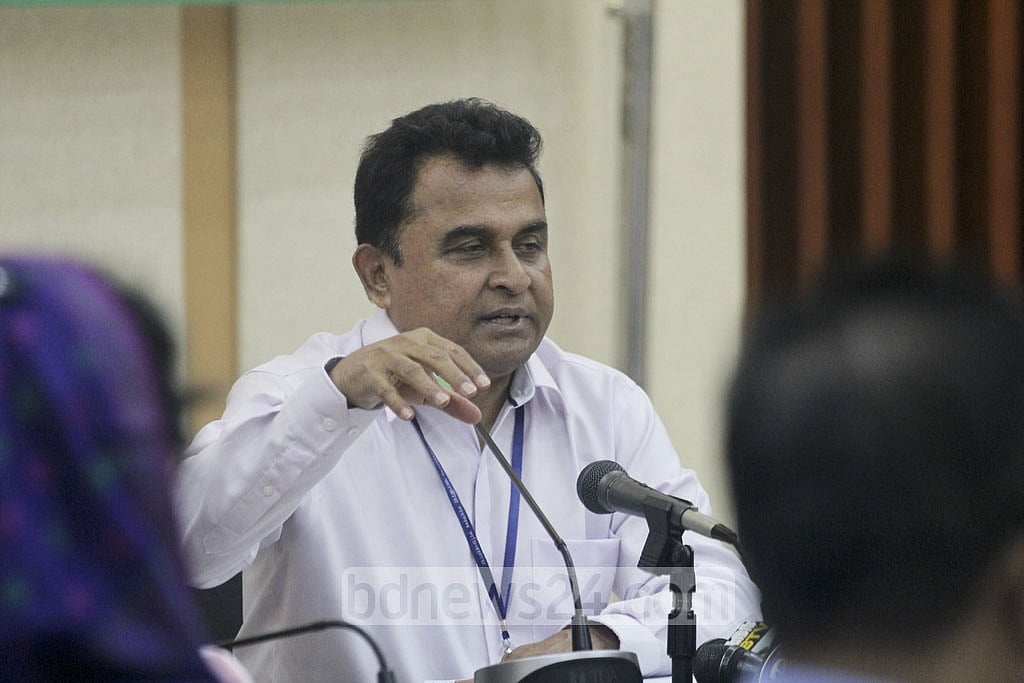
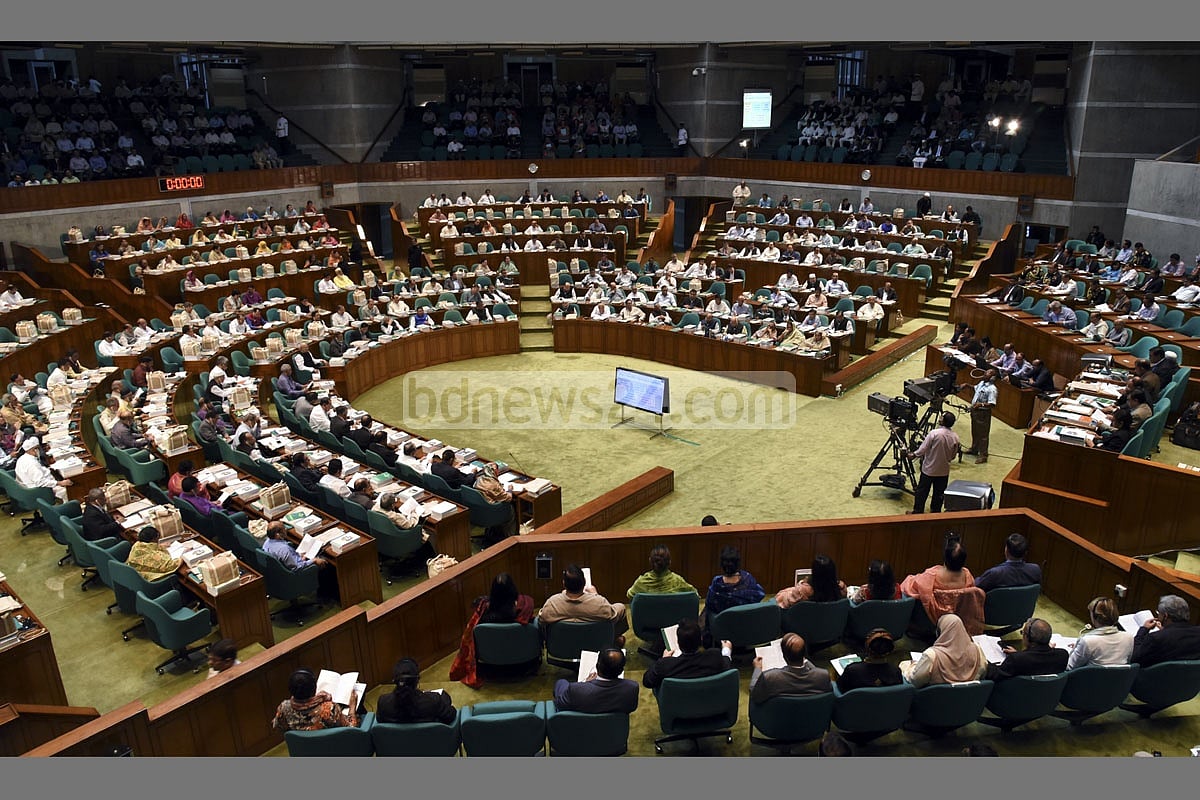
In Sunday’s question-answer session in parliament, he admitted that the capital market is not fully under the government’s control and the banking sector was in a bad shape as well.
In response to a supplementary query by ruling Awami League MP Ahasanul Islam Titu, the finance minister said the strength of an economy first gets reflected through the stock market and this is how the economy and the capital market are connected.
“The economy of our country is very strong. The World Bank and IMF are amazed to see our economy. They ask other countries to follow Bangladesh,” Kamal said.
“This progress of ours will halt if we cannot bring the capital market under control. The share market is not under control now.
“I won’t say that it’s completely out of control. We’ve identified the problems in the stock market and will solve these one by one,” the minister said.
The government is as much sincere about the stock market as it is about macroeconomics, according to Kamal.
He said he had sat with the stakeholders of the capital market and will hold more meetings.
“We will try to run the capital market like the other countries do. All the deviations in these efforts will be removed,” he said.
The finance minister said he would keep incentives for the capital market in the national budget.
“Now I can’t say how much. But everything needed to run a strong stock market will be done,” he said.
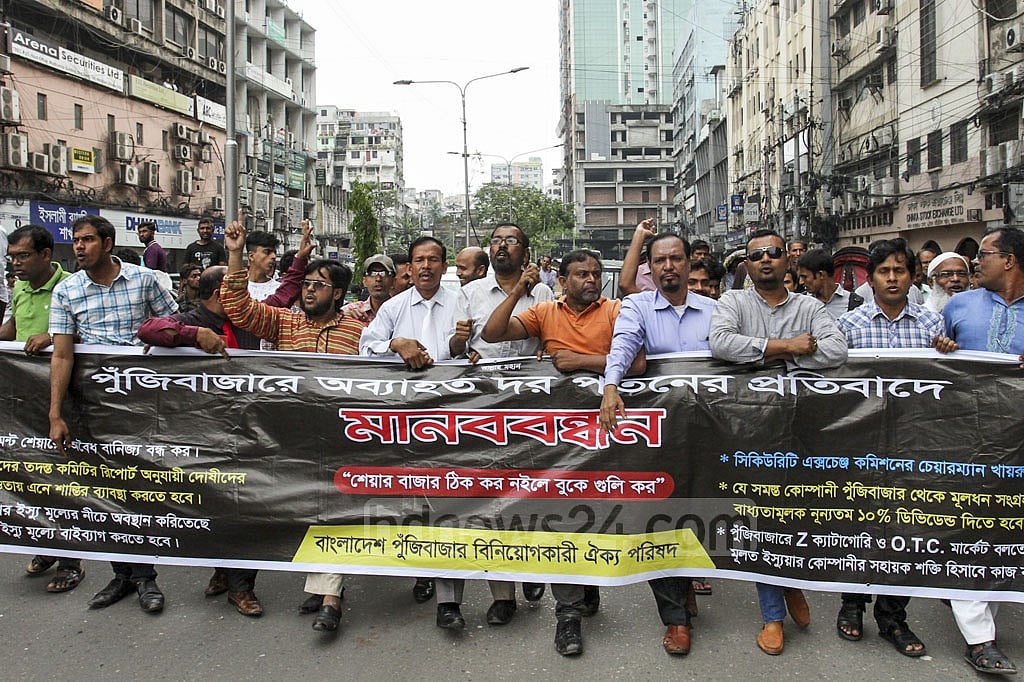
A group of investors uder the banner of Bangladesh Stock Market Unity Council demonstrating outside the Dhaka Stock Exchange at Motijheel on Wednesday against continuous fall in share prices.
But after the monetary policy for the January-June period was released on Jan 30, a fall started. On Sunday, the market closed at 5238 points after a drop of over 12.5 percent in three months. Turnover also declined to Tk 3.44 billion from Tk 13 billion of January-end.
A group of small investors demonstrated outside the Dhaka Stock Exchange on Sunday demanding steps to stop the fall. They also announced a token hunger strike for Monday.
Related story: Bangladesh stock market is all right, insists finance minister |
After a meeting with the Securities and Exchange Commission on Apr 22, the finance minister brushed off concerns over Bangladesh's stock market.
"The stock market is fine. It is normal for the market to have fluctuations," he had said.
The finance minister had also dismissed reports about the ongoing movement by small-scale investors over the prevalent condition of the stock market, accusing the media of “exaggeration”.
‘NO PROBLEM TO ADMIT’
The MPs also discussed the banking sector in trouble for default loans and irregularities.
“The government doesn’t want any financial institution or bank to go bust,” the finance minister said in reply to a query by Kazi Firoz Rashid on the renaming of the Farmers Bank to the Padma Bank.
The government hopes the renamed bank will be able to turn around and return its customers’ deposits, according to Kamal.
The rates will be brought to a single digit following Prime Minister Sheikh Hasina’s instructions and the measures for this to happen will bear fruit this year, the finance minister said.
He said changes would also be made to the interest system. The banks will not be able to charge compound interest on simple interest from July 1, according to him.
In reply to Israfil Alam’s question, Kamal said: “We don’t have any problem to admit that our banking sector is in a bad shape. Such things happen in every country. It is not always possible to run all the sectors in good and equal ways. And I won’t say that our banking sector is doing bad.”
He ruled out the possibilities of establishing a separate regulatory commission for the banks as pledged by his predecessor AMA Muhith, saying the ongoing efforts to solve the problems in the sector were sufficient.
Speaking about interest rates, he said the banks will have to resort to writing off bad loans again and again if they do not bring down the rates.
| Related story: Bangladesh will come to a halt if loan defaulters are put in jail: Finance minister |
In response to Mokobbir Khan’s supplementary question on the minister’s previous remarks, he said it is correct that the country won’t be functioning if all the businessmen with default loans are sent to jail.
“But not all of them can be forgiven. Those who deliberately default on loan repayment must face stern action,” he clarified.













