bdnews24.com
Home +
  • Bangladesh
  • Politics
  • Campus
  • Education
  • Media
  • Environment
  • Health
  • Fashion
  • People
  • Automobile
  • Aviation
  • World
  • Science
Sport +
  • Sport
  • Cricket
World +
  • Middle East
  • Europe
  • Neighbours
Business & Economy +
  • Business
  • Economy
Features +
  • Opinion
  • Technology
  • Lifestyle
  • Entertainment
  • Hello
  • Stripe
Others +
  • Photos
  • Tube
  • Mobile

June 05, 2026

  • Bangladesh
  • Sport
  • Technology
  • Opinion
  • Politics
bdnews24.com
বাংলা
  • National Election 2026
  • World
  • Opinion
  • Entertainment
  • Lifestyle
  • Economy
  • Business
  • Cricket
  • Recent
bdnews24.com
Home
  • Bangladesh
  • Politics
  • Campus
  • Education
  • Media
  • Environment
  • Health
  • Fashion
  • People
  • Automobile
  • Aviation
  • World
  • Science
Sport
  • Sport
  • Cricket
World
  • Middle East
  • Europe
  • Neighbours
Business &
Economy
  • Business
  • Economy
  • Budget 2025-26
Features
  • Opinion
  • Technology
  • Lifestyle
  • Entertainment
  • Hello
  • Stripe
Others
  • Photos
  • Tube
  • Mobile
  • Business

Rawhide merchants, tanners trade blame as Bangladesh leather industry troubles drag on

Stakeholders in Bangladesh’s leather industry were hoping the trade of rawhide from cattle slaughtered on Eid-ul-Azha would really take off this year, but many seasonal traders dumped animal skin after failing to get the asking price.

Zafar Ahmed

Senior Correspondent, bdnews24.com

Published : 24 Jul 2021, 05:27 AM

Updated : 24 Jul 2021, 05:27 AM

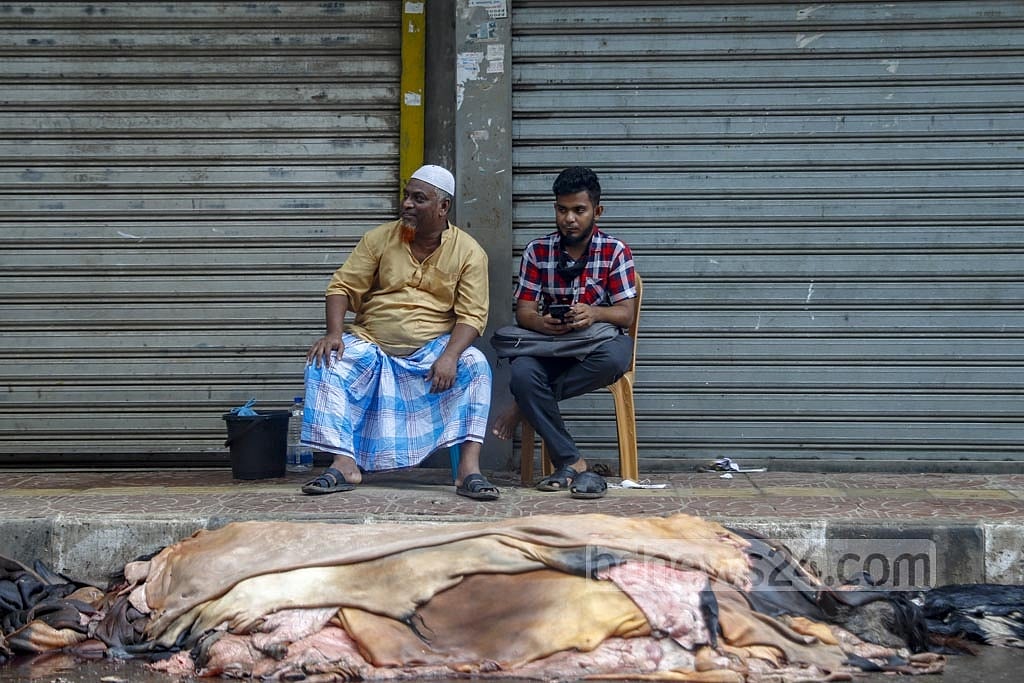
Many people jumped into the seasonal trade of rawhide of cattle sacrificed on Eid-ul-Azha as the government fixed slightly higher prices this time than last year. Some of them traded in rawhide on Dhaka’s Nawabpur Road on the Eid day on Wednesday, Jul 21, 2021. Photo: Mahmud Zaman Ovi Many people jumped into the seasonal trade of rawhide of cattle sacrificed on Eid-ul-Azha as the government fixed slightly higher prices this time than last year. Some of them traded in rawhide on Dhaka’s Nawabpur Road on the Eid day on Wednesday, Jul 21, 2021. Photo: Mahmud Zaman Ovi
Workers apply salt on cattle rawhides for preservation at Posta in Old Dhaka's Lalbagh. Photo: Asif Mahmud Ove Workers apply salt on cattle rawhides for preservation at Posta in Old Dhaka's Lalbagh. Photo: Asif Mahmud Ove
Many people jumped into the seasonal trade of rawhide of cattle sacrificed on Eid-ul-Azha as the government fixed slightly higher prices this time than last year. Some of them traded in rawhide on Dhaka’s Nawabpur Road on the Eid day on Wednesday, Jul 21, 2021. Photo: Mahmud Zaman Ovi Many people jumped into the seasonal trade of rawhide of cattle sacrificed on Eid-ul-Azha as the government fixed slightly higher prices this time than last year. Some of them traded in rawhide on Dhaka’s Nawabpur Road on the Eid day on Wednesday, Jul 21, 2021. Photo: Mahmud Zaman Ovi
A worker carries dried leather to storage facilities at a tannery in Savar leather industrial estate. Photo: Asif Mahmud Ove A worker carries dried leather to storage facilities at a tannery in Savar leather industrial estate. Photo: Asif Mahmud Ove
Processed leather is being dried at a tannery in Savar leather industrial estate. Photo: Asif Mahmud Ove Processed leather is being dried at a tannery in Savar leather industrial estate. Photo: Asif Mahmud Ove

The situation has indeed improved from the grim picture of the past two years. In recent years, there has been a marked decline in the rawhide collection as stocks from previous years drove down demand while a financial crisis coupled with the coronavirus pandemic compounded matters further.

However, many in the sector hoped that the 'hard times' would be over this year, with the arrears of the tanners falling and the previous year's stocks also drying up. Adequate salt stocks and the government's initiative to ease exports of wet blue leather further fuelled those hopes.

Stakeholders believed the situation would change this time as the demand for rawhide in the leather and leather product export sectors is on the rise and some of the problems that existed last year have been resolved.

The government increased the prices of rawhide by Tk 5 per square foot during the Eid this year. The price of a square foot of salted cow or buffalo rawhide was set between Tk 40 and 45 in Dhaka, an increase from Tk 35-40 per sq ft last year.

Additionally, the government has paved the way for the export of 10 million pieces of wet blue leather over the next year, which is expected to create additional incentives for leather procurement.

So, what went wrong again? 

“The main reason is our crisis of funds,” claimed Tipu Sultan, secretary general of Bangladesh Hide and Skin Merchant Association. “The situation has improved slightly as the tanners have paid us the money due this year, but they are not paying the old dues.”  

“Prices drop when the tanners refuse to buy from us due to a lack of their export orders,” said the association’s President Aftab Khan, pointing to the pandemic crisis that hit trade across the world.

Bangladesh’s earnings from leather and leather goods dropped to $797.6 million in 2019-20 fiscal year from $1.02 billion in the previous financial year. The exports from the sector turned around and posted a total earning of $941.6 million in 2020-21 as the world economy began recovering from the effects of the pandemic.

Shakhawat Ullah, general secretary of Bangladesh Tanners Association, also hopes exports will increase further with life returning to normal in the US and Europe. “Demand for leather products is increasing along with garments and fashion products.”

He said most of the famous brands stopped buying from Bangladesh after the government closed 225 tanneries in Dhaka’s Hazaribagh in a day in 2017 following a High Court order to relocate them to an industrial city in Savar for environmental reasons.  

“The situation is improving now. We are getting orders from many countries. The orders are expected to increase further in the next year,” Shakhawat said.

He, however, denied the allegation that unpaid dues led to a fund crunch for the rawhide merchants.  

“This allegation is not fully accurate. We have paid the dues of the past few years, including last year and the year before that. Some old dues are still unpaid, but that should not create a problem. Because this business is an ongoing process.”

The merchants raise the same old allegation every year before the Eid to buy rawhide from seasonal traders at lower prices, he said.   

Leather sector stakeholders estimate that about 7 million animals, including cows, goats and buffaloes are sacrificed in the country every year, which is more than half of the animals slaughtered throughout the year.

Of this, about 4 million are cows, according to industry sources. However, the number of animal sacrifices dropped about 40 percent last year due to a combination of the coronavirus pandemic and seasonal floods.

According to the Department of Livestock Services, as many as 11.8 million animals were worthy of sacrifice this time. Of these, cows and buffaloes accounted for 4.5 million while the other 7.2 million were goats and sheep.


Follow bdnews24.com on Google News
Related Stories
BSEC chairman, 4 commissioners resign
More institutional investment the goal: BSEC chief
SpaceX sets $135 price for blockbuster IPO
Stocks slide on flare-up in Middle East fighting
Read More
Iran World Cup squad still in visa limbo
30 hurt as villages clash despite Section 144 restrictions
NASA reverses ISS evacuation alert order
Lamine Yamal wins LaLiga Player of the Season
Read More
Opinion

Anika Tahsin

Misunderstood truths about studying English

Misunderstood truths about studying English

Towheed Feroze

Is Masud Rana wearing lipstick?

Is Masud Rana wearing lipstick?

Arshi Fatiha Quazi

When hospitals become death chambers

When hospitals become death chambers

Jon Sindreu

How a housing pivot could rescue Starmer

How a housing pivot could rescue Starmer
Read More
Editor-in-Chief and Publisher: Toufique Imrose Khalidi
News
  • Home
  • Bangladesh
  • Business
  • Politics
  • Economy
  • World
  • Technology
  • Science
  • Environment
  • Health
Op/Ed
  • 1971
  • Achievement
  • CHT
  • Corruption
  • Culture
  • Democracy
Social
  • Facebook
  • Twitter
  • Instagram
  • Youtube
  • WhatsApp
Features
  • Tech
  • Lifestyle
  • Entertainment
Others
  • Stripe
  • Hello
  • Mobile
Sport
  • Sport
  • Cricket
Follow us
  • Disclaimer & Privacy Policy
  • About Us
  • Contact Us

Copyright © 2026, bdnews24