Published : 10 Oct 2026, 12:41 AM
Updated : 10 Oct 2026, 12:41 AM


Amid uncertainty surrounding a visit by Prime Minister Tarique Rahman to New Delhi, Dhaka has emphasised the need to remove land port-based restrictions and non-tariff barriers in exporting goods to the Indian market in a meeting aiming to thaw bilateral trade relations.
Issues of withdrawing the anti-dumping duty on Bangladeshi jute products and PET film, and continuing existing tariff facilities in the country even after Bangladesh’s transition from Least Developed Country (LDC) status has been taken into consideration.
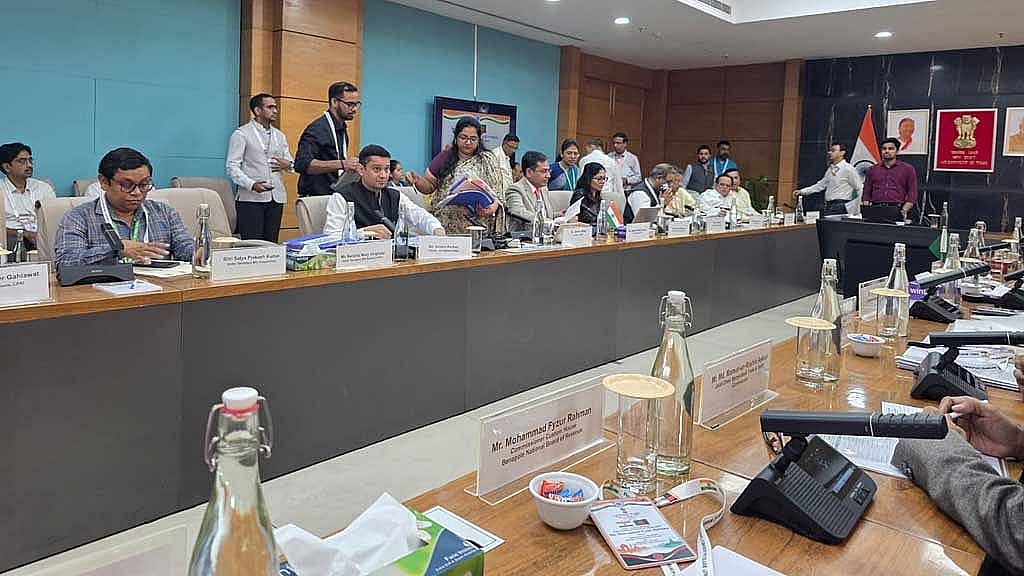
Bangladesh’s Ministry of Commerce made the information available in a press release at the end of the second day of the 16th meeting of the Joint Working Group on Trade (JWGT) in the Indian capital of New Delhi on Friday.
It said that the two-day meeting, which began on Oct 8, discussed removing barriers to bilateral trade, increasing the capacity of land ports and making the regional goods transport system more effective.
A number of proposals to remove existing restrictions on import and export and improve communication systems have been included in the agenda.
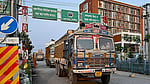
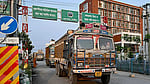
Bangladesh has raised the issue of reviewing and withdrawing existing restrictions on the export of Bangladeshi products through Indian land ports to protect the interests of domestic exporters.
Discussions are under way on removing tariff and non-tariff barriers to facilitate access of products to the Indian market, as well as other trade remedy measures.
The release said that how tariff benefits enjoyed by Bangladeshi exports in the Indian market could be retained after the LDC transition was also an “important aspect” of the discussions.
Bangladesh asked for consideration of maintaining the benefits currently available under the SAFTA agreement even after the transition.
At the same time, emphasis has been placed on establishing consistency in determining product standards, mutual recognition and simplifying the process of obtaining the necessary certificates from the Bureau of Indian Standards (BIS).
In addition to market access, expanding the scope of goods transportation was also a priority for Bangladesh.
The issue of increasing the scope of goods truck movement from Bangladesh to Nepal and Bhutan using Indian territory was part of the agenda as well.
Bangladesh also raised the issue of implementing the CEOs Forum to increase direct communication and cooperation between businessmen of the two countries.
The meeting highlighted the need for infrastructure development of India's land customs stations to facilitate trade through land ports.
Bangladesh also said that it would increase the entry points, parking yards, warehouses and sheds at the land ports, as well as increasing goods testing and quarantine facilities.
Increasing the capacity of border land ports and expediting the process of unloading goods was also emphasised in the discussions.
On the other hand, India's agenda included the issue of lifting existing restrictions on exports of cotton yarn and other products to Bangladesh at certain land ports.
The issues of removing obstacles to the export of goods from the northeastern states of the country to Bangladesh, improving regional connectivity and expanding the multi-dimensional transport system were also part of the talks.
Increasing the effectiveness of the relevant commercial routes, including the Akhaura-Agartala connection, developing Bangladesh-India rail connectivity and border markets also figured in the discussion.
The two countries have opportunities to expand trade by utilising the potential of geographical proximity and regional connectivity. However, to take advantage of this opportunity, it is necessary to remove barriers to market entry as well as restrictions on the transport and clearance of goods at the border.
It is expected that progress and effective initiatives will be made through the discussions of the Joint Working Group on these issues.
A 10-member Bangladesh delegation led by Additional Secretary of the Ministry of Commerce Ayesha Akhter participated in the meeting.
The JWGT usually meets once a year. The previous meeting, the 15th, was held on Sept 26 and Sept 27, 2023 in Dhaka.
The 14th meeting was held on Mar 2 and Mar 3, 2022 in New Delhi.
After the Awami League government fell in the face of mass protests in August 2024, relations between the two countries cooled, interrupting the regular meetings.
In April 2025, Bangladesh stopped importing Indian yarn through the land ports of Benapole, Bhomra, Sonamasjid, Banglabandha and Burimari. However, the opportunity for imports by sea remained open.
A few weeks later, India banned the import of various products from Bangladesh via land routes, including readymade garments, processed food, plastics and PVC. In June of the same year, a ban was also imposed on jute and some textile products.
In previous meetings, discussions were held on the development of infrastructure at land ports and integrated check posts, lifting of port-related restrictions, opening of border markets, transport of goods by rail, regional connectivity and harmonisation of product standards and mutual recognition.
The preparation and joint study of the Bangladesh-India Comprehensive Economic Partnership Agreement (CEPA), supply of daily necessities to Bangladesh, and keeping the Petrapole-Benapole check post open 24 hours a day were also on the agenda.