Published : 24 Sep 2026, 09:44 AM
Updated : 24 Sep 2026, 09:44 AM


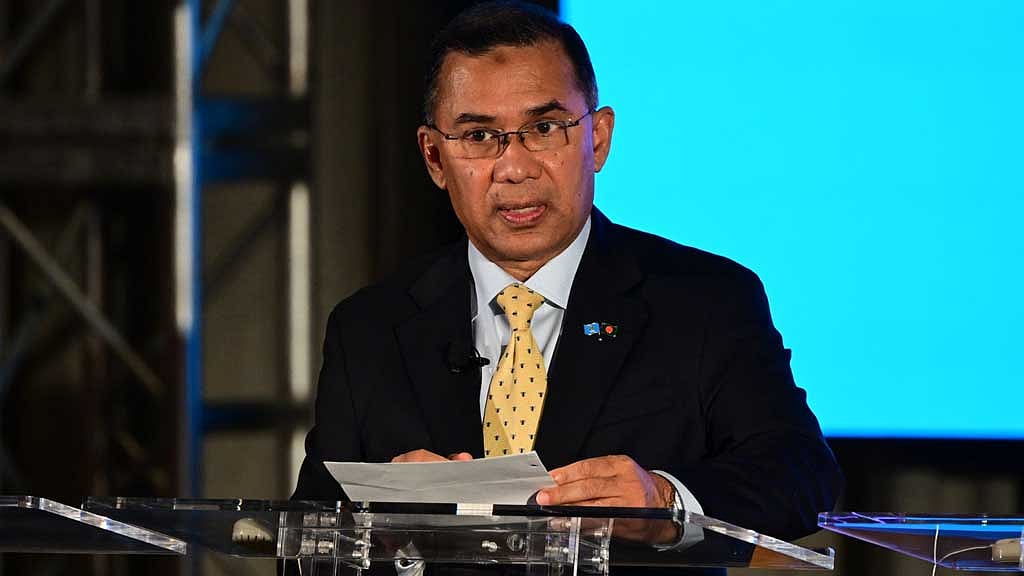
Prime Minister Tarique Rahman has highlighted the various initiatives taken by Bangladesh to combat climate change.
He said, “In this year’s budget, we have allocated about $3.19 billion for climate adaptation. Despite that, we are at risk of major losses without international assistance.
“Over the next five years, we have planned to plant 250 million trees. At the same time, we are excavating about 20,000km of rivers and canals to conserve water, reduce flood risks, revive wetlands and restore groundwater.
He said, “In addition, we are also making progress on the implementation of the master plan for the Padma Barrage and Teesta Barrage.”
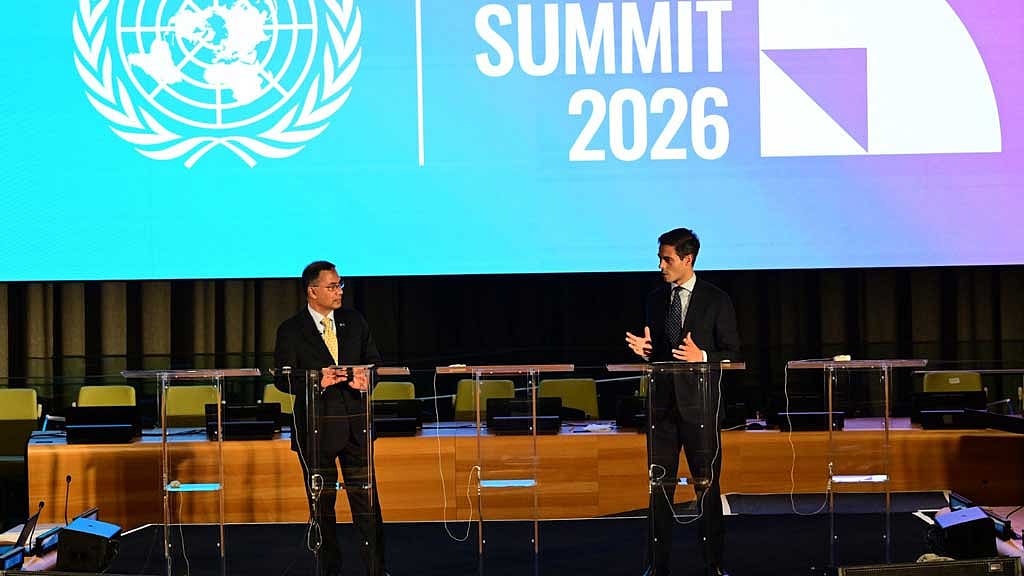
The premier made the remarks at a high-level meeting on “Climate Action and Just Transition” organised by UN Secretary-General Antonio Guterres on Wednesday afternoon.
Tarique said, “Bangladesh looks forward to such partnership to help implement its plans.
“Let us work together and build a safer and more sustainable future for future generations.”
Noting that Bangladesh is most at risk from climate change, the head of government called for “collective action” from the international community to overcome it.
The prime minister said, “Bangladesh’s contribution to the world’s total greenhouse gas emissions is less than 0.5 percent. Yet, Bangladesh is one of the countries most vulnerable to climate change in the world.
“By the end of this century, 12 to 18 percent of our coastal areas may be submerged due to rising sea levels. This will affect the livelihoods of millions of people. The damage caused by climate change is equivalent to 1 percent of our GDP. Our food security is also at serious risk.”
Speaking of efforts to expand green energy and industry, he said: “By 2030, we have a target of meeting 20 percent of our electricity needs from renewable energy. We are expanding green industries, including jute products, eco-friendly transportation, waste-to-energy and circular economy initiatives.
“At the same time, we are working to build a national carbon market. However, we cannot achieve this goal alone. Collective action based on the principle of ‘common but differentiated responsibilities and respective capabilities’ is now essential.”
Tarique made five proposals to address climate change:
# Global greenhouse gas emissions must be reduced to maintain the 1.5 degree Celsius global warming target, as per the Paris Agreement.
# Ensuring predictable and accessible financing for climate-vulnerable countries in the adaptation sector
# A fair and equitable climate transition must be made possible by ensuring greater access to smart climate technologies
# The use of renewable energy must be expanded through accessible financing, capacity building and technology transfer
# The full implementation of the Damage and Loss Fund must be ensured and its funds must be replenished regularly.
The meeting was held at the Trusteeship Council Chamber of the United Nations Headquarters in New York.
It emphasised strengthening international cooperation to address the impacts of climate change, ensure climate justice and a sustainable and fair energy transition.
The main goal of the climate meeting was to accelerate the implementation of the Paris Agreement and strengthen practical international cooperation to address the climate crisis.
This high-level UN meeting was attended by heads of state and government of various countries, international organisations, multilateral development banks, business and civil society representatives.