


Published : 03 Nov 2015, 01:10 AM
Updated : 23 Apr 2022, 01:14 PM


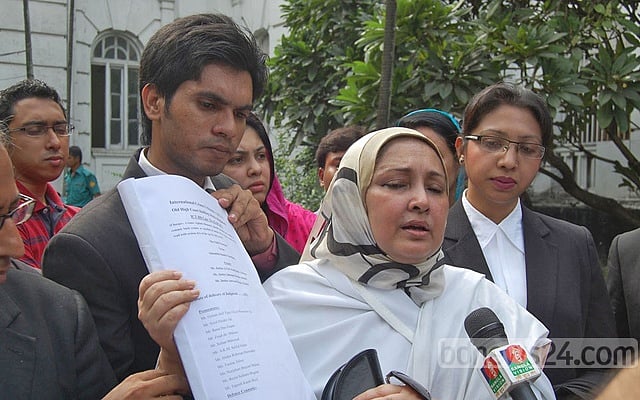
Farhat Quader Chowdhury filed the petition on Monday challenging four issues as her husband’s final review plea is pending at the top court.
The Appellate Division will hear Salauddin Quader’s review plea on Nov 17. If the death penalty is upheld, the convict will be left with the option of seeking mercy from the president.
He was sentenced to death on Oct 1, 2013 by a special tribunal for genocide and torture of Hindus and Awami League supporters in Chittagong. On July 29, the apex court confirmed the highest punishment for the 64-year-old former BNP parliamentarian.
Attorney General Mahbubey Alam said the wife challenged a clause in the 15th Amendment that allows trying a person or a group of persons for war crimes.
She also challenged appointment of High Court judges to the war crimes tribunal.
Farhat Quader, in her petition, claims the tribunal’s quorum is ‘non-judice’ and hence, her husband’s death verdict is illegal.
Alam said the plaintiff argued the ‘quorum is non-judice’ as the High Court judges were appointed there. They claimed High Court judges cannot work anywhere other than the High Court.
Bangladesh formed the first tribunal in 2010 to put war crimes suspects on trial and set up a second one two years later to expedite the trials. But this year, the two tribunals were merged as the number of cases dwindled.
The tribunal is equivalent to a High Court bench.
Most of the war crimes convicts are from Jamaat-e-Islami, that party that tried to stop Bangladesh breaking away from Pakistan by perpetrating and abetting atrocities.
Salauddin Quader’s wife is accused in a case filed over the alleged leak of a tribunal’s draft verdict on the BNP leader in 2013.
Also Read:
War-time terror Salauddin Quader Chy to die












