


Published : 30 Sep 2015, 11:19 PM
Updated : 19 Oct 2022, 06:59 PM


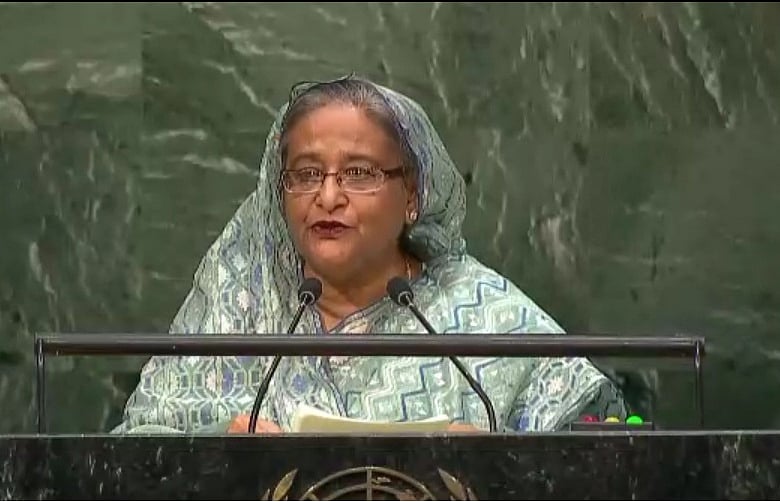
Her appeal to world leaders at the United Nations General Assembly (UNGA) followed the Islamic State’s claim that it killed an Italian national in Dhaka.
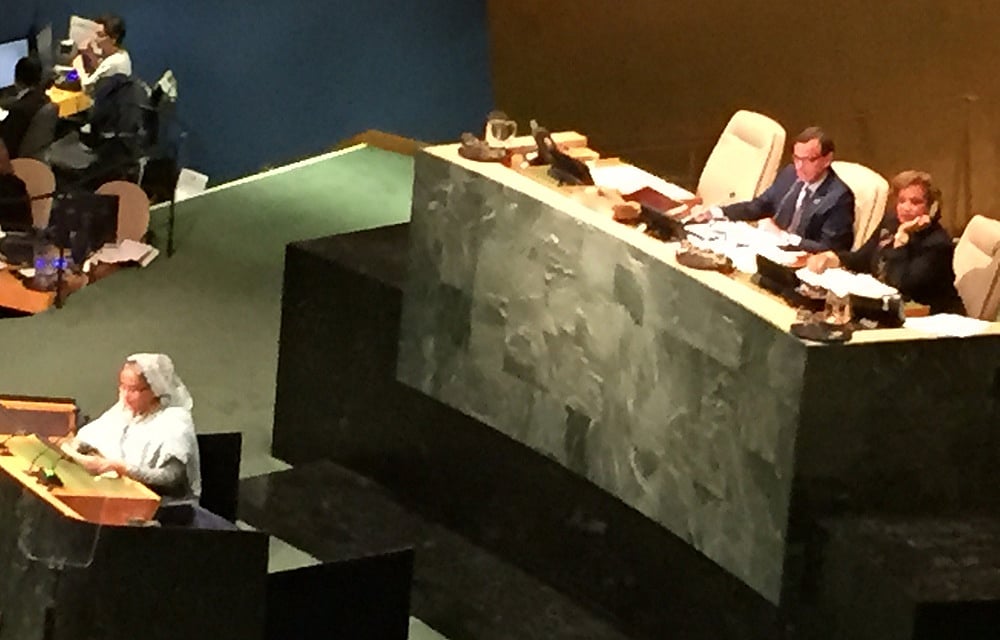
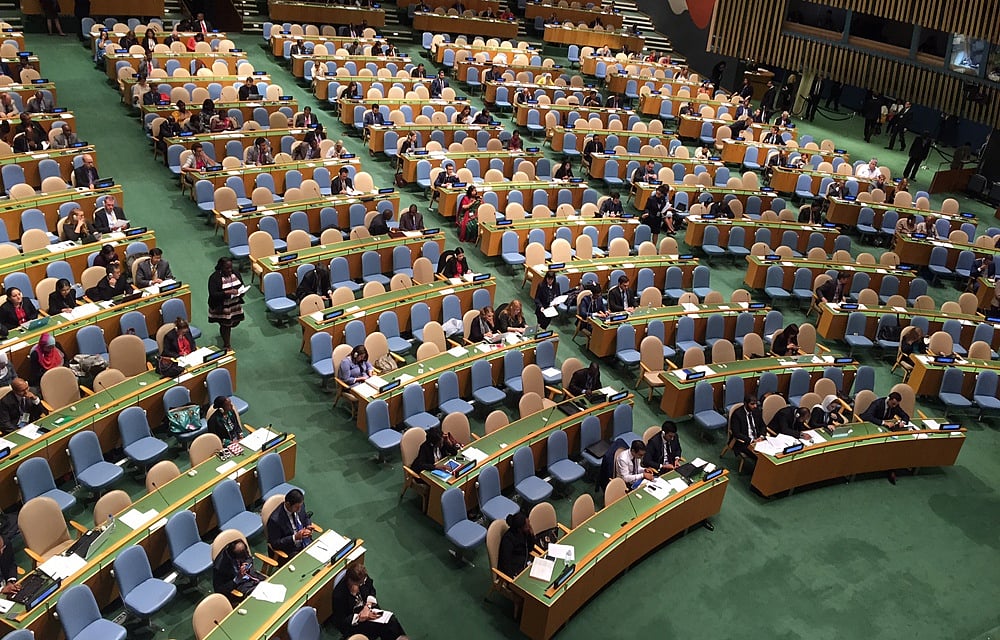
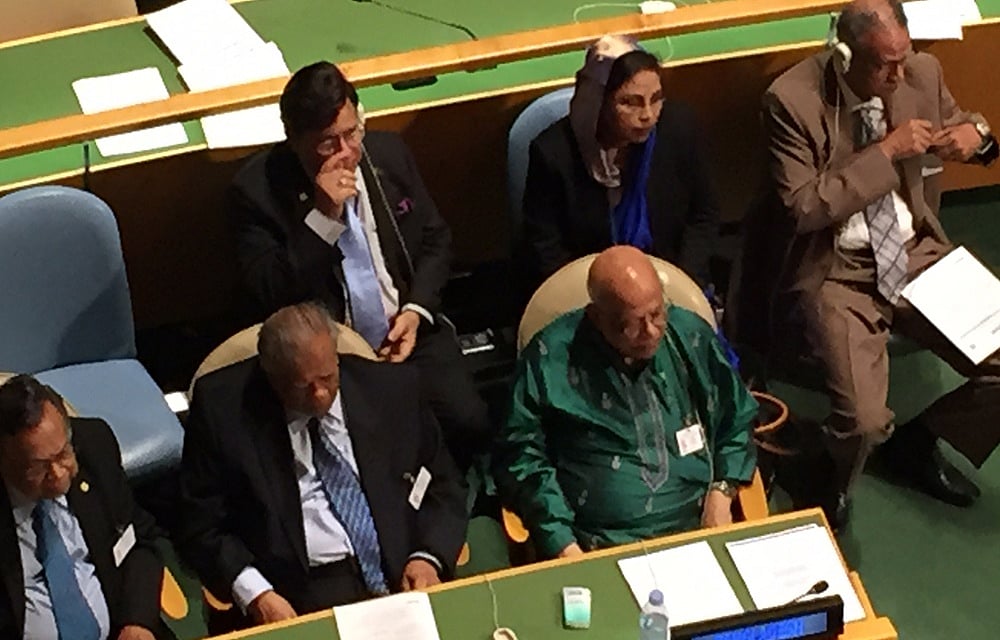
The prime minister’s address at the 70th session of the UNGA was streamed live by the UN’s web TV on Wednesday night.
She was the 11th head of state – after Palestine President Mahmoud Abbas and Turkey Prime Minister Ahmet Davutoğlu – to speak on the occasion.
“There are two global challenges that pose the greatest threat to sustainability of the human civilisation,” Hasina said.
Insisting terrorists do not have any religion, she urged all countries to stand united against terrorism and violent extremism.
She cited the tragedy of Aug 15, 1975, and the grenade attack of Aug 21, 2004, as personal examples of terror attacks to drive home the point.
A group of rogue army officers had assassinated most of her family members including her father Bangabandhu Sheikh Mujibur Rahman on Aug 15, 1975.
And on Aug 21, 2004, the grenade attack on a Awami League rally in Dhaka’s Bangabandhu Avenue killed 24 people and maimed many others for life.
The Bangladesh government headed by Awami League has been maintaining a ‘zero-tolerance’ policy on all forms of terrorism, violent extremism, and radicalisation, she told the UNGA Wednesday.
“We are steadfast in tackling the extremists and anti-liberation forces who continue to remain active in destroying the democratic, progressive and secular ethos of our nation.”
The prime minister also said limiting climate change was crucial for combating poverty and ensuring a safer, greener earth.
“We would not be able to sustain our development endeavours if climate change cannot be effectively dealt with... We have only a small window of opportunity,” she warned.
The prime minister underscored the importance of regional cooperation for fostering sustainable development and achieving peaceful and stable societies.
“Bangladesh has taken lead in building regional cooperation processes such as SAARC, BIMSTEC and BCIM-EC,” she said.
“We have also taken initiatives to develop infrastructures to enhance trade and people-to-people contacts among Bangladesh, Bhutan, India and Nepal (BBIN).”
The cooperation among countries, she pointed out, was necessary for harnessing the full potential of migration.
“With this (regional cooperation) objective, we have decided to lead the Global Forum on Migration and Development in 2016.”
The prime minister also outlined Bangladesh’s contribution to UN peacekeeping, adoption of Sustainable Development Goals for scaling up resources and digital drive through Vision 2021 for a middle-income, knowledge-driven economy.
Among her country’s achievements, she outlined poverty reduction from 56.7 percent in 1991 to 22.4 percent today. This is the fastest rate in the world with a modest resource base, she said.













