


Published : 08 Nov 2021, 02:14 AM
Updated : 14 Oct 2022, 07:02 PM


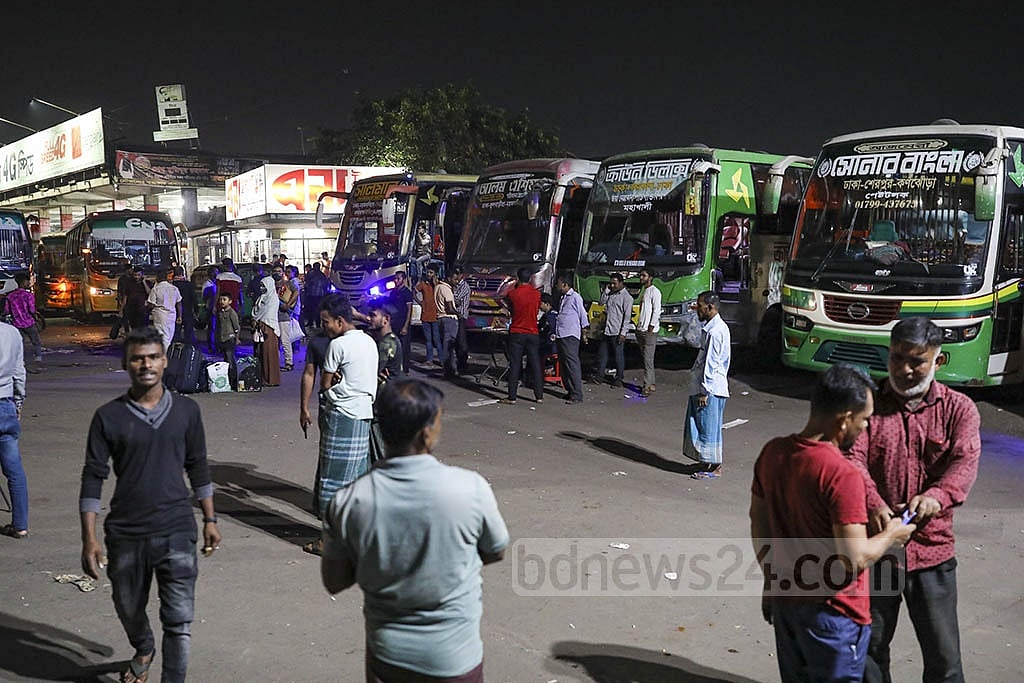
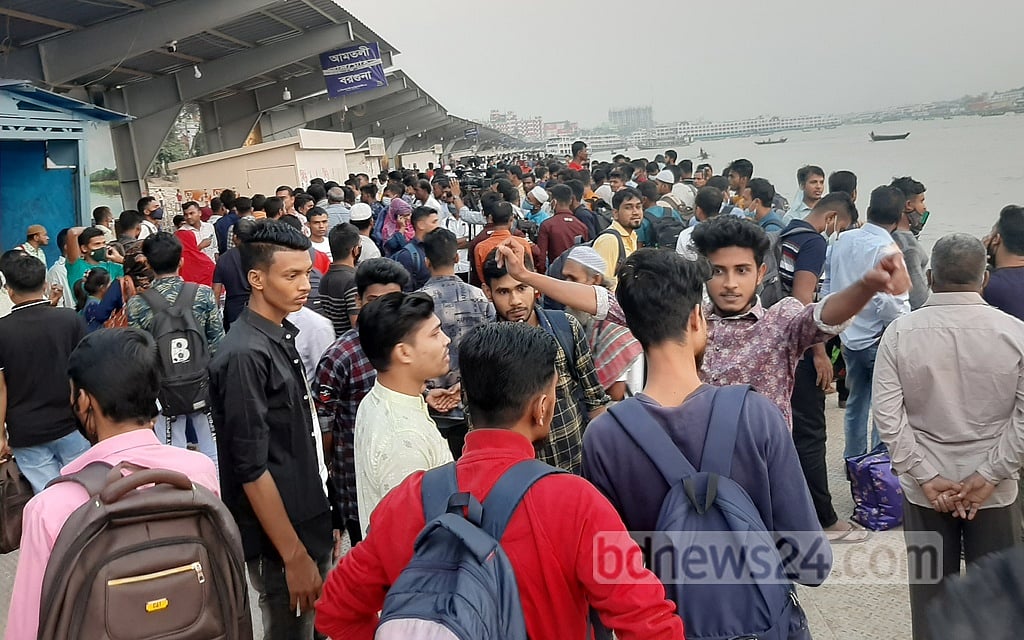
Transport owners and workers had begun the strike on Friday, demanding either a rise in fares or a reversal of a 23 percent hike in diesel prices announced last week. Launches had also stopped operating on Saturday.
The operators called off the strike on Sunday evening after the fares were raised in meetings between the authorities and the owners.
Goods transport operators, however, decided to continue their strike demanding a reversal of the fuel price hike.
The government increased the prices of diesel and kerosene by Tk 15 to Tk 80 per litre last Wednesday, citing a volatile global oil market.
City buses will now charge Tk 2.15 per kilometre, a 26.47 percent increase from the old price of Tk 1.70. The fare for long-haul buses has increased from Tk 1.42 per kilometre to Tk 1.80, a 26.76 percent jump. The minimum fare has been set at Tk 10 for buses, and Tk 8 for minibuses.
The fares for CNG-powered buses will remain unchanged. “CNG-run buses cannot increase the fares by even a single paisa,” said Nur Mohammad Mazumder, chairman of the Bangladesh Road Transport Authority or BRTA.
Khandokar Enayet Ullah, an influential transport owners’ leader, urged the owners and workers to call off the strike after a meeting with the BRTA. Long-haul buses later started leaving Dhaka’s terminals.
Transport owners demanded a 40 percent hike in bus fares at the meeting with the BRTA. But the buses running in Dhaka charge no less than Tk 10 for a trip on any route, no matter the distance, despite the government order setting the minimum fare for any distance at Tk 7.
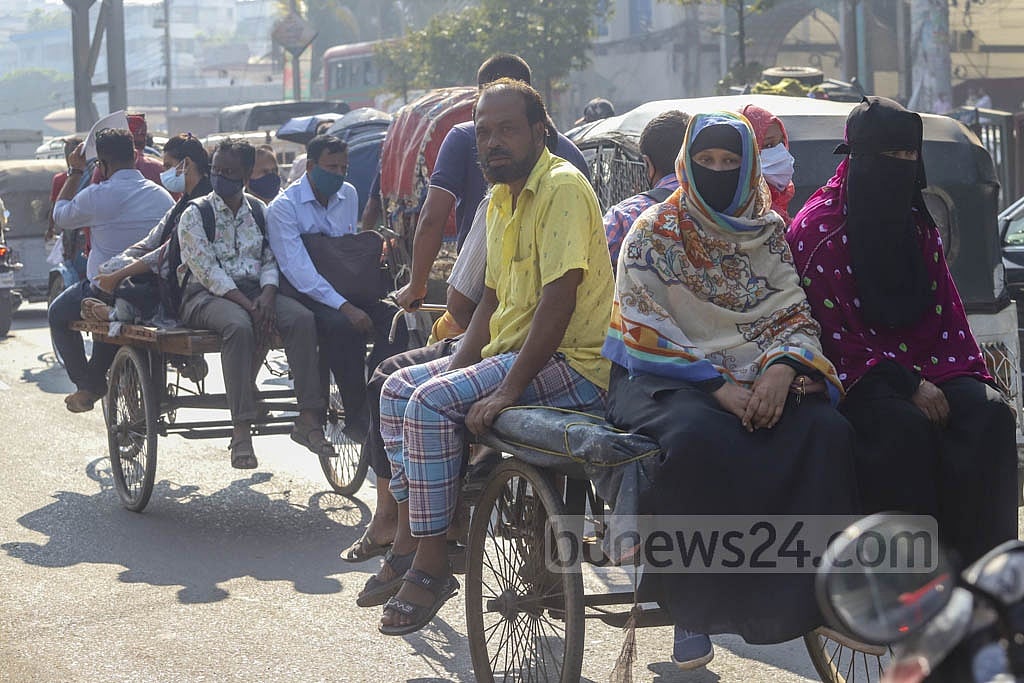
With no public transport amid a strike, commuters travel to their destinations by rickshaw vans on the first workday of the week on Sunday, Nov 7, 2021. Photo: Asif Mahmud Ove
According to the set of proposals sent to the BRTA by the Transport Owners Association, the price of city buses in the Dhaka and Chattogram metropolitan areas and for long-haul bus routes has not increased in the past eight years.
But, in that intervening period, the cost of vehicle chassis, tyres, tubes, spare parts, and all sorts of taxes and fees have increased. They claim that, for these reasons, the cost of running vehicles has increased “significantly”.
In another meeting, Bangladesh Inland Water Transport Authority announced the new launch fares with a rise of at least 35 percent. Later, the launch operators resumed services.
The new rate has been set at Tk 2.3, up from Tk 1.7 for per kilometre travelled within a distance of 100 kilometres -- a 35.3 percent increase. After 100 kilometres, the fare will be Tk 2, which is a 43 percent jump. The minimum fare has been raised by Tk 12 to Tk 30.
Launch owners called for their fares to be doubled. They proposed fixing the fare at Tk 3.40 for the first 100 kilometres, from Tk 1.70 now, while raising the rate to Tk 2.80 from Tk 1.40 beyond 100 kilometres.
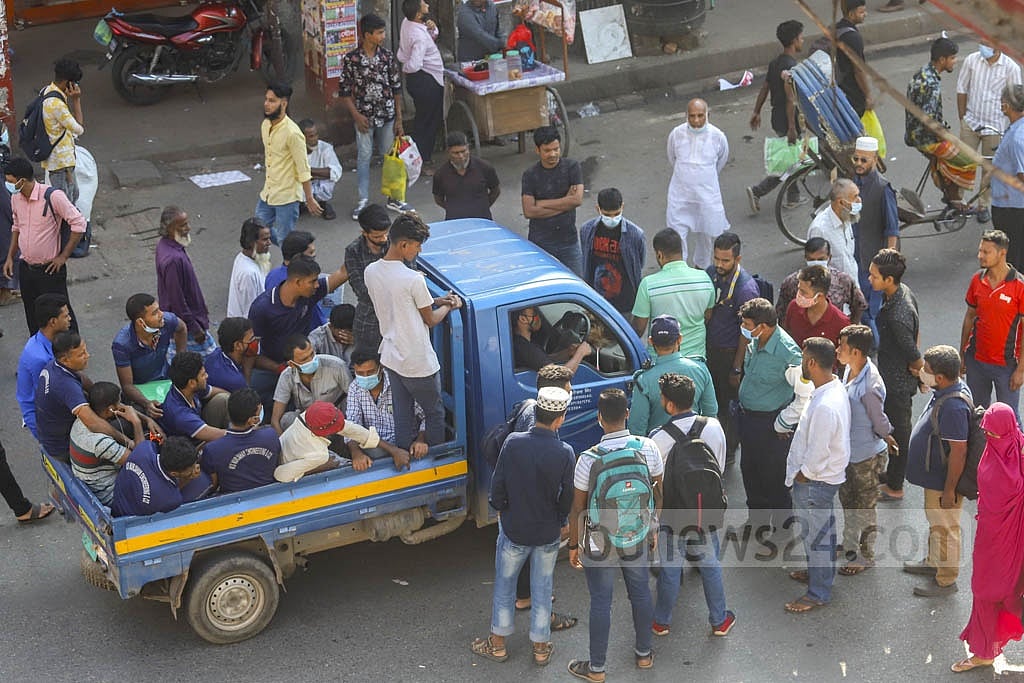
With no public transport amid a strike, commuters travel to their destinations by pickup vans on the first workday of the week on Sunday, Nov 7, 2021. Photo: Asif Mahmud Ove
Launch owners believe the fuel price hike will lead to a Tk 100,000 rise in cost per trip from Dhaka to Barishal. More than 80 launches leave the capital’s Sadarghat terminal for the southern districts daily. Hundreds of lighter vessels transport goods throughout the country as well.
COMMODITY PRICE HIKE LOOMS
A rise in transport costs and supply crunch due to the strike has affected Dhaka’s markets, triggering fears of a further increase in the prices of rice and other commodities.
The cost of transporting rice from Kushtia, the largest supplier of the food staple, to Dhaka has increased by at least 22 percent per truck, leading to an increase in the price of rice by Tk 12 per sack of 50 kg, traders and mill owners said.
Supply plummeted during the transport strike, wholesalers at Dhaka’s Karwan Bazar said. The prices of rice increased by Tk 50 per sack after imports from India stopped. Now the prices will go up as much as Tk 15 per sack if the additional transport costs are counted, the traders said.
Moreover, the Bangladesh Truck, Covered Van and Tanker Lorry Prime Movers Owners and Workers Coordinating Council has decided to continue their transport strike to demand a reversal of the diesel price hike.
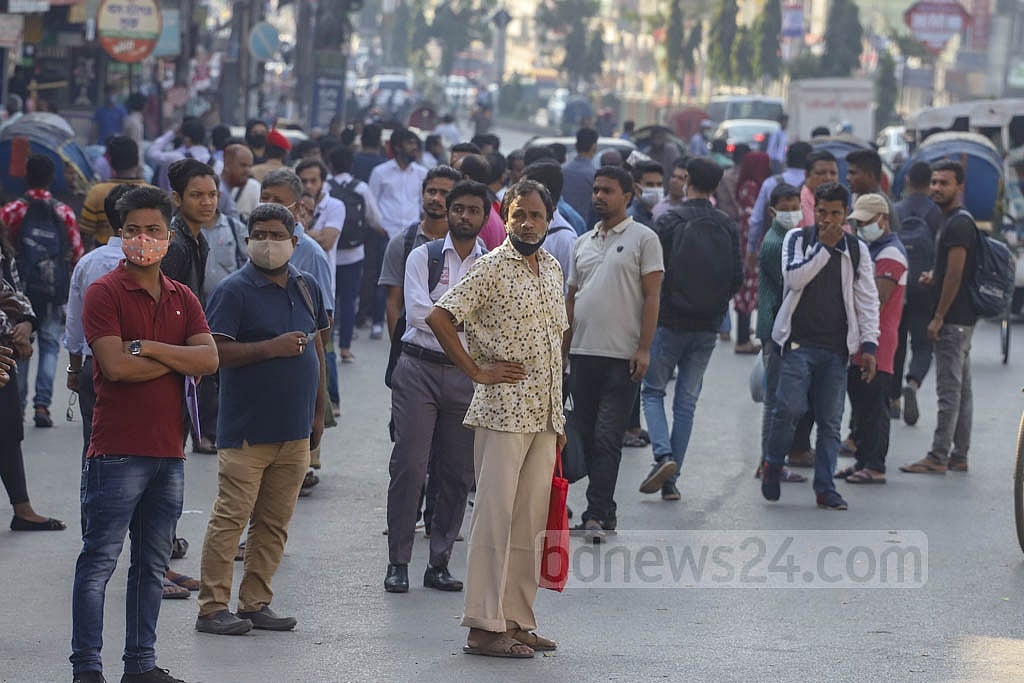
Commuters wait for transports at Mirpur-1 in Dhaka to reach their workplaces amid a transport strike on the first workday of the week on Sunday, Nov 7, 2021. Photo: Asif Mahmud Ove
Their strike has suspended the movement of containers in and out of Chattogram port, delaying shipments. Exporters and importers say the additional cost of business due to the strike and increased transport cost will ultimately pass on to the consumers.
ORDINARY PEOPLE, THE ULTIMATE SUFFERERS
Commuters struggled on the first workday of the week due to the public transport strike. Many of them left home very early in the morning to make it to their offices on time, while many others were late.
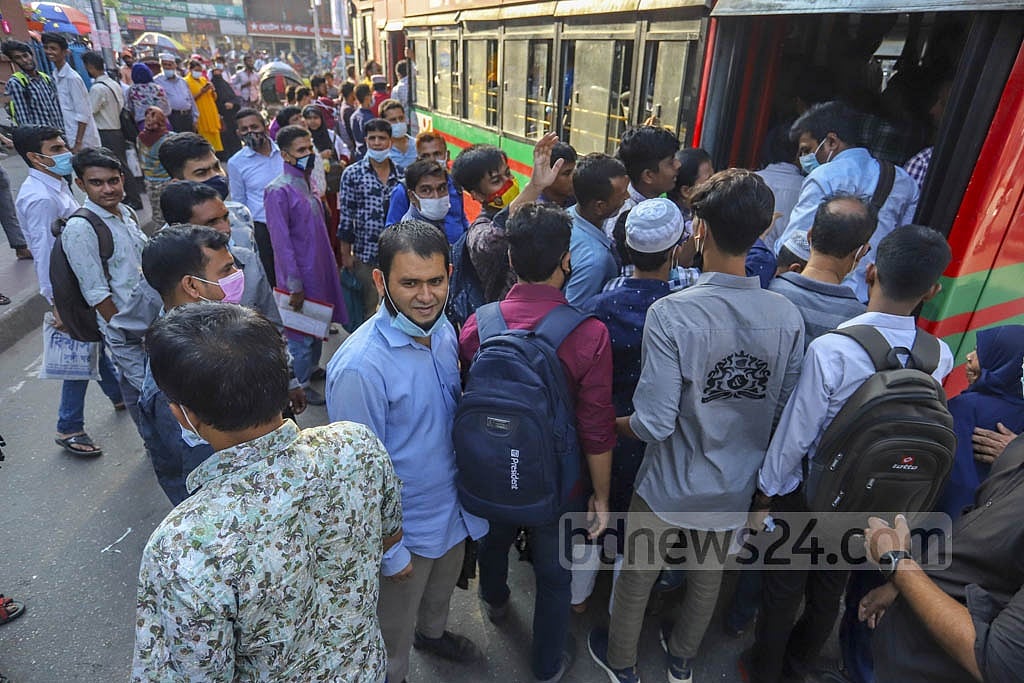
As in the past two days, commuters were also charged a lot more for their trips. Though private cars, autorickshaws, rickshaws and motorbikes were crowding the Dhaka roads, passengers were seen waiting for public transport. Some BRTC double-decker buses were available on the roads but were overcrowded. Elderly passengers, women and children were among those who could not make it.
Many passengers changed their rides and took different vehicles to reach a destination. As some of them tried to walk, some tried to hitchhike on private cars.
Autorickshaws, rickshaws and ridesharing bikes became exorbitant. Many of the passengers travelled in rickshaw vans.
Passengers scramble to get on a BRTC bus at Farmgate in Dhaka amid a transport strike on the first workday of the week on Sunday, Nov 7, 2021. Photo: Asif Mahmud Ove
The strike led to an increase in the number of passengers in trains, prompting the railway authorities to attach additional coaches to accommodate scores of embattled travellers at Kamalapur Railway Station.
Cars and microbuses offered some respite to people wishing to leave Dhaka for other districts -- in exchange for double the bus fares. Those travelling to nearby districts hired autorickshaws.
But a number of people were stranded in Dhaka’s bus terminals amid the strike with no suitable place to stay or not enough money to hire a car after taking exams or treatment at hospitals in the capital.
The people always suffer no matter what happens, said Ghulam Rahman, president of the Consumer Association of Bangladesh.
“They can't just halt transport services. They should have discussed and resolved the issue. Why are they holding us hostage?" a disgruntled passenger asked as the travellers looked for answers to their sufferings.













