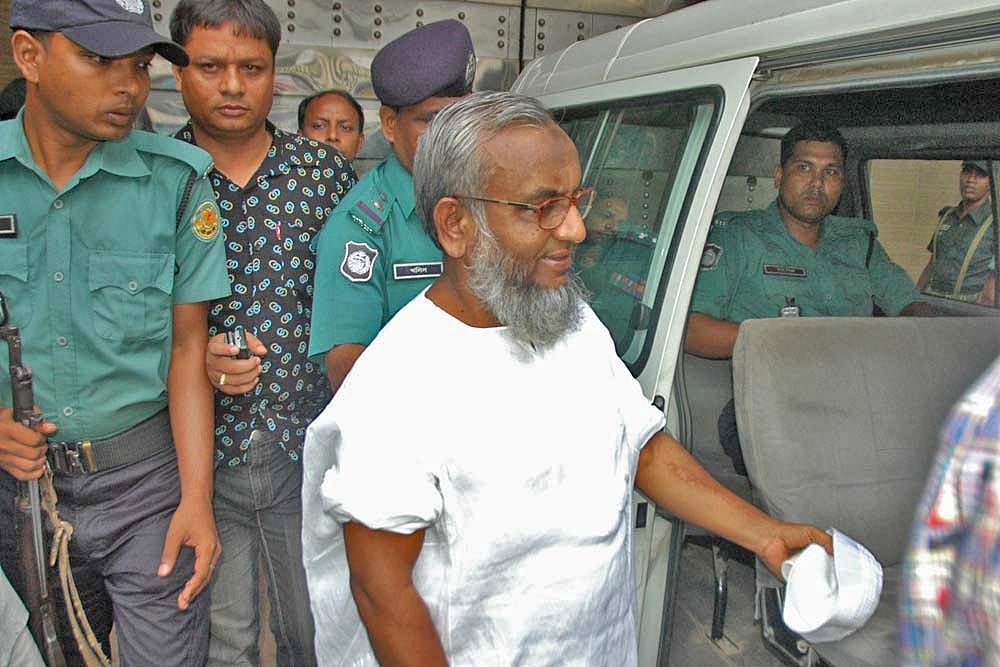
Abdul Quader Molla (File Photo)
The law had stipulated that the prosecution could appeal against any judgment of the International Crimes Tribunal only in case of acquittal of an accused. But the law was amended, providing that the prosecution can appeal against any ICT verdict, following demand by the Ganajagaran Mancha after the tribunal condemned Molla to a life term on Feb 5.
The prosecution appealed against the ICT judgment on Mar 3 but Molla’s lawyer Abdur Razzaq questioned the legality of the amended law’s application to the appeal against the Jamaat leader’s punishment.
His appeal prompted a five-strong bench of the Appellate Division on Thursday to appoint seven senior lawyers as amici curiae, or friends of the court, for their opinions on the matter.
The lawyers are TH Khan, former Attorneys General Rafique-Ul Huq, Mahmudul Islam and AF Hassan Ariff, Amir-Ul Islam, Barristers Rokonuddin Mahmud and Ajmalul Hossain QC.
Their opinions will be heard on Jul 8 during the appeal hearing.
The ICT awarded life term to Molla on the charge of committing crimes against humanity during Bangladesh’s Liberation War in 1971.
The prosecution levelled five charges against the Jamaat leader of which four were proved ‘undoubtedly’. The judgment said that the prosecution could not prove one charge.
Molla was given life term in two charges and 15 years in another two.
Following the verdict, Ganajagaran Mancha activists launched a movement demanding an amendment to the law and death penalty to Molla as they considered the punishment ‘too lenient’. They also demanded maximum punishment to all other convicted war criminals.
Amid the movement, the government on Feb 17 amended the law.
Later, the prosecution filed the appeal seeking death penalty for Molla and challenging his acquittal in one charge. On the other hand, the Jamaat leader appealed against his life term.
Hearing on both the appeals began on Apr 1.
During the hearing, Barrister Razzaq questioned the legality of the amended law’s applicability.