


Published : 01 Dec 2013, 11:31 PM
Updated : 20 Oct 2022, 03:42 PM


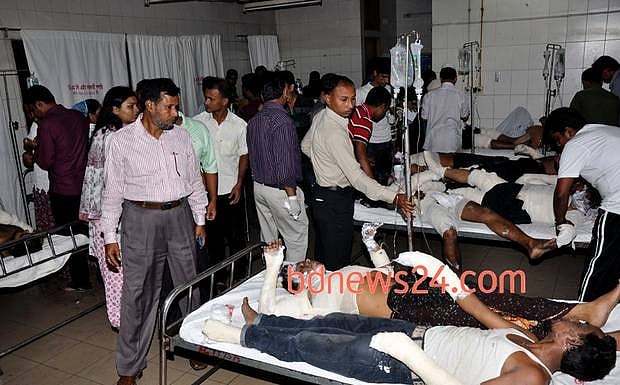
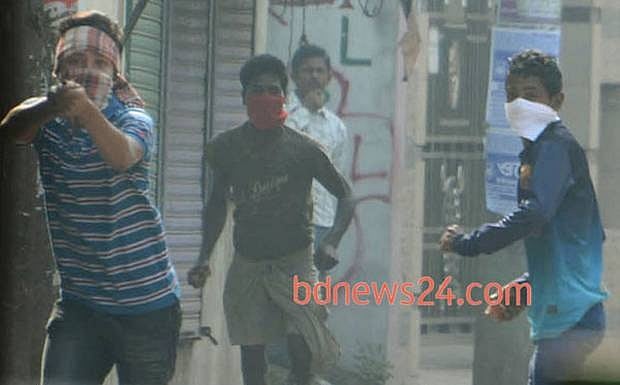
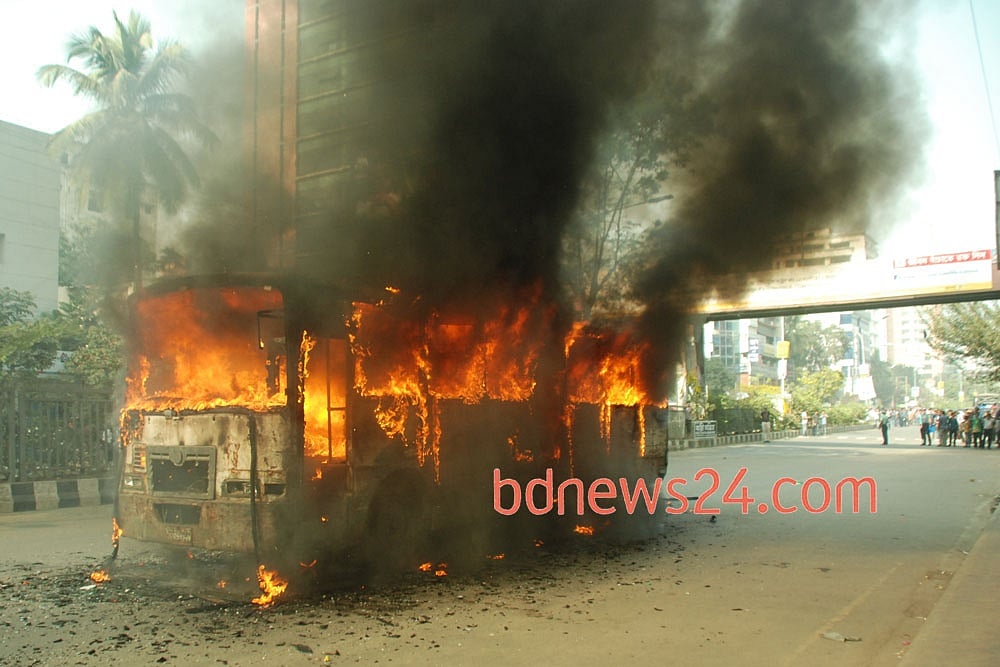
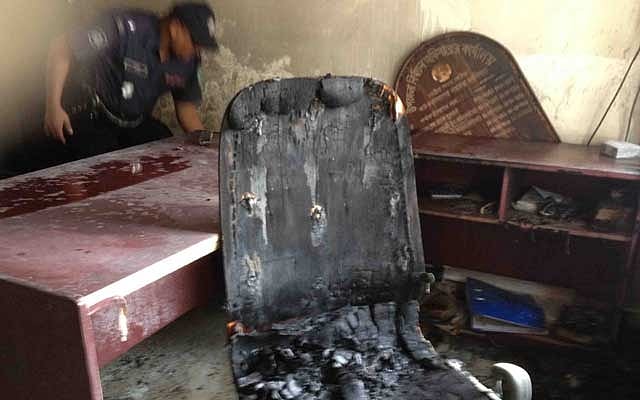

The BNP and its allies in the 18-Party coalition consider the violent agitation a popular movement and a manifestation of public support for its key demand – holding the next parliamentary election under a non-party caretaker government.
But analysts don’t agree.
They termed it ‘acts of terrorism’ and said the movement was never characterised by sniper attacks.
At least 26 people were killed – mostly in sniper attacks – in the last six days since Saturday as agitation-related violence pulverised Bangladesh.
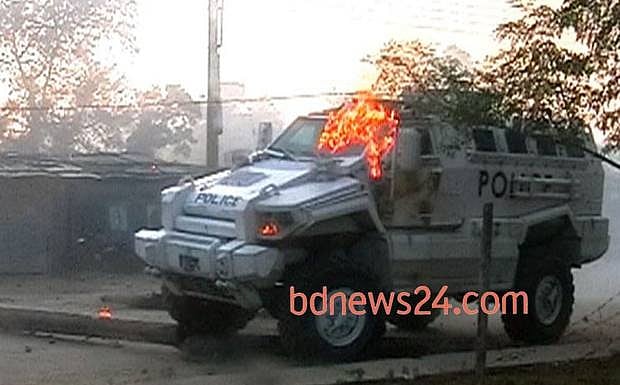
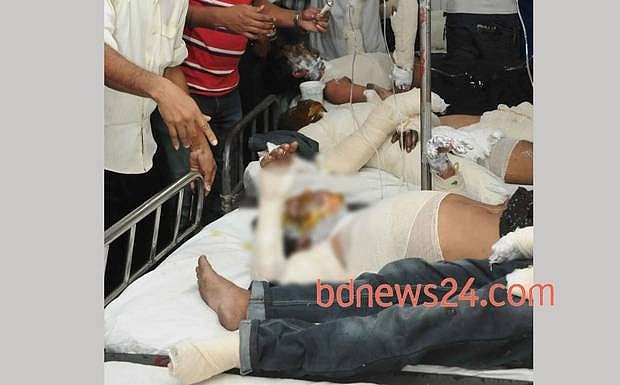
The last week’s 71-hour blockade was marked by vandalising of vehicles, murder of people, attacks on government establishments and clashes with police.
The latest 72-hour blockade enforced from Saturday to press Opposition alliance’ demands has been fiercer at some places where massive violence occurred after Sayeedi condemned to death.
BNP leader Salahuddin Ahmed in a statement on Saturday said the government, worried by the severity of the ‘mass movement’, had resorted to oppression, killing and arresting and filing cases against Opposition leaders.
Dhaka University’s Peace and Conflict Study Department founding chairman Dalem Chandra Barman, however, said: “There is no mass movement here… No sniper attack happens in mass movement.”
Political science Professor Harun-or-Rashid said: “What is happening in the country in the name of blockade can no way be called popular movement.”
He said terrorism and sniper attacks were being carried out at some specific places of the country.
The violence has panicked the people.
An executive of a state-owned bank, Aslam Hossain, says: “My family remains worried about me when I am on way to office or home. I live in fear of arson of bus and explosion of bombs.”
According to media reports, political violence in the last 11 months has claimed around 350 people lives.
About 50 people had been killed during the Awami League-led movement in 1996 to press for polls-time caretaker government.
Harun-or-Rashid, now Vice Chancellor of National University, said people from all walks of life would spontaneously join any mass movement.
“But this movement doesn’t have spontaneous participation of the people.”
He said many left the movement seeing that ordinary men being killed in arson and bomb attacks.
Bogra, Satkhira, Sirajganj, Chapainawabganj
Ten people had been killed in Bogra, nine in Satkhira and three each in Sirajganj and Chapainawabganj in the violence following the death sentence to Sayeedi.
Known as strongholds of the Jamaat, the BNP’s key ally, these districts have been turbulent again during the anti-government agitation.
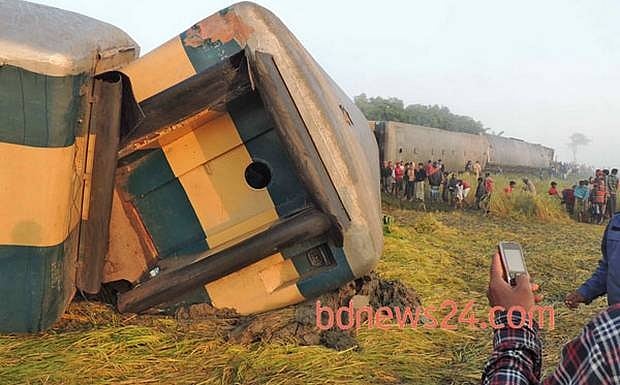
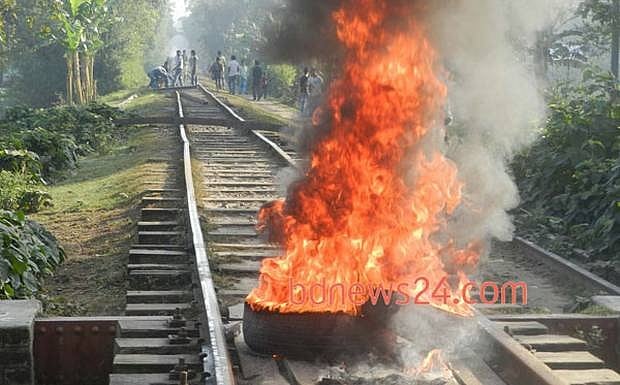
In Pabna, where top war crimes accused Jamaat chief Motiur Rahman Nizami and Abdus Sohbhan hail from, rail tracks were dismantled on Tuesday night. Intercity Sirajganj Express derailed following the sabotage.
In Chapainawabganj, one Border Guard Bangladesh member was injured when blockade supporters hurled crude bombs on a vehicle.
Later on Wednesday, two police personnel were injured in attack by Opposition activists.







