


Published : 03 May 2018, 08:40 PM
Updated : 19 Oct 2022, 02:11 PM


World Health Organization has ranked Dhaka third worst among megacities with polluted air in a latest report on air quality in 792 cities of 67 countries.
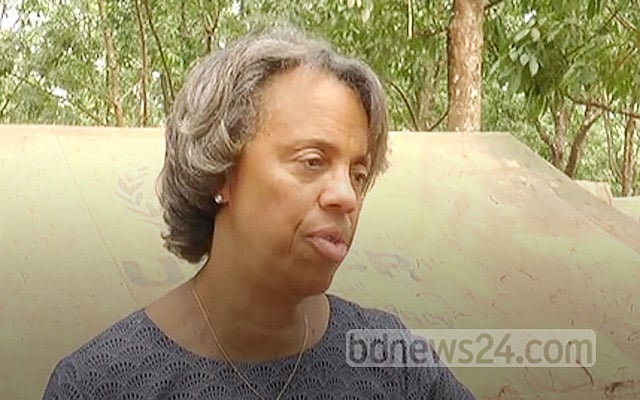
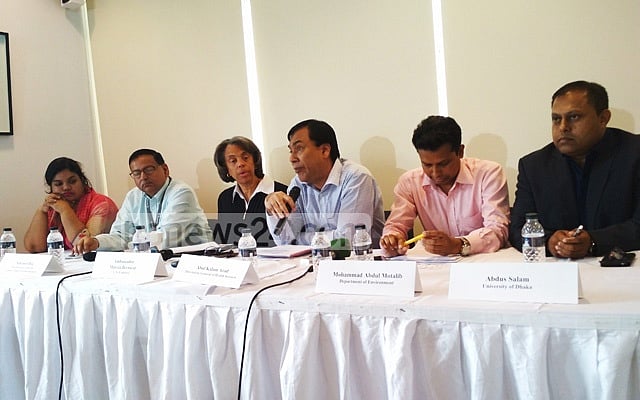
The ambassador speaking at a roundtable on the air quality at the EMK Center on Thursday said her doctor took her off the inhaler a year before her Dhaka assignment.
The environmental experts speaking at the roundtable said air quality becomes bad during the winter or dry season, mainly due to the brick kilns, rice parboiling machines and road dust.
The American ambassador said a year before she came to Dhaka her doctor told her that “your lung capacity has plateaued and you have to be careful. You may need rescue inhaler. You don’t need daily inhaler”.
“Within three months of living in Dhaka, I was waking up at night gasping for air which is one of the main symptoms of asthma,” she said.
US Ambassador Mercia Bernicat
“When the rains came I was fine,” she said, adding that it recurred in December.
“My recovery has not been so good. It’s a personal struggle for me and a setback for my health,” Bernicat said.
Mohammed Adul Motalib, senior chemist at the Department of Environment, said brick kilns, construction, road and soil dust, and vehicle are the major contributors of air pollution in Bangladesh.
Brick kilns contribute almost 58 percent of them, according to him.
He said poor-quality construction materials are also contributor to air pollution.
“We use fine sands while other countries mostly use coarse sands. Fine sands easily come out through vehicle wheels friction. Crashed road, unmanaged wastes, unplanned and unmanaged construction activities are also responsible for air pollution,” Motalib added.
Director General for health services Abul Kalam Azad said health is the “victim” of air pollution.
Citing statistics, he said in the whole world, air pollution is the worst in South Asia where 5.9 million deaths occur, out of which 3.3 million are because of the indoor air pollution.
Azad said indoor air pollution is also putting the health of women and children at risk. “This [indoor air pollution] can affect many people because of the density of population in Bangladesh.”
“In rural areas it's actually fossil fuel that is the culprit,” he said, asking for strategic interventions, awareness building and enforcement of law.
“We can actually quickly promote (the use of) safe cooking practices in rural areas. If brick kilns are the main problem why cannot we control them.? This can be an intermediate solution.”
The DG pointed at the rise of non-communicable diseases such as strokes, heart disease, and lung diseases in Bangladesh which have links with the air pollution.
Saleemul Huq, Senior Fellow in the Climate Change Group at the International Institute for Environment and Development, suggested finding alternatives that allow quality of life as he said regulations do not work in Bangladesh due to poor enforcement.
“We have the technology now…those maybe expensive but those will become cheaper by the day,” he said, citing instances of electric vehicles which are not gaining popularity.
The US ambassador, however, suggested finding ways of venture capital in Bangladesh so that youths who have “amazing ideas” to address the environmental challenges can make those a reality.













