Published : 25 Nov 2026, 05:50 PM
Updated : 25 Nov 2026, 05:50 PM


Migrant workers deceived during recruitment or exploited abroad recover 12 to 15 percent of their migration costs through arbitration, leaving many in debt, a study has found.
The Ovibashi Karmi Unnayan Programme (OKUP) published “Justice by Procedure? A Legal and Institutional Audit of BMET Arbitration for Migrant Workers in Bangladesh” on Wednesday.
It reviewed 85 complaints filed with the Bureau of Manpower, Employment and Training (BMET) between November 2024 and June 2026. Complainants included 50 men and 35 women; around 86 percent had travelled legally to Saudi Arabia.
Men spent an average Tk 458,000 to migrate, women Tk 31,900. Mediation compensation covered 15 percent of men's costs and 12 percent of women's.
Of the complaints, 52 remained pending, 28 were settled and five proceedings stalled.
Although hearings should begin within 30 working days, 44 percent took up to 12 weeks to start; 29 percent of complainants were never summoned.
Researchers found no documented investigation; some applications disappeared from official records despite receipt acknowledgements.
OKUP Chairperson Shakirul Islam said the system facilitated settlements, not legally binding remedies. Agencies' greater bargaining power pressured vulnerable workers into accepting inadequate compensation. Agencies could skip hearings without penalty, while workers faced harassment.
Half of the settled cases brought Tk 30,000 to Tk 50,000 in compensation. Most women received Tk 15,000 to Tk 30,000.
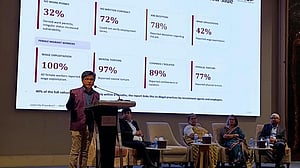
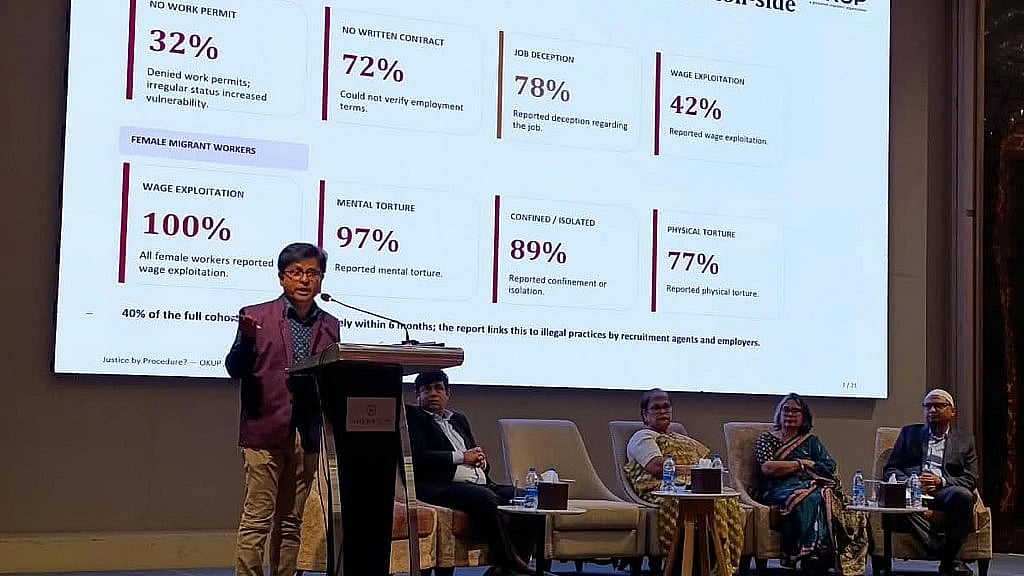
The study found abuse: 91 percent lacked employment contracts before departure and 72 percent had none on arrival.
Overall, 78 percent reported job fraud, 68 percent wage deception and 42 percent exploitation.
All surveyed women domestic workers reported wage abuse; 97 percent faced mental abuse, 89 percent confinement and 77 percent physical abuse.
Forty percent returned within six months, before their contracts ended.
OKUP urged stronger investigations, impartiality, structured compensation and enforcement of the 2013 Overseas Employment and Migrants Act, which criminalises recruitment fraud.