


Published : 27 Nov 2017, 11:45 AM
Updated : 19 Oct 2022, 03:51 PM


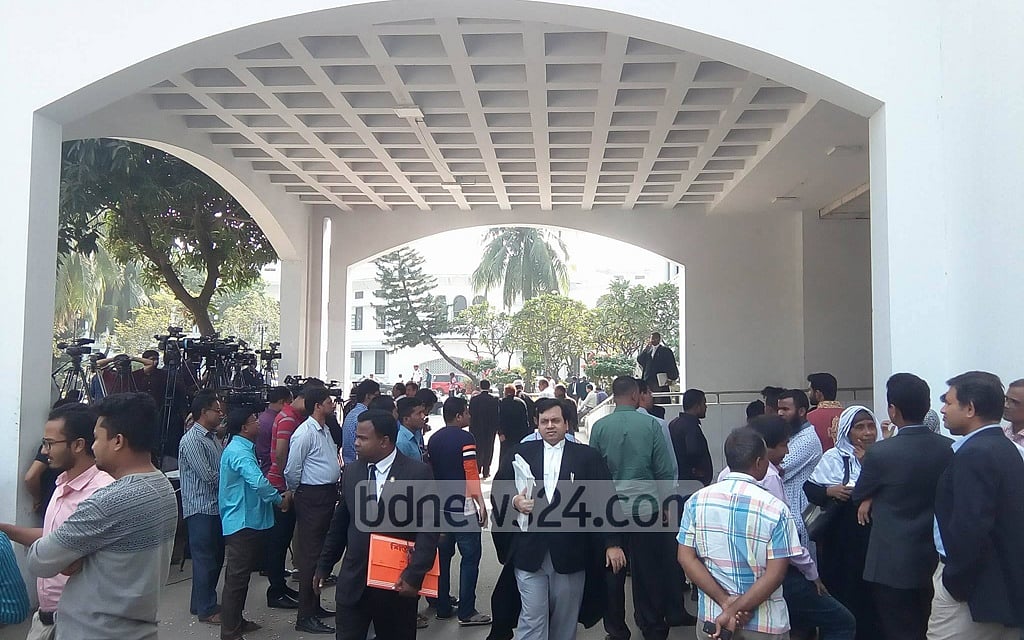
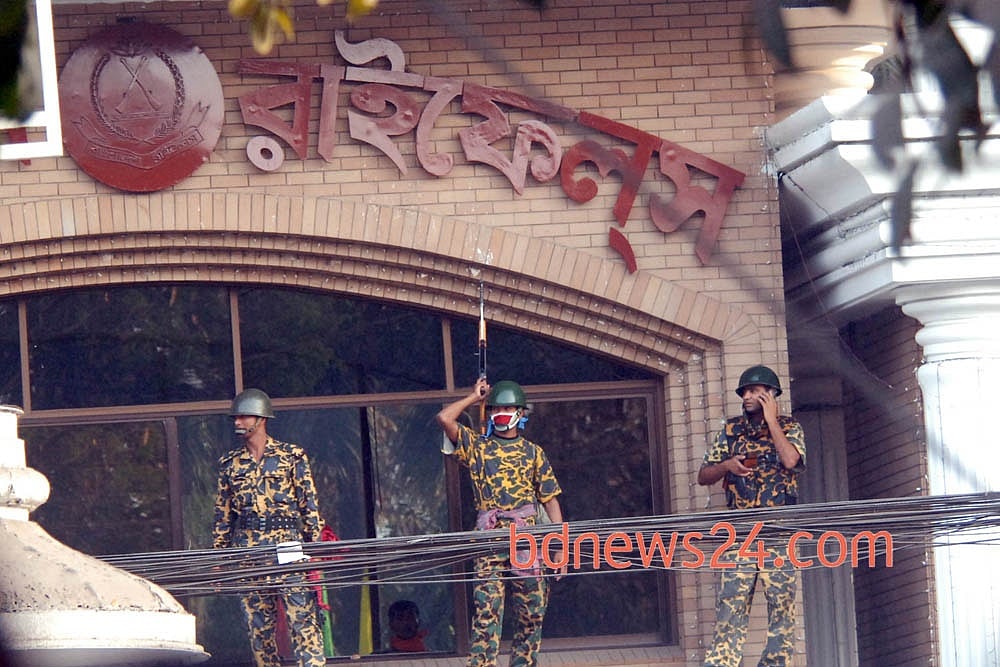
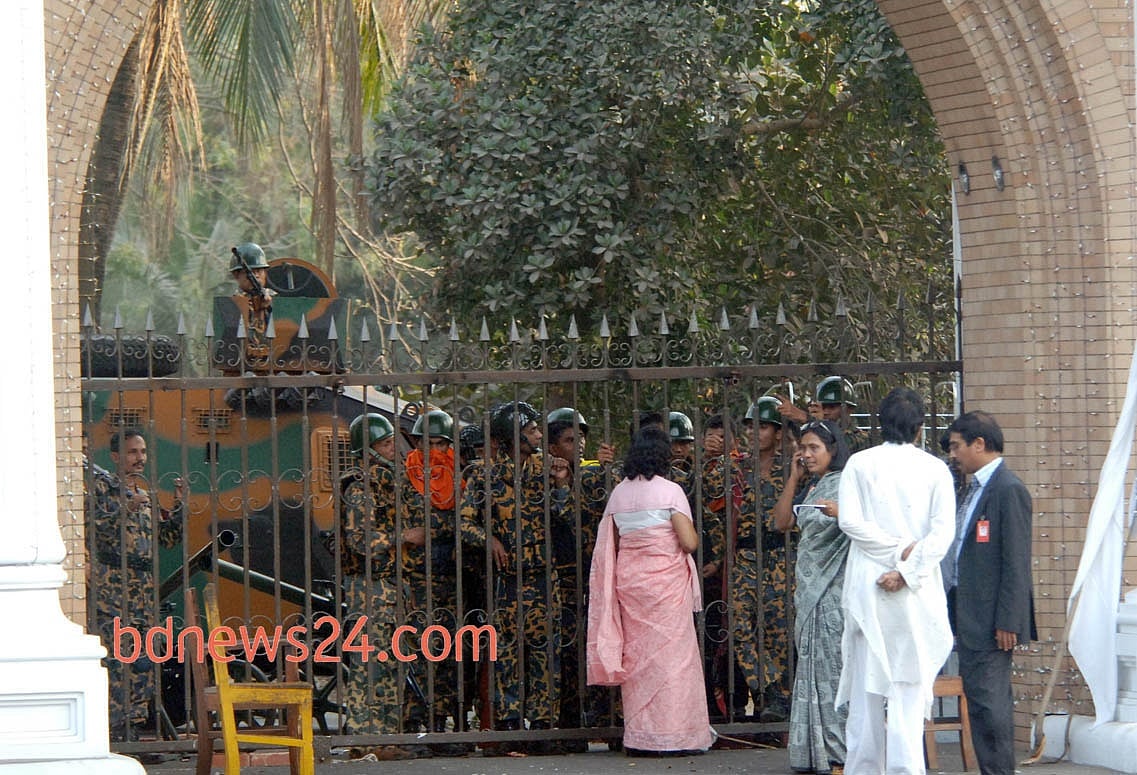
The court gone into a recess after finishing reading out the observations.
The three-member bench led by Justice Md Shawkat Hossain began the second day of announcing the verdict shortly before 11am.
Justice Md Abu Zafor Siddique and Justice Md Nazrul Islam Talukder are the other members of the larger bench formed in 2015 to hear the case, the largest in Bangladesh's history in terms of the number of convicts.
Monday’s proceedings opened with Justice Talukder reading out a summary of his observations on the verdict.
He finished around 12:45pm, when the court went into a recess after presiding judge of the bench, Justice Hossain, said that they would start announcing the sentences at 2:30pm.
In his observation, Justice Talukder emphasised on opening an investigation into the intelligence failure that held back critical information of a brewing mutiny.
"The BDR had its own intelligence wing, which failed to provide input before the mutiny. An investigation should be opened," he said.
Throughout the verdict proceedings on Sunday, Justice Siddique read out his more than 1,000 pages of the summary of observations.
The court also praised the way the administration led by Prime Minister Sheikh Hasina put down the mutiny and handled its aftermath.
The mutiny that continued for two days eight years ago, a month after a new government took office, sent shock waves across Bangladesh and to the rest of the world.
Seventy-four people, including 57 army officers, were brutally murdered by the mutineers on Feb 25-26 in 2009.
In November 2013, a special court of an additional metropolitan sessions judge awarded the death penalty to 152 soldiers and non-commissioned officers of the erstwhile Bangladesh Rifles or BDR for the massacre.
The court sentenced 161 others to life in prison and 256 to three to 10 years in jail. It acquitted 277.
Never before had so many accused, 850 in total, been tried in a single case in the history of Bangladesh.
After the mutiny, some suggested deeper conspiracies behind the rebellion, but police investigators concluded that the BDR personnel's grievances led them to revolt.
The trial court, in its verdict, observed that the mutiny was orchestrated with the motive to destroy the military security system and might have been engineered to weaken the economy.
It said involving the border guards in market activities like 'Operation Dal Bhat', introduced by caretaker government, had been 'unwise'.
The court believed there were intelligence 'gaps' that held back critical information of a brewing mutiny.













