


Published : 24 Nov 2013, 10:41 AM
Updated : 20 Oct 2022, 03:41 PM


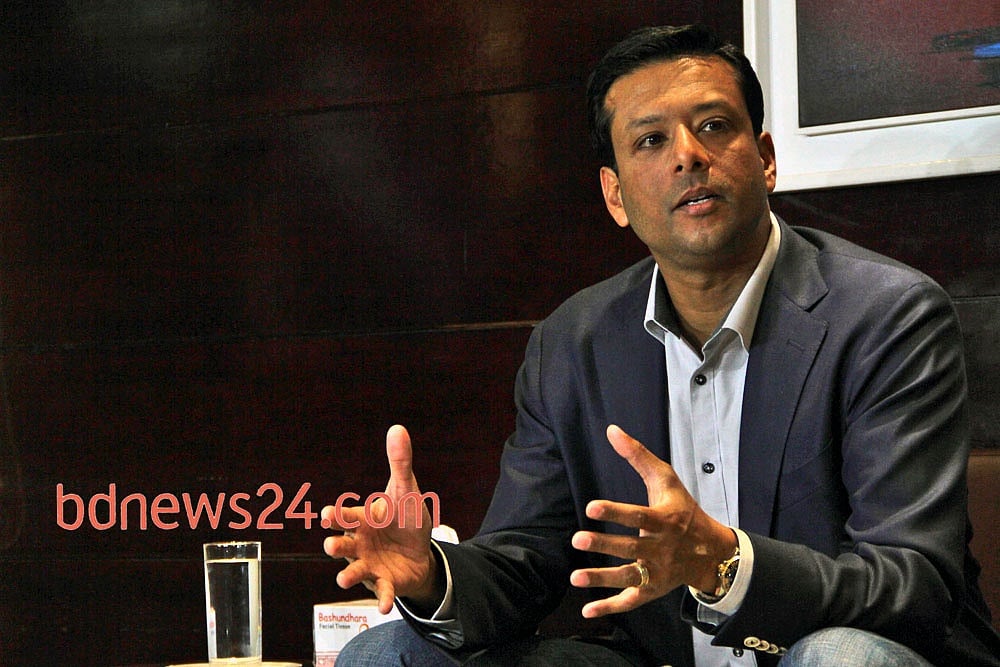
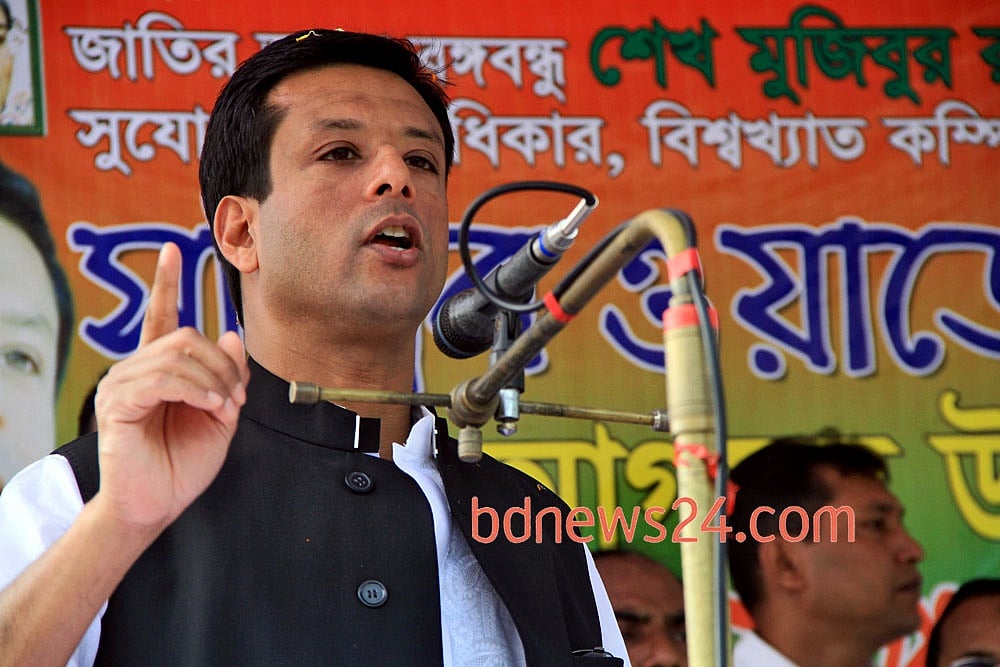
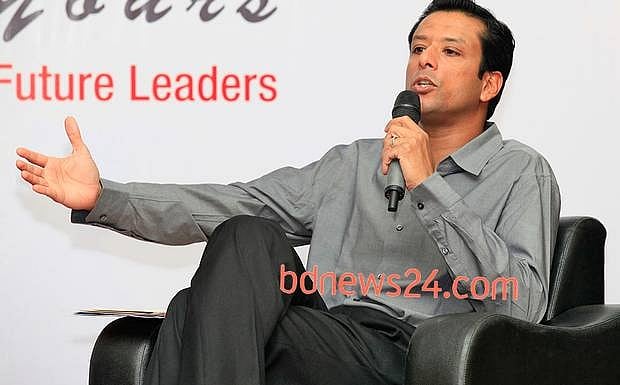
Prime Minister Sheikh Hasina's son Sajeeb Ahmed Wazed Joy is confident there is no chance of a military coup in Bangladesh. In an interview to the Kolkata Telegraph published on Sunday, Joy tells correspondent Devadeep Purohit that a 'section of our civil society wants power' and they want the military to back them. But Joy is confident Bangladesh as a nation and its people will 'not tolerate this'. Here excerpts of the interview:
Q: The uncertainty over the next general election has triggered speculation of army intervention. Bangladesh was ruled by the army between 1975 and 1990, and by a military-backed civilian government in 2007-08.
Joy: A section of our civil society wants power, but they can never win an election. As the only way they can come to power is through the backing of the military, they are talking about army intervention. But I can tell you that the people of this country will not tolerate this. The successes of our government have been so overwhelming that the population will not support any intervention against a legitimate government that is trying to hold a credible election.
Besides, you have to look at the logistics of a coup. Right now, there is no general or officer who has the appetite for a coup attempt.
To have a successful coup, you will have to physically get Sheikh Hasina to hand over power. The guards guarding this house (Gano Bhaban, the official residence of the Prime Minister) are faithful to Sheikh Hasina. There is no way the guards will allow anybody to step in.
Besides, any (coup) attempt will be so bloody that I don’t think there is any group of officers inclined to take that risk. I can tell you that Sheikh Hasina will not hand over power. It can only happen over our dead bodies.
Q: Bangladesh has seen a spate of hartals — two back-to-back 60-hour shutdowns from October 27 and another 84-hour hartal between November 11 and 14 — as the Bangladesh Nationalist Party-led Opposition tried to pressure the government into allowing a caretaker regime to oversee the upcoming elections. As the Hasina government is opposed to the idea, Bangladesh has witnessed bitter street battles in the past few weeks. More hartals are expected over the next few weeks as there is no resolution between the two key parties.
Joy: The hartals are not good. The basic point is, what are the reasons for the hartals? There is no real reason. We have had 6,000 local elections, which were free and fair. During the BNP’s term, this never happened. We have a voters’ list now that is digitised, has photos and fingerprints, and is regarded as clean. During the BNP’s time, the voters’ list had 14 million more people than the population.
People are not supporting the hartals, which have fizzled out. People did not come out to enforce the hartal and even the BNP leaders did not come out. So, they tried to terrorise the people and shut down the country.
It is one thing to damage vehicles, but they are targeting people. Whatever they are doing is nothing but cold-blooded murder. Pouring petrol and gunpowder and then setting people on fire is cold-blooded murder. (At least 30 people died in Bangladesh in the 204 hours of hartal.)
Q: The crackdown on Opposition leaders — five BNP leaders were arrested before the hartal starting November 11 — has stirred a debate beyond the borders with the Opposition and a section of civil society accusing the government of muzzling voices of dissent.
Joy: The Opposition first tried to intimidate the Awami League so that the elections are not held and then tried to terrorise people. The government has to protect the people and that’s what is being done. In the last hartal, we were able to minimise the violence. We made seizures of large quantities of explosives from BNP people during raids.
But rather than chase the foot soldiers, we went after the people responsible to cut off the funding. The explosives are expensive; they cost money. As we uncovered information that senior BNP leaders were directing these attacks and some of them were financing the purchase of bombs and petrol, we arrested them.
Q: During the hartals, Bangladesh witnessed thousands of 'cocktail bomb' explosions. A 'cocktail bomb' is a generic name used for a variety of bottle-based improvised incendiary weapons, which leave the victims with burns and splinter injuries.
Joy: The arrests made a difference and so the number of attacks was far less in the last hartal in comparison to the previous two hartals.
Q: You are steering Hasina’s poll campaign, primarily strategising how to reach out to voters with the “successes” of the government and gauging their mood through surveys conducted with the help of an expert team of researchers.
Joy: We did not do any PR for four-and-a-half years but there was a concerted, negative PR against us and that certainly affected us. Till a few months ago, the Awami League and the BNP were neck and neck in terms of popular support.
Then I decided to start a PR campaign from July onwards with a team of professionals, and that has changed the situation. The positive campaign has helped us. Our surveys — done by foreign entities, market research firms and our own teams — indicate that we are comfortably ahead of the BNP.
We had a lack of capable and skilled people to do PR and so I built a new team. We have even done message-testing to understand what kind of messages people are receptive to.
We have gone out with our message and we are accelerating and a lot more will come. Soon, our billboard campaign will start.
Q: Almost everything has improved, be it the economy or law and order, and that’s getting reflected in the surveys.
Joy: The economy is doing well (Bangladesh’s economy has been growing at an average 5.5-6 per cent for the past few years). We have solved a lot of basic infrastructure problems. We have celebrated the achievement of generating 10,000MW of electricity but when we took over five years ago, our production was only 3,500MW.
When we came to power, the primary complaint was lack of power. The FBCCI (Federation of Bangladesh Chambers of Commerce and Industry) president came to me and said industry was dying because of power problems. We have solved that problem and our country is growing at a rapid pace.
Q: Any long-term plans!
Joy: Right now, I am working on the elections and am travelling back and forth as my family is in the US. After the election, I don’t know…. But I think these elections are going to be critical for Bangladesh as they will determine the future of leadership in this country.
If the BNP somehow manages — through a miracle — to come to power, there is going to be a transition in the leadership to Khaleda Zia’s son (Tarique Rahman).













