Nipah strikes Lalmonirhat
Bangladesh remains the only country in the world that reports infection of the deadly virus
bdnews24.com News Service
bdnews24.com
Published :
04 Feb 2011, 03:02 PM
Updated :
10 Aug 2022, 04:18 PM
Dhaka, Feb 4 (bdnews24.com) – The 'mystery fever' that has so far killed 14 people in Hatibandha of Lalmonirhat has been identified as the 'Nipah virus'. This virus has been a public health threat in Bangladesh since 2001.
Director of the Institute of Epidemiology Diseases Control and Research (IEDCR), Mahmudur Rahman, confirmed on Friday afternoon that 'nipah has claimed 14 lives in the border district of Lalmonirhat in northern Bangladesh, leaving eight more critically ill.'
His confirmation came soon after the lab results came out.
"We got 22 cases from Hatiabandha since Jan 31. Nipah virus is behind these cases," he told reporters urging people to avoid drinking raw date or palm juice and bat-bitten fruits.
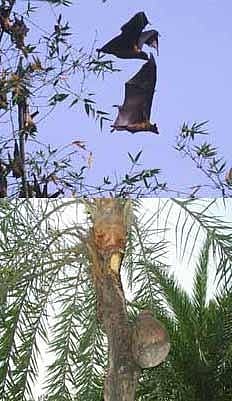
Nipah generally spreads between December and April when fruit bats perch on the jars used for collecting the sap of palm or date trees. They usually leave saliva and droppings in the jars.
People are infected when they drink raw juice. Thereafter it spreads through person to person contact.
bdnews24.com correspondents report that the disease has become a nightmare in the area and many have left their homes in panic.
IEDCR director said two more members, including senior scientist Dr M Mushtuq Husain, will join the 10-membr team already posted there since Feb 2.
Though the government's disease control department keeps an eye out for such outbreaks every year, the virus has so far killed 127 people out of 174 affected including the recent deaths.
"It is because of lack of awareness. People have a long-standing habit of drinking raw palm juice. We must stop the practice if we want to stop the menace."
"The virus is highly infectious Symptoms appear with fever followed by altered mental status, seizure and death," Rahman said and recommended that people in the affected areas with the symptoms should immediately consult physicians.
"It causes encephalitis, a fatal brain infection. There is no vaccine against it, neither is there any specific treatment. All you can do is treat the symptoms."
The virus has been found in Meherpur, Naogaon, Rajbari, Faridpur, Tangail, Thakurgaon, Kushtia, Manikganj, and Rangpur districts of Bangladesh. This year it has spread to Hatibandha, Lalmonirhat.
It is so fatal that in 2004, four members of a family in Faridpur died after one of them got infected. A rickshaw-puller who carried a patient to the hospital also got infected and died.
"Luckily the virus did not pass from person to person in Hatiabnahda, we cannot say why. But we are on high alert," said Rahman.
ICDDR,B scientist Dr Farhana Haque who is in the team told bdnews24.com that most of the people affected are from Tongbhanga village at Hatiabandha.
"We saw many bats here. People also have a habit of drinking raw date juice. Children eat half-eaten fruits."
She said people got panicky and were relieved to see a team from Dhaka.
"We are going door to door to disseminate useful information." The team is also distributing masks to prevent the virus from spreading through interpersonal contacts.
"The situation is improving."
IEDCR also advised people to watch their rooftops preventing bats from staying there.
It also suggests nursing patients carefully. Those who take care of patients should wash their hands with soap and use mask to protect themselves, the IEDCR director said.
"Patient's cough and spit should be collected in a pot so that it can be buried," he advised.
He suggested 'one health' approach meaning a concerted effort of physicians, animal scientists and anthropologists to contain the outbreak.
Nipah was first detected in Malaysia in 1998, but at present Bangladesh, a hotspot for emerging diseases, is the only country in the world that reports the disease. No one can say why.
But it has become a cause of anxiety among Bangladesh's health authorities as it strikes every year.
"We have strong vigilance and hope that one day we will be able to combat the virus," Rahman said, adding that once people believed that it was an 'evil spirit' that killed people, but now they have started to understand.
"People can prevent it once they understand the cause."
"Pteropus bats carry the virus," said Dr Salahuddin Khan, an ICDDR,B scientist, adding that their research showed using a shade or covering the pitcher with polythene can prevent contamination of the date sap.
bdnews24.com/nih/ta/2050h