


Published : 31 Aug 2019, 01:36 AM
Updated : 05 Aug 2022, 05:58 PM


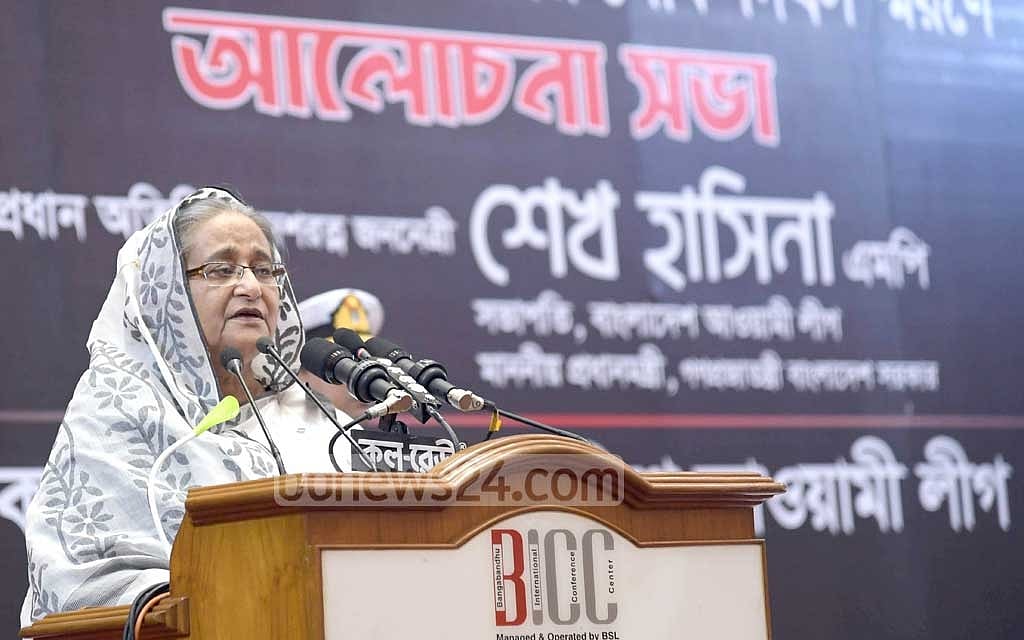
It’s not only that she lost her parents and other family members in the Aug 15, 1975 carnage, but the people of Bangladesh also lost the prospects of development because of the massacre, she told a programme in Dhaka on Friday.
“They lost all the possibilities to have a dignified life. We’ve been able to restore these (possibilities). I urge the countrymen to be alert so that Bangladesh never falls into the hands of the hyenas again from here,” she said.
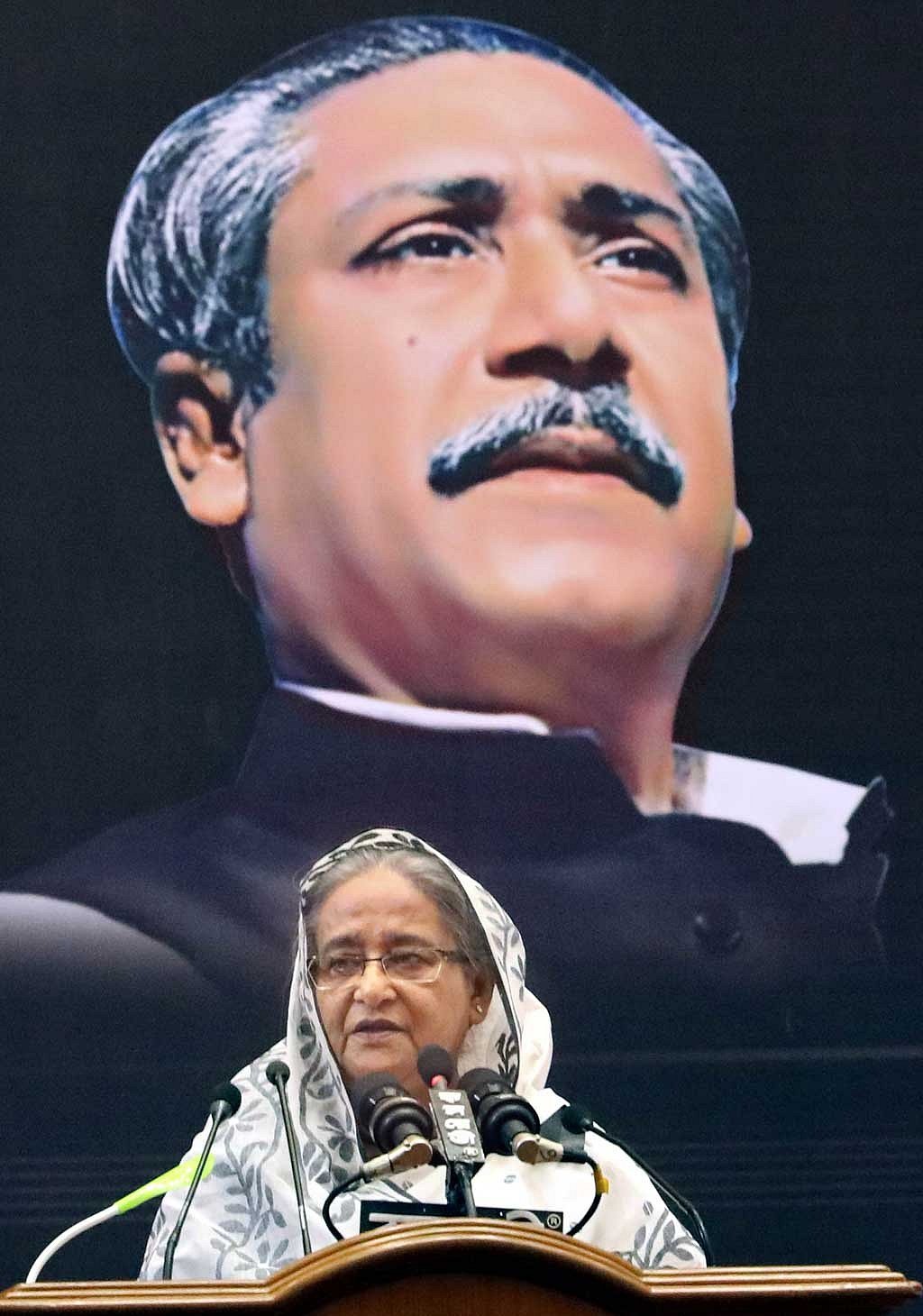
Hasina, who along with her sister Sheikh Rehana survived the carnage as they were abroad, said the killers were known to her family.
“It is unfortunate that Khandakar Mushtaque of our Awami League became president after the incident of ’75,” she said.
Bangabandhu’s convicted killers Major SHMB Noor Chowdhury, Colonel Syed Faruque Rahman, Major Shariful Haque Dalim, Dalim’s wife, sister-in-law, and mother-in-law used to visit Bangabandhu’s home at Dhanmondi 32 very often, Hasina recalled.
“Bangabandhu could never imagine that they were conspiring and could betray him in such a way,” she said.
Mushtaque came to power after betraying Bangabandhu, but could not remain for even two and a half months, the prime minister said, describing how the BNP founder Ziaur Rahman was made army chief by Musahtaque and usurped power eventually to become the first military ruler of the country.
She criticised the BNP leaders for denying the allegation that Zia was involved in the assassination of Bangabandhu.
“The BNP founder was himself the killer. He not only had involvement in the killing, but he also issued the Indemnity Order to save the killers from trial. These killers were awarded jobs in different embassies during his rule,” Hasina said.
She also recalled how Zia barred a committee formed in London from investigating the assassination of Bangabandhu.
The committee assigned Sir William Thomas Williams, QC, who supported Bangabandhu in the Agartala Conspiracy Case, to investigate the incident, but he was denied entry to Bangladesh in 1980 when Zia was president, Hasina said.
“If Zia wasn’t a killer, if the BNP he founded is not a party of killers, then why did he not allow Sir Thomas Williams, QC, into Bangladesh? What was his weakness?” she asked.
It was Zia who introduced Bangladesh to the “politics of murder”, the prime minister said.
“Now they (BNP leaders) speak against enforced disappearances. It was Zia who started the culture of enforced disappearances and murders in Bangladesh’s politics. They abducted numerous leaders and activists of our party. They tortured many leaders and activists. The families did not even get the bodies,” Hasina recalled.













