


Published : 24 Mar 2016, 10:12 PM
Updated : 11 Apr 2022, 09:45 PM


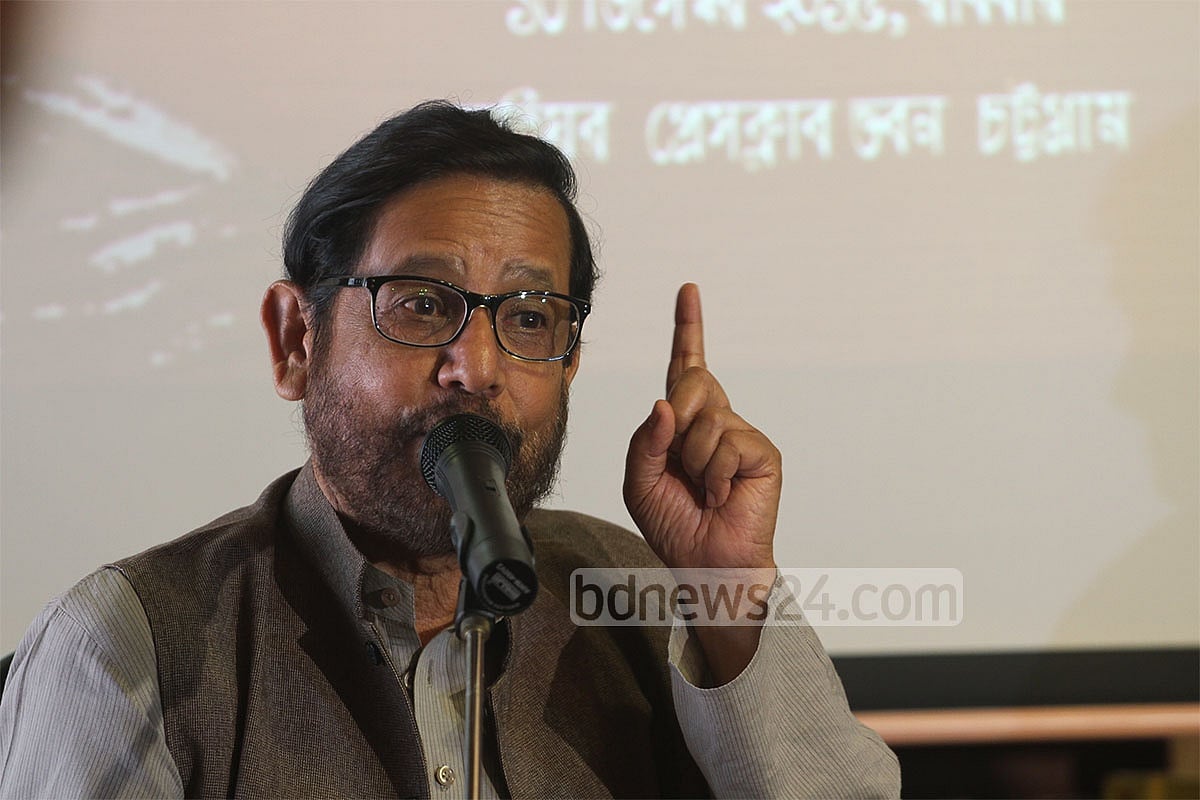
At a programme in Dhaka on Thursday, he stressed the need for more research to highlight various aspects of the genocide before the younger generation and the world community.
“Pakistani occupation forces have committed the biggest genocide of our time in 1971. It was so horrific that we are still bearing the brunt of the trauma it inflicted upon us,” he said at the inaugural programme of an international seminar on genocide at Dhaka University.
The minister said the trauma would continue to haunt Bengalees for many more years.
“It’s unfortunate that this tragic incident is not properly documented in international documents,” he said.
Referring to Convention on the Prevention and Punishment of the Crime of Genocide (CPPCG) adopted by the United Nations in 1948, he said the CPPCG clearly stated that the genocide was against the international law and UN’s basic principle and goal.
“Yet, the international community did not include this mass killing in their list,” he said.
In this regard he also pointed out how BNP rehabilitated the war criminals and made them ministers.
“Even a political party, which ruled our country for several years, also tried to erase this gruesome mass killing from the history. Many of those who helped Pakistani forces to commit the mass killings were made ministers.”
“It’s still trying to protect those cohorts. The chief of that party has recently even raised doubt on the figure of martyrs, which Pakistan has been doing for long,” the minister said.
“It’s a matter of credit to us as a nation that we have completed the trials of some of the accomplices of Pakistan,” he said.
“Some others are facing trial. The process has received appreciation from various quarters around the world for being fair,” the minister said.
Asking people to remain firm on the demand for trial of war criminals, Asaduzzaman said, “We need to do research on the magnitude and grisliness of the mass killings of 1971, so that future generation can know the true history of the crime.”
Dr Kamal Hossain, who was one of the members of the Constitution Drafting Committee, at the programme highlighted the backdrop against which the International Crimes (Tribunal) Act of 1973 was formulated.
“The draft of the law was prepared in consultation with criminal lawyers of international repute. The effectiveness of the Act was discussed at the 3rd International Law Conference held in Dhaka in December, 1974. The trial process was about to start.”
“But the unfortunate killings of political leaders in 1975 impeded the trial process and it was subsequently postponed by the then regime. It took 37 years to restart the process.”













