


Published : 26 Aug 2013, 09:51 PM
Updated : 09 Aug 2022, 11:03 AM


This is part of the 'Promotion of Social and Environmental Standards in the Industry' (PSES), a joint project of the governments of Bangladesh and Germany.
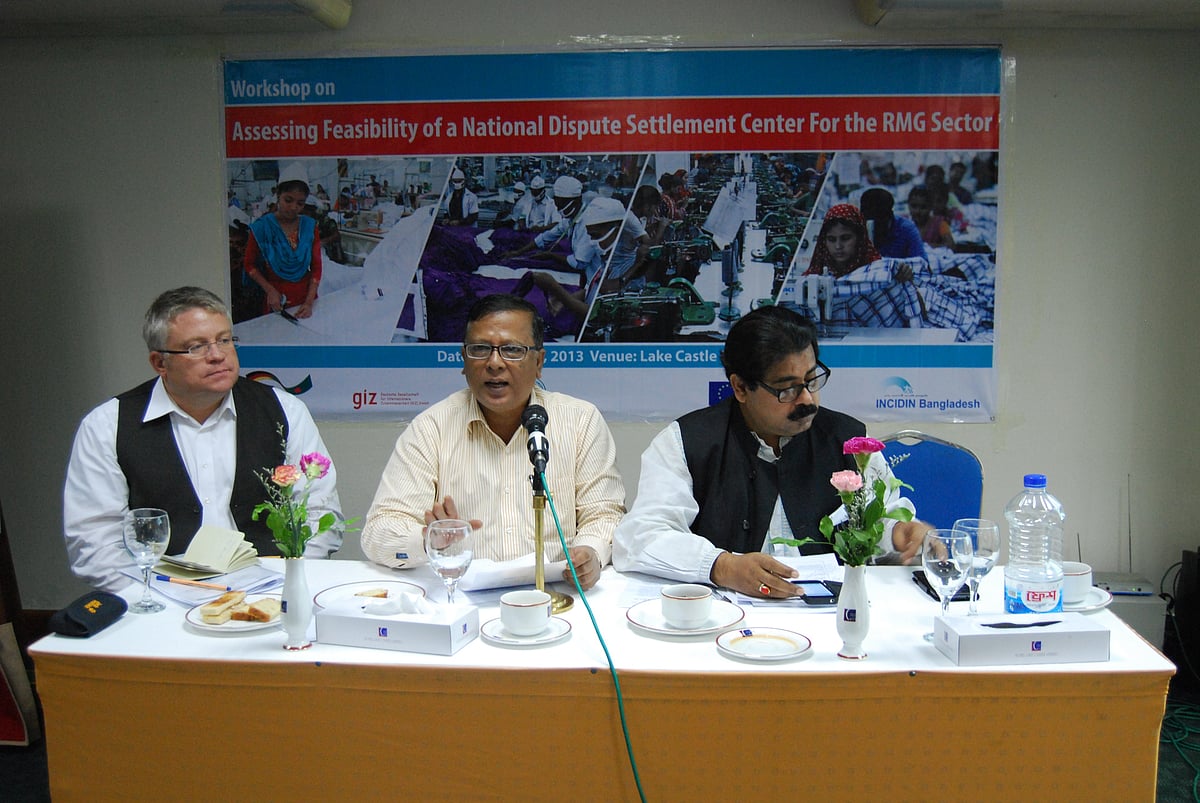
The Gesellschaftfür Internationale Zusammenarbeit (GIZ) GmbH, facilitated the half-day workshop on “Assessing Feasibility of a National Dispute Settlement Center for the Ready Made Garments (RMG) Sector” on Monday at the Lake Castle Hotel in Dhaka.
"The main objectives of this proposed medium were to act as a pilot concept, on a national level, to serve as an intervention to resolve labour disputes, provide pro-active legal advisory services and support the workers and management in resolving industrial conflicts," said GIZ spokesperson Lena Klara Hollender in a press statement.
The workshop was organised by Integrated Community & Industrial Development Initiative (INCIDIN) Bangladesh, who has also conducted a feasibility study on the establishment of this center, with support from GIZ.
Mr. Olaf Handloegten, Country Director of GIZ remarked, “This is a proposal. We at GIZ believe that sustainable development of the RMG sector requires the involvement and cooperation of all relevant stakeholders."
"Thus, we follow a multi-level approach. We as GIZ advisors, would like to stimulate a discussion on this issue and hope that in the end we can come up with a fruitful result.”
The workshop was presided by Md. IsrafilAlam, Honorable Member of Parliament (MP) and Chairman of the Parliamentary Standing Committee on Labour and Employment Ministry (MoLE).
“The concept of individual dispute settlement center may be examined in order to promote better industrial relations in RMG
sector of Bangladesh”, said Alam while addressing the workshop.
The survey, presented by Mr. AKM Masud Ali, Executive Director of INCIDIN Bangladesh, has detected a high demand for an independent national mediation center to settle industrial disputes of the RMG sector.
The study was conducted by consulting BGMEA, BKMEA, individual entrepreneurs, worker’s representatives, NGOs, workers and as well as reviewing current best practices and lessons learned in the sector.
Those who attended the workshop included BGMEA, BKMEA, ILO, MoLE and other eminent policy makers, government officials, business leaders, trade union leaders, NGO representatives and labour rights activists.
"The aim of this workshop was to generate a collective perspective on the proposition and identify invaluable lessons based on each sector’s individual experiences," GIZ spokesperson Hollender said.







