Published : 01 Nov 2026, 04:13 PM
Updated : 01 Nov 2026, 04:13 PM


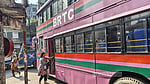
Bus services have begun operating under a franchise system on seven routes in Dhaka, comprising six regular routes and one circular route, as part of Dhaka’s bus route rationalisation initiative.
Shimul Biswas, chief coordinator of the Transport Owners-Workers Unity Council, inaugurated the service at Manik Mia Avenue in the capital at 11am on Sunday.
The routes are from Shibbari in Gazipur to Azimpur in Dhaka, Mirpur to Keraniganj, Ghatar Char to Demra, Ghatar Char to Kanchpur, Ghatar Char to Dhour, and Tongi to Azimpur.
A circular bus service has also been introduced on the Mirpur-1 to Ansar Camp route, passing through Kachukhet, Sainik Club, Jahangir Gate and Agargaon.
At the inaugural ceremony, Shimul said some of the seven routes launched in the initial phase would have as many as 300 buses each.
He said a decision had been taken to assign different colours to buses on each of Dhaka’s 32 routes, following the model of cities in developed countries.
“This will not be just a photo opportunity today, followed by the service being discontinued later,” he said.
“In the past, all governments wanted to bring discipline to the roads, but progress was delayed because they indulged vested interests. However, the current prime minister has taken a firm stance, bringing everyone under scrutiny and accountability and accelerating the process of change.”
Drawing on his long experience in the transport sector, the lawmaker from Pabna-5 said: “I feel ashamed every moment because of the limitations, shortcomings and criticisms of this sector, and we accept self-criticism too. We want to move away from hostile criticism and scolding and earn people's blessings instead.”
Noting that while a small section of people benefited from the prevailing disorder, the majority would gain from the restoration of discipline, Shimul said everyone wanted an end to Dhaka’s unbearable traffic congestion and the unsafe conditions threatening lives and assets.
“Today, battery-powered rickshaws, known as local Teslas, and conventional rickshaws have taken over the entire city.
“Although these vehicles are necessary for the poor, calculating how much time and money we lose because of traffic congestion would give us a headache. Bringing discipline to Dhaka could be a major contribution to the country's GDP and economic growth,” he said.
The transport sector leader said foreigners arriving at the airport and travelling to the Secretariat or their hotels often made harsh remarks about Bangladesh as a whole after seeing the disorder on the roads, rather than blaming any particular owner, worker or political party.
“At that point, everyone living in Bangladesh becomes part of those to be blamed. If Dhaka becomes orderly, the impact will spread to every corner of the country, empowering people to tackle other forms of irregularities and disorder as well,” he said.
ADMP Commissioner Mosleh Uddin Ahmed said 98 bus routes in Dhaka had been reduced to 32 main routes to prevent unhealthy competition on the roads and reduce accidents.
“Today, buses operating under approximately 18 different banners have been brought under six companies, and services have been launched on six routes.
“Alongside this, one route has been launched today with air-conditioned buses from among the five initially approved routes of the 25 planned circular routes within the city. Orders have been placed for 27-seat minibuses for the remaining four routes, which are expected to begin operating within the next two months,” he said.
He said the new system proposed replacing the existing contract-based employment of transport workers with a salary-based arrangement, and that the proposal had been placed before the bus owners’ and workers’ associations.
Buses on all 32 routes would soon be equipped with distinct colours, route numbers and digital display boards, he added.
Mohammad Mashiur Rahman, executive director of the Dhaka Transport Coordination Authority (DTCA), said the initiative was not a pilot project but a final implementation programme, with no scope for turning back.