


Published : 05 May 2017, 02:13 PM
Updated : 19 Oct 2022, 03:34 PM


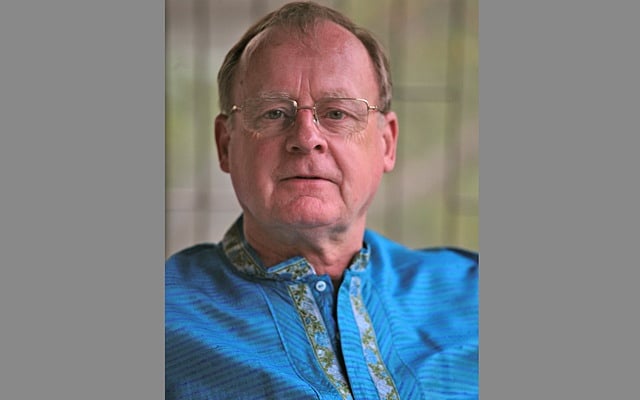
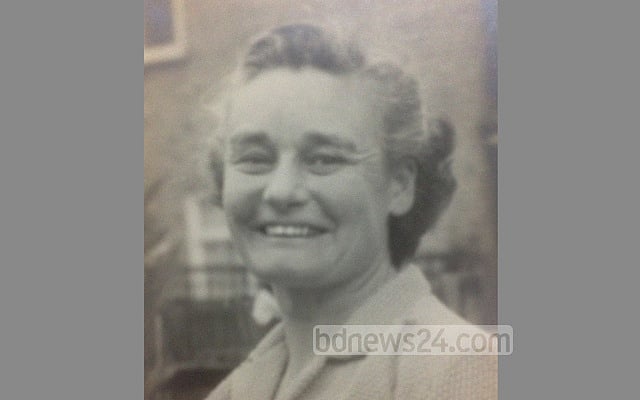
It is his 26th, thus far, in Bangladesh. He had spent most of the day rather “quietly”, he said.
But the main celebration, perhaps, is yet to begin. After our interview he would be on his way to a birthday dinner thrown by his house helper at her home.
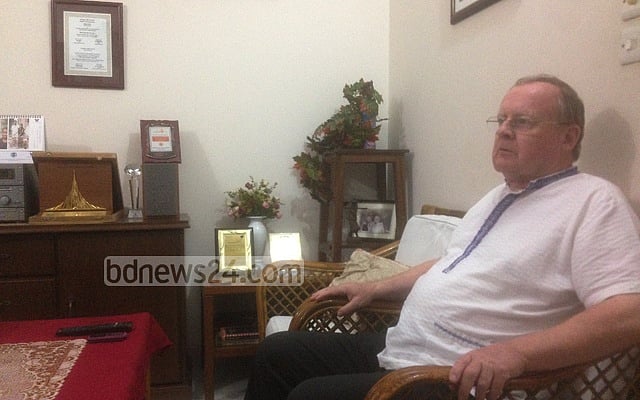
“She has been helping me for 15 years,” he said. “Before her it was her mother.” Her son’s photo hangs on his wall.
In 2012, the Englishman was officially honoured as a ‘friend of Bangladesh’ in recognition of his role during the Liberation War.
But Julian Bhai, as he is known to so many, said he had never imagined such a day would come.
Within nine months a new country was born and Julian Francis would forever be tied to it. He would move there to live a life beyond and apart from that of a usual ‘Bideshi’.
After all, he has known the country since its remarkably bloody birth. A gruelling road journey from Kolkata to Dhaka in January of 1972 ended with a meeting with the nation’s father, Sheikh Mujibur Rahman.
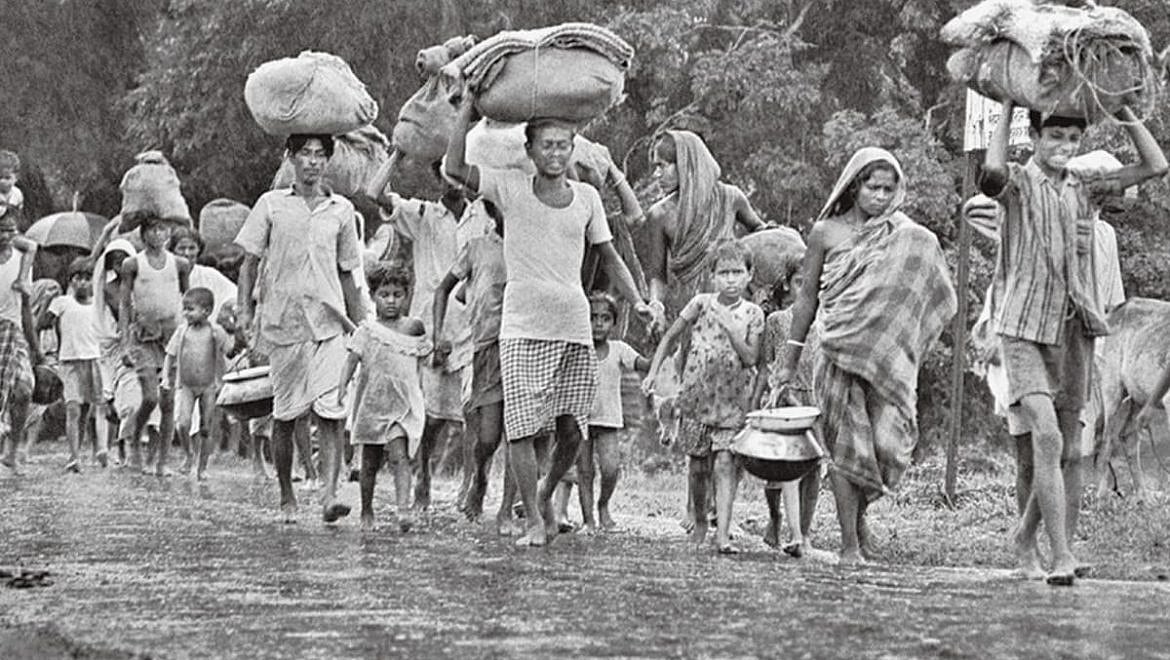
The young volunteer had moved past refugees on foot, torn down bridges and culverts. What struck him most were the “blank faces” people wore as they returned to their charred homeland.
Bangabandhu, in his characteristic booming voice, had asked him about the camps. As he spoke, Francis found himself in tears. Bangabandhu had then put his arms around him.
In a few years, Francis would be sitting before a TV set in Delhi, and hear of Bangabandhu’s brutal assassination, which also left most of his family dead.
He grew up in post-blitz London, and people spoke little about the wars they had endured. But 45 years later, the images from the refugee camps returned as “violent nightmares”.
“For an entire month I had the same dream. I saw myself on the muddy ground of the refugee camps, holding a dead child. I would wake up screaming. It felt embarrassing and I didn’t want to tell anyone.”
For a man who urged people to respond to the needs of others, he seemed ill at ease sharing his.
Times of war
Francis began aid work early.
His mother joined the work to raise money for Oxfam aid efforts. Francis and his friend would wash their neighbours’ cars and the money they collected would be sent to the charity.
His first connections to South Asia were also made through his mother.
“Past generations [of my family] have come here as either missionaries or businessmen. But it was my mother, Ursula Matthews, who really influenced me,” he said. “Her father died in the First World War, and she and her siblings were cared for by their uncles.”
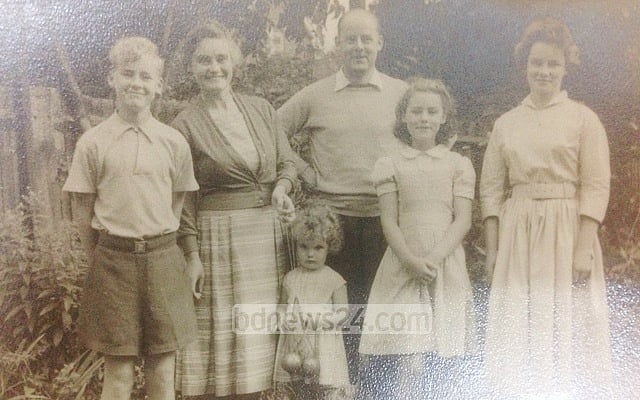
An old photo of the Francis family in England.
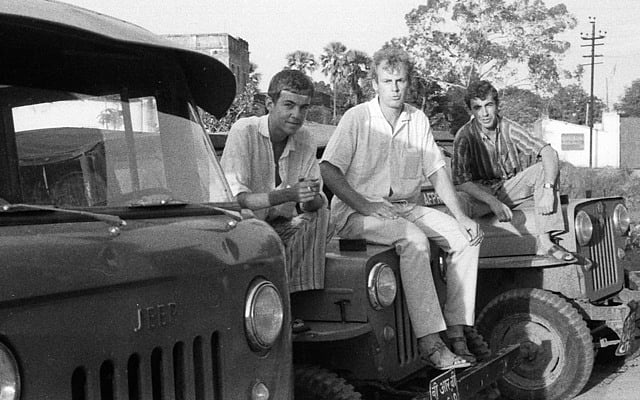
Though 2017 marks his 50th year in Asia, Francis was only 22 when he came to India as an agriculture consultant to work in Bihar on an Oxfam project that allocated land to Harijans, or the untouchable community.
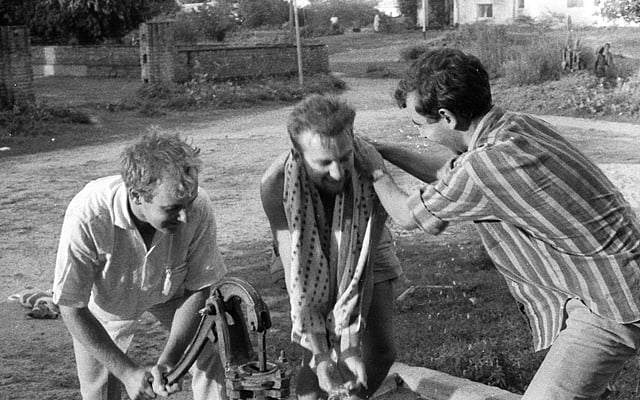
In 1971, he was in Bihar working in a project that allocated land to ‘Harijan’ or the untouchable community. As an Oxfam volunteer who specialised on agriculture, he set up wells, schools and advised the community on crops.
The work “needed time” so he had extended his two-year contract to a third year when war broke out in East Pakistan.
“I was in the district town of Gaya. I was listening to the radio when parts of Sheikh Mujib's Mar 7 speech on the BBC were broadcast.”
“I quickly went downstairs to where Bengalis lived in a community. One of them ran a tea store. They were all saying how independence was now inevitable.”
There were Oxfam-run hospitals along the border near East Pakistan. Within a few days, the officials there began reporting to the centre about the thousands who had crossed the border and passed by their stations.
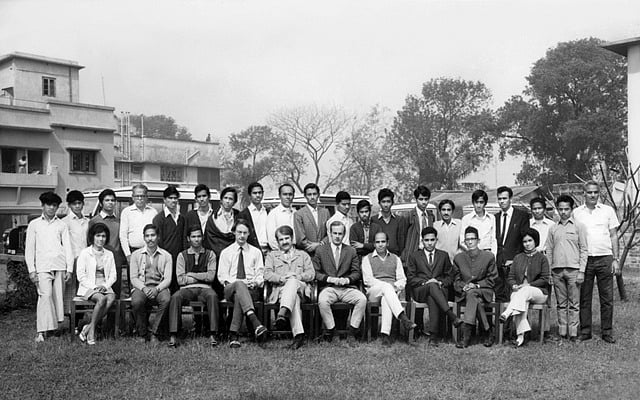
Oxfam's Kolkata team in 1971. Photo: Courtesy of Julian Francis
"We sent them back a telegram saying 50,000 had crossed at that one point along the border in a day. They thought the telegram operator had mistakenly added an extra zero.”
In the months that followed, Oxfam would play a huge role in providing succour for the 10 million violently displaced and living in refugee camps in West Bengal and other Indian states.
Of them, between five and ten percent, according to Francis, perished.
“There were times we did not have enough wood to cremate the dead. There weren’t enough people to dig graves. So one day I started digging myself. You had to do something about the bodies.
“I kept digging for six hours before an army personnel came and took over.”
Fading harmony
Francis moved back to England in the mid-80s with the Bengali wife he married right after the 1971 war.
“But I soon found that all the work I was qualified for was back here.”
The decision to come to Bangladesh in 1983, as an expert for Canadian initiative CUSO, had caused the couple with two sons to split.
Since then he has worked as a consultant for a number of aid and agricultural organisations. He also spends time speaking to families of disabled children.
“I don’t have a PhD. But I am QBE, that is Qualified By Experience."
Beside Francis is one of just two foreign friends of Liberation War still living in Bangladesh. But being an expatriate in Bangladesh is far from simple nowadays.
“I always told my friends that the communal situation in Bangladesh was better than in India,” said Francis.
When the conflict first broke out, people assumed only the Hindus would flee but they were only 65 percent of the refugees, said Francis.
The one positive aspect of the camps was seeing how Hindus and Muslims supported each other, he said.
“As Ramadan came along, the Hindus tried to convince the Muslims not to fast. You must eat, they said, because you are weak and must keep your strength, and we know the Koran allows the sick to refrain from fasting. During Puja, Muslims would come up with treats for Hindus.”
But the rise of militancy and the government’s recent concessions to Islamist hardline groups, including the recognition of Qawmi madrassa degrees, worries him. And it has even affected his friends’ circle.
And then there was the Gulshan attack.
“I still think about what I would have said to the gunmen if I had been there. Would I have brought up the actual teachings of the Koran? … I don’t know.”
A framed photo in his dining room shows Francis at a dinner party with one of the victims of the attack.
And yet Francis still hopes to become a citizen of Bangladesh. Perhaps because he remembers the hope the country knew when it was young.
“I remember it was February of 1972. I was working in the Oxfam office in Kolkata when the office boy told me there was a crowd gathered outside. I thought they had come to complain.
“When I went out I saw close to 500 people. They had come from the camp at Digberia to say goodbye. It was Feb 21. They explained to me they had waited to return to their homes on this special day.
“But they had actually travelled in the opposite direction of the border to thank us,” he said, smiling. “That was when I first learned about Ekushey.”













