Published : 29 Aug 2019, 10:00 PM
Updated : 08 Apr 2022, 02:21 PM


DCs, superintendents of police and other district-level top officials used to keep their families with them and their children used to study in the local schools of those areas earlier, he said in an event in Dhaka on Thursday.
“They took care of schooling. Now their children are studying in Dhaka. And they are not eager to take care of the schools in their areas,” he said, adding that he asked his office to make a list.
“If they do not keep their families with them, they do not need to be posted there. If we find posts in Dhaka empty for them, we can deploy them here. Otherwise, they can leave (their job),” he said, pointing to the executive engineers of the LGED.
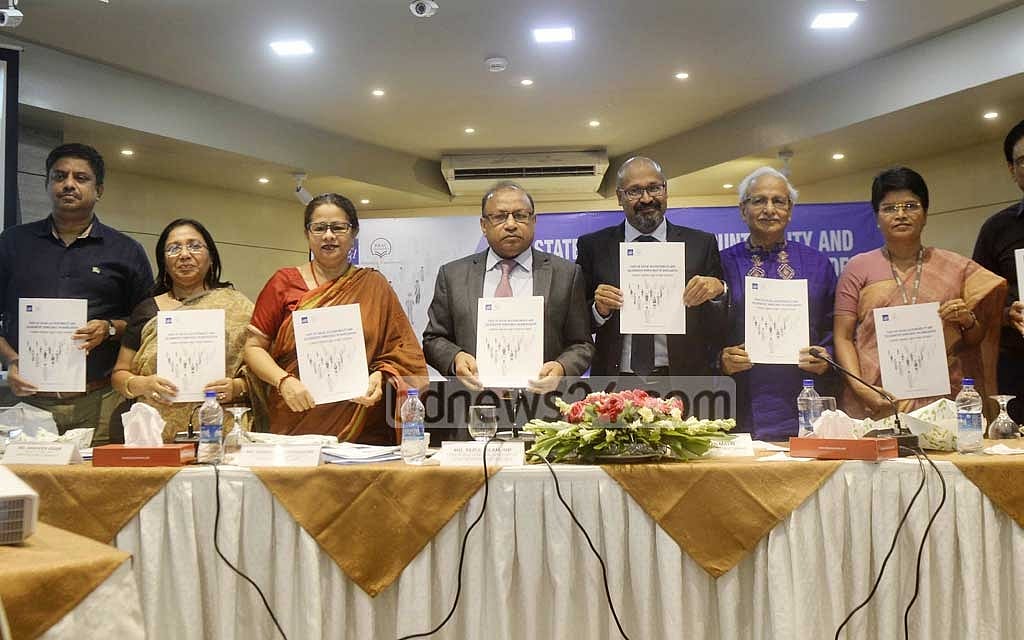
The minister was addressing a programme marking the launch of a study report titled “State of Social Accountability and Deliberative Democracy in Bangladesh: Current Dynamics and Future Pathway” of BRAC University in Dhaka on Thursday.
Rasheda K Chowdhury, executive director of Campaign for Popular Education and former caretaker government adviser, Shaheen Anam, executive director of Manusher Jonno Foundation, Dr Badiul Alam Majumder, country director of Hunger Project, and Anwarul Haq, Social Development Adviser of DFID, also spoke at the programme.
Dr Mirza M Hassan, senior research fellow and head of Governance and Politics Cluster, BRAC Institute of Governance and Development (BIGD), presented the study in the event moderated by Dr Imran Matin, executive director of BIGD.
The report highlighted that the local government bodies at the union level are dysfunctional unless they are nurtured by the NGOs.
The report mentioned some reasons behind this: their financial and other activities are not transparent, they maintain mutually-beneficial links with elites, relatives, and supporters and followers using public resource and they get involved in leakages of funds and materials related to development projects and social protection services.
But once functional, citizens are eager to take the services from the local government bodies.
To maintain control, according to the report, Union Parishad leaders tend to control and manipulate the forums and select their favoured people in different committees including school managing committee.
The minister said 112 services are mandated for the Union Parishad office.
“In many cases, we’ve found that chairmen do not go to the office regularly and people suffer. What methodology do you have to ensure their office presence?” he asked the guests who included NGO representatives working on local government issues.
He said he also found that staff of some municipalities do not get salaries regularly.
“We have announced a plan not to allow those mayors to go abroad on tour or programmes where employees are not getting salaries. Then we observed that the trend is changing,” he said.