Lawyers fire verbal salvoes at ICT
Jamaat-e-Islami leader Delwar Hossain Sayedee's defence could barely get through five questions in one hour after it began cross-examination of journalist Abed Khan on Sunday Updates
bdnews24.com News Service
bdnews24.com
Published :
04 Mar 2012, 08:49 AM
Updated :
09 Aug 2022, 03:30 PM
Dhaka, Mar 4 (bdnews24.com) — Jamaat-e-Islami leader Delwar Hossain Sayedee's defence could barely get through five questions in one hour after it began cross-examination of journalist Abed Khan at the war crimes tribunal on Sunday.
By the end of the day, however, Khan's cross-examination came to a close as the judges were adamant in getting it over with.
The defence resumed its cross-examination of the former editor of Samokal and Kaler Kantho, who has been a journalist for almost 50 years, in the case against Jamaat-e-Islami executive council member Sayedee around 11am on Monday.
But the cross-examination faced numerous objections from the prosecution which broke down into a shouting match at one point. Things, however, cooled down subsequently at the intervention of the tribunal's chairman, Justice Nizamul Huq.
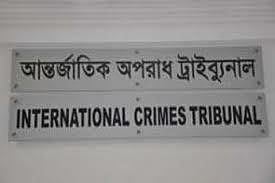
The International Crimes Tribunal, set up to deal with crimes against humanity during the 1971 Liberation War, indicted Sayedee on 20 counts of such crimes on Oct 3. Sayedee's charges include murder, rape, arson and loot.
The courtroom erupted centring defence counsel Mizanul Islam's question regarding a tripartite agreement between Bangladesh, Pakistan and India in March 1974.
This agreement between foreign ministers of Bangladesh, India and foreign and defence state ministers of Pakistan brought about the pardon and repatriation of almost 200 war criminals.
Although Abed Khan agreed that the agreement facilitated repatriation of the war criminals, it did not provide them with a pardon.
Counsel Islam suggested that he would rather read the agreement to the witness, to which prosecutor Syed Haider Ali said the contents of a historical document could not be verified by the witness.
The defence was of the opinion that since witness Abed Khan had embarked on a historical lecture during his deposition, he had opened the can of worms and so needed to be questioned regarding those matters.
Defence counsel M Tajul Islam became agitated and exchanged heated words with prosecutor Haider Ali. The chief prosecutor Ghulam Arieff Tipoo also joined in but his deliberations were hardly audible over the uproar.
Mizanul Islam kept repeating, "Very unfortunate my lord, very unfortunate."
BNP MP Salauddin Quader Chowdhury's chief counsel Ahsanul Haq had stepped out of reasonably quiet courtroom for a short while and returned only when the shouting match had peaked.
Haq stood in the middle of the aisle staring at his shouting colleagues, before he managed to bow and find a seat.
Tribunal chief Justice Huq intervened to say that other than the conducting lawyer or the chief prosecutor, no one else should make any sound.
The defence faced some difficulty with the second question to Abed Khan, when Mizanul Islam asked him whether he knew that although the Bangladeshi constitution demarcated its borders, the Indian constitution did not and in fact in defining India, a union of states, under 1.3.c of its constitution, said that its territories shall include 'such other territories as may be acquired', which the defence was about to suggest was the reason enough for raising the suspicion of right-wing parties in Bangladesh.
The tribunal, however, did not allow the question and said that the defence was free to ask question regarding the Jamaat-e-Islami and such relevant issues. But the Indian constitution had hardly anything to do with Delwar Hossain Sayedee, the accused.
The tribunal on Sunday deferred further proceedings regarding a plea to allow Jamaat guru Ghulam Azam, currently at the Bangabandhu Sheikh Mujib Medical University, to have home-cooked food. The tribunal will take it up on Monday.
The other items of the day, charge hearing against Abdul Quader Molla and further hearing of Salauddin Quader Chowdhury's petitions were, were also adjourned until Monday.
The tribunal chief called forth prosecutor Haider Ali and inquired about his other witnesses. The prosecutor said he would produce one by Wednesday, but could not specify a name as the investigation officer of the case was out of Dhaka.
FIRST CASE TO TRIAL
Sayedee's is the first case to proceed to the trial stage at the tribunal. The prosecution on Sept 4 proposed framing of charges against him on 31 counts for crimes against humanity and genocide.
On Oct 3, the tribunal indicted Sayedee on 20 counts.
The tribunal also sent Jamaat's former chief Ghulam Azam to jail on Jan 11. His indictment hearing began on Feb 15 and the tribunal rejected his second bail petition on Thursday.
Besides Sayedee, Jamaat chief Matiur Rahman Nizami, secretary general Ali Ahsan Mohammad Mujaheed and assistant secretaries general Mohammad Kamaruzzaman and Abdul Quader Molla, and Bangladesh Nationalist Party's standing committee member and MP Salauddin Quader Chowdhury have been detained on war crimes charges.
The tribunal granted conditional bail to former BNP lawmaker and minister Abdul Alim on Mar 31 last year. The bail was extended further on Jan 16, ordering him to be present in the court on Mar 15 when the prosecution has been directed to submit formal charges against the BNP leader.
bdnews24.com/ta/bd/2006h