


Published : 29 Apr 2013, 07:20 PM
Updated : 23 Apr 2022, 05:07 PM


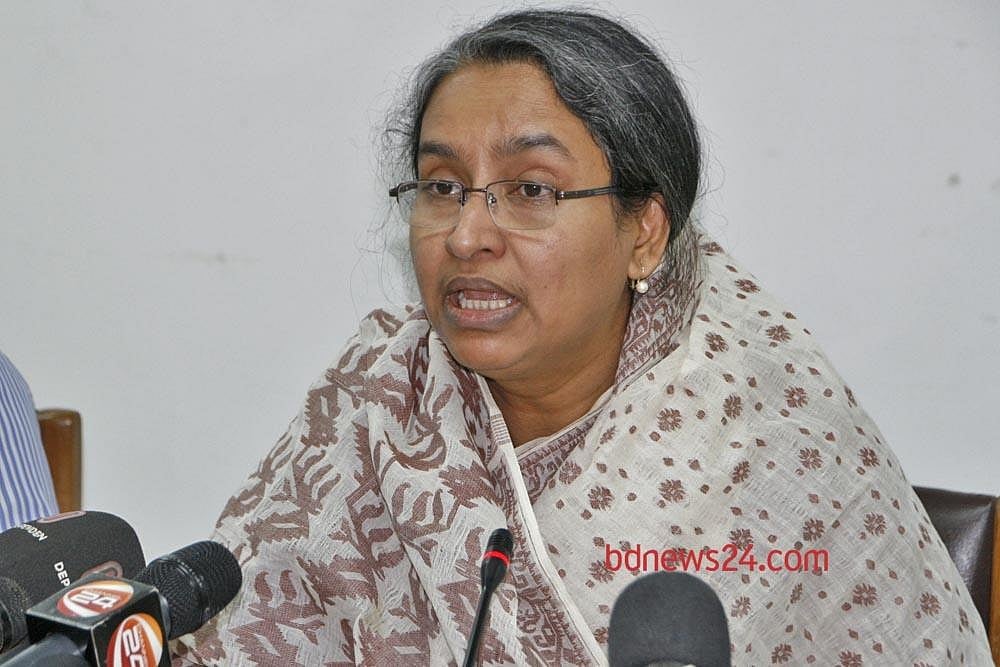
She defended Bangladesh’s human rights record in Geneva at the Human Rights Council’s second Universal Periodic Review of the member states, according to a Ministry of Foreign Affairs media release.
Moni said her government attached “importance to sensitising the agencies about their human rights obligations in the line of duty”.
The minister responded for three and half an hours to questions from different states concerning Bangladesh’s recent ‘achievements and challenges’ in promoting and protecting human rights.
She emphasised “upholding the rule of law in every sphere of society and safeguarding the rights of the vulnerable and marginalised segments of the population”.
The minister reiterated the government’s ‘unequivocal’ commitment to show ‘zero tolerance’ to attacks against minorities that took place in Ramu, Cox’s Bazar last year and against the Hindu communities during the recent political violence.
The foreign ministry says this is the first time Bangladesh participated with a delegation comprising eminent personalities from the religious and ethnic minority groups in the review process.
Principal of Seema Bihar Ramu Mohathero Seemath Satyapriyo, Bangladesh Hindu Bouddho Chirstian Oikyo Parishod’s Secretary General Rana Dasgupta, and Buddhist Religious Welfare Trust’s Trustee Gyanendriya Chakma are in the delegation longside senior government officials.
The media release said 98 countries spoke during Bangladesh’s session and “commended the significant strides made in ensuring citizens’ civil, political, economic and social rights”.
Members of the Human Rights Council have to undergo a review process of their overall human rights situation every four years.
The minister made a ‘comprehensive’ presentation on her government’s initiatives to improve human rights situation.
She first faced such review in Feb 2009, a month after assuming power.
Referring to that session, she said she had then made a commitment that “Bangladesh would pursue the path of inclusion and that change would come”.
After four years, she said her government made “a significant qualitative change in the normative and institutional framework in the country’s human rights regime”.
She touched upon ‘all the major legislative and policy initiatives’ taken by the current government to ensure human rights in Bangladesh.
The media release said during question-answer session “there seemed to be considerable degree of interest in Bangladesh’s success in combating poverty, reducing child mortality, attaining food security, facing climate change impacts and promoting migrant’s well-being and the rights of persons with disabilities”.
She sought international community’s support ‘to strengthening its democratic, secular, inclusive and pluralistic socio-political fabric in Bangladesh’.
The UN’s universal periodic review is a process which involves a review of the human rights records of all UN member states.
The Bangladesh government submitted its report before the UN in January while National Human Rights Commission (NHRC) and civil society groups have presented two separate reports for the state-driven process under the auspices of the Human Rights Council.
The NHRC Chairman Mizanur Rahman was present during the meeting.
The review provides the opportunity for each state to declare what actions they have taken to improve the human rights situations in their countries and to fulfill their human rights obligations.







