


Published : 31 Aug 2022, 03:59 AM
Updated : 31 Aug 2022, 03:59 AM


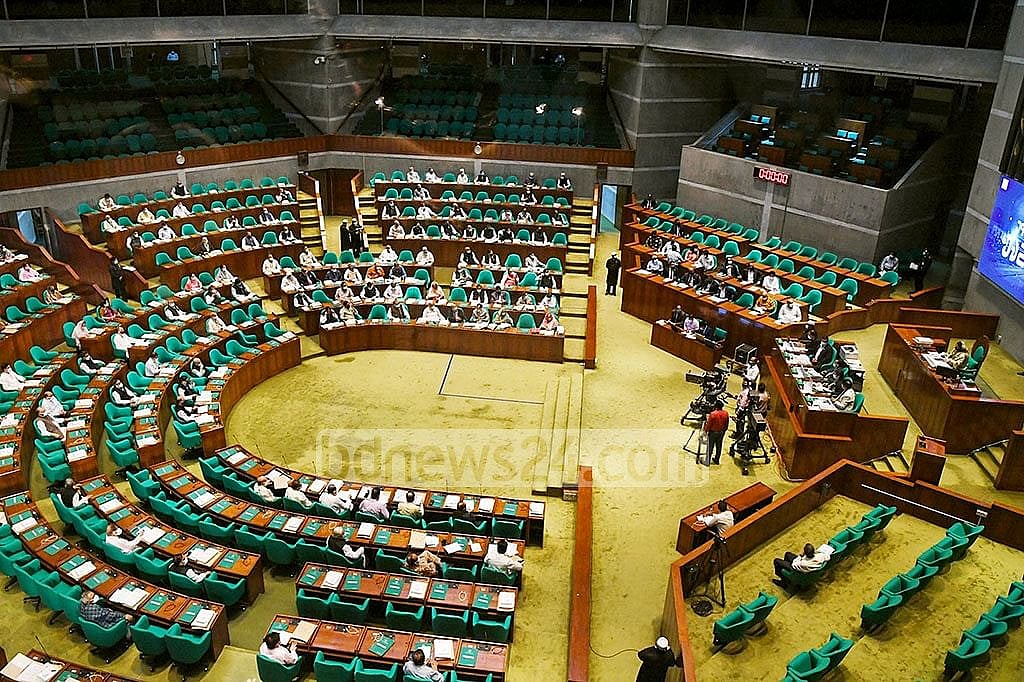
Opposition MPs have torn into the government over a hike in prices of essential commodities, especially fuel oil.
State Minister for Power, Energy and Mineral Resources Nasrul Hamid defended the decision to raise fuel oil prices amid a global crisis due to the Russia-Ukraine war, saying the opposition was raising the same allegations over and over again.
After the government raised fuel oil prices by as much as 52 percent earlier in August, prices of all commodities shot up further amid rising inflation.
Muzibul Haque Chunnu, the Jatiya Party MP who proposed a discussion on the issue, alleged the government had “a lack of interest” in signing long-term deals for fuel oil supply, which he
said has led to the ongoing energy crisis.
“It rather favoured imports from the spot market. There must’ve been some vested interest behind this move. And power plants were built without ensuring the source of fuel,” he said, criticising the government for lowering the fuel oil prices by Tk 5 a litre only.
Chunnu said Bangladesh Petroleum Corporation is suffering from a crisis of funds because it deposited Tk 252.64 billion in banks that are in trouble. “The banks don’t have capital after lending the money. BPC won’t be able to cash the funds if it wants to.”
The BNP’s Harunur Rashid also questioned the deposition of the BPC’s in banks that are “on way to bankruptcy”.
Rumeen Farhana of the BNP said Bangladesh had been dreaming to become a prosperous nation like Singapore, but it is now struggling to avert a crisis like the one in Sri Lanka.
“The question is - is the crisis upon us for wrong policymaking, or is it the inevitable result of looting,” she said. “When a party remains in power without public support, it needs to create oligarchs to cling to power. This is exactly what has happened to Bangladesh.”
Shamim Haider Patwary of the Jatiya Party said the government should have been frugal in spending on development projects. “We spent, but did not think about what we will get in return.”
His party colleague Kazi Feroz Rashid alleged rogue businesses made extra profits of billions of takas taking advantage of the price rises, and many in the government were “involved” in the scheme. “People are really suffering when they go to the market, but our ministers do not admit it.”
Workers Party President Rashed Khan Menon blamed “the rich and bureaucrats at the centre of power” for the situation. “It’s right global factors are affecting the prices. But we need to examine whether our import-based energy policy is a correct one.”
Hasanul Haq Inu, president of the Jatiya Samajtantrik Dal, criticised the ministers for their “irresponsible” comments when Prime Minister Sheikh Hasina herself sympathised with the people and urged them to have patience.
Inu, a leader of the ruling Awami League-led 14-Party Alliance, apologised to the people for their suffering.
Jatiya Party Chairman GM Quader said the price rises indicated the “government’s failure, mismanagement and corruption”.
State Minister Nasrul said the government adjusted the fuel oil prices after the prices in the international market fell to keep the domestic prices at a “tolerable level”. “Had we adjusted the domestic prices when the global prices were high, it would’ve been a Tk 60 rise.”
He also criticised the Jatiya Party and the BNP for their “failure” to ensure power supply. “Systems loss led to 44 percent less power production during the Jatiya Party’s tenure while it was 22 percent during the BNP government. Now it has come down to 7 percent.”
“I expected constructive criticism from the opposition, but that hasn’t happened. They are still complaining about captive power, rental power and capacity charge,” he said, adding that businesses would not have invested in the power plants had there been no capacity charge.
“It can’t be that you hire a power plant for 10 to 20 years but won’t pay the daily expenses.”
Nasrul said the BPC did make a profit of Tk 480 billion, but the government took Tk 450 billion from it to run the country.
Awami League MPs, including former ministers Faruk Khan and Tofail Ahmed, backed Nasrul. They mentioned inflation and the energy crisis in the developed nations for Nasrul’s defence.
“Considering the situation in those countries, Bangladesh is in a strong position in South Asia,” said Tofail.







