


Published : 26 Aug 2022, 12:24 AM
Updated : 26 Aug 2022, 12:24 AM


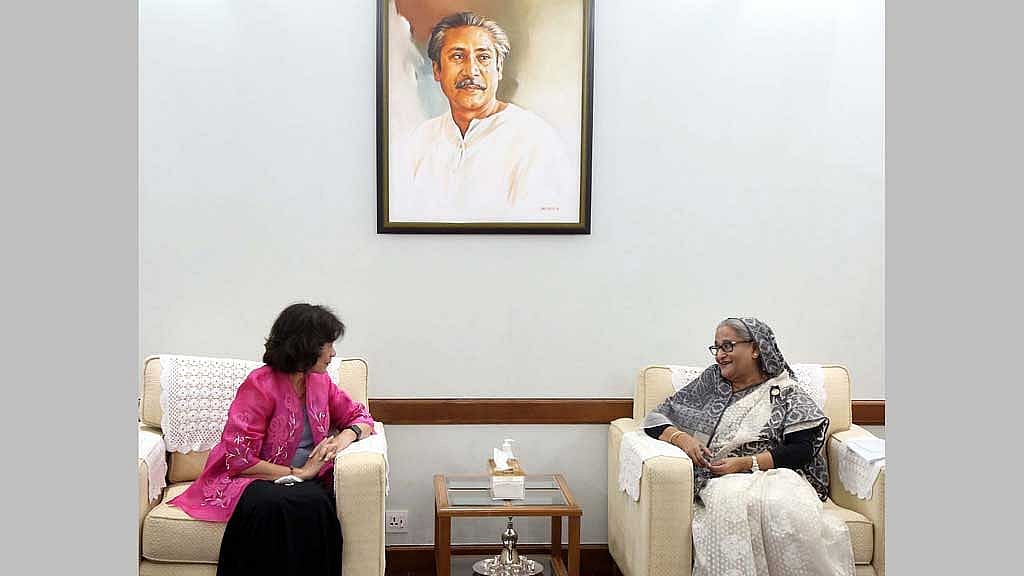
Five years after the Rohingya people were forcibly displaced from their homes in Rakhine, Prime Minister Sheikh Hasina has asked international organisations how long Bangladesh must provide hospitality to the refugees.
"Myanmar should allow international organisations to work in the Rakhine state," Hasina said to United Nations Secretary-General's Special Envoy for Myanmar Noeleen Heyzer, who paid a courtesy visit on Thursday.
"We're pursuing this with Myanmar and also discussed it. But, no response has yet come. We want to solve it. How long we can host this huge number of people?" Prime Minister's Press Secretary Ihsanul Karim later quoted her as saying.
With Myanmar unresponsive about their repatriation to Myanmar, some from the refugees have engaged in crimes like human trafficking and drug abuse, she said. “They are also destroying the environment in the region.”
Recalling the Chittagong Hill Tracts peace accord, Hasina said some 62,000 refugees were sent home from India after signing the agreement in 1997.
The UN special envoy Heyzer said she had visited the Rohingya camps in Cox's Bazar and had talks with them.
It was now essential to create a suitable atmosphere to ensure their dignified return to Myanmar, she said.
Appreciating Bangladesh for its management of the forcibly-displaced people, Heyzer said Bangladesh needs a lot of support in dealing with the issue.
She called on the military-run Myanmar government to look for a solution to the issue during her visit there.
Heyzer also stressed making the Rohingya crisis an agenda in the ASEAN Foreign Ministers’ Meeting while moving for an ASEAN-Bangladesh initiative.
“INVOLVE ROHINGYA IN DISCUSSIONS”
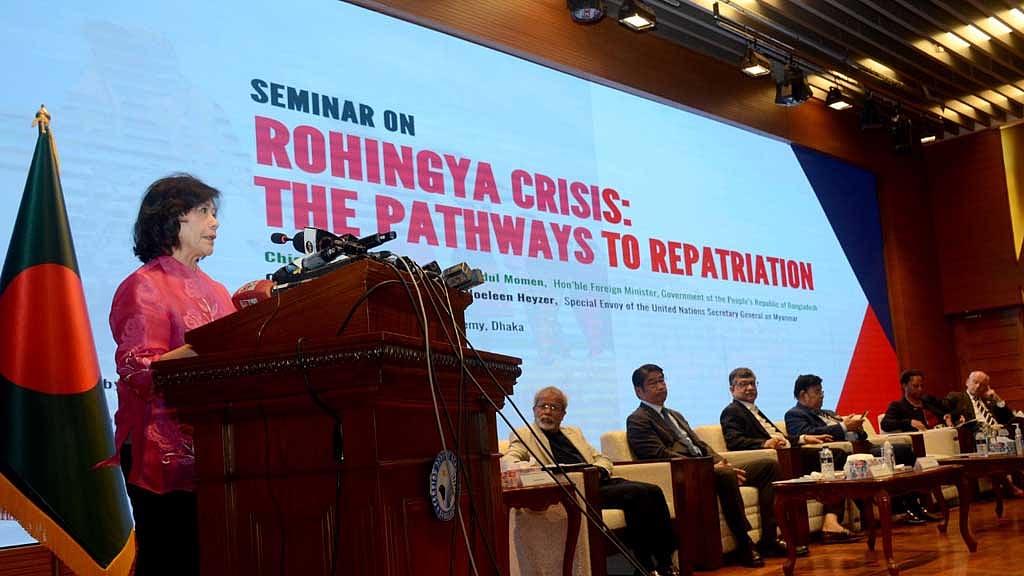
While speaking at Dhaka’s Foreign Service Academy marking five years of Rohingya influx, the UN special envoy advised involving representatives from the refugee community to attend to their needs and settle them down.
She also called on the international humanitarian community to unite in their efforts to work on the “fundamental aspects” of the crisis.
“In the context of grave human right violations and unmet protection needs in Myanmar, finding solutions to this crisis must include the meaningful participation of those affected, especially Rohingya refugees.”
“The Rohingya made it clear they want to be engaged directly and meaningfully. They feel that their exclusion from discussions and decisions about their future has entrenched their marginalisation,” Heyzer said.
She mentioned that the refugees in the camps shared with her direct accounts of the horrendous ordeals they endured as they were uprooted from their homes.
They repeatedly expressed their desire to return to Myanmar in safety and dignity, and their messages were very clear – to be able to go back to their homes, to have freedom of movement and rights to citizenship.”
Heyzer said: "Generations could be affected if we fail in our obligation to protect the Rohingya and all the people of Myanmar, their fundamental rights and dignity.”
She stressed it was ultimately Myanmar’s responsibility to “establish conducive conditions for the voluntary, safe, dignified and sustainable return” of the refugees.
Foreign Minister AK Abdul Momen spoke about Myanmar government’s agreement with Bangladesh to repatriate the Rohingya within two years in 2017.
“But their failure to live up to the promise meant not even one of the Rohingya was able to go back,” he said.
He called on the international community to push for visible initiatives in Rakhine State.











