


Published : 31 Jul 2019, 12:29 AM
Updated : 17 Oct 2022, 11:43 AM


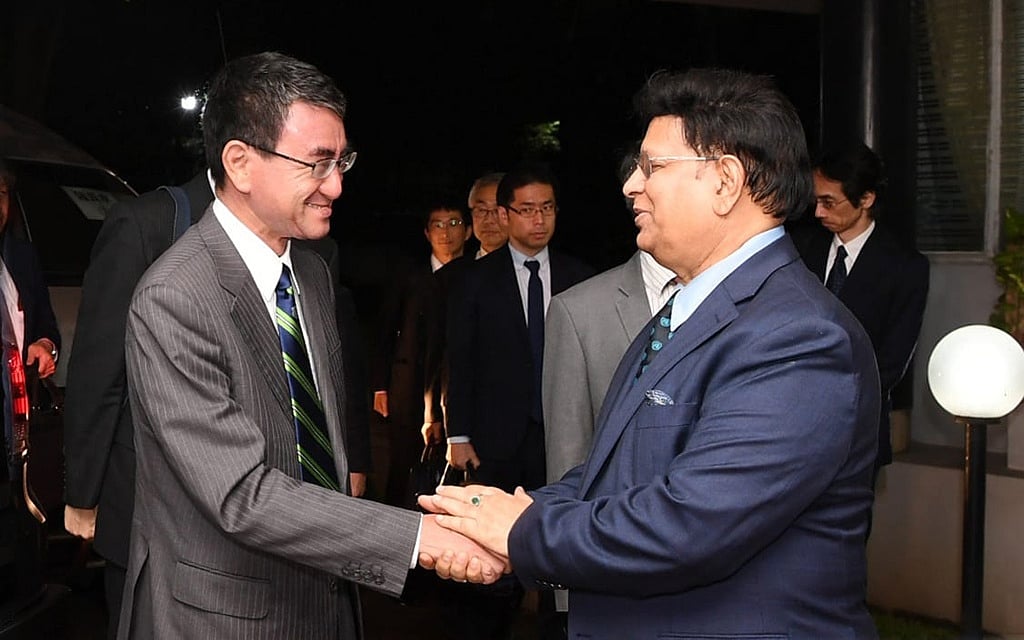
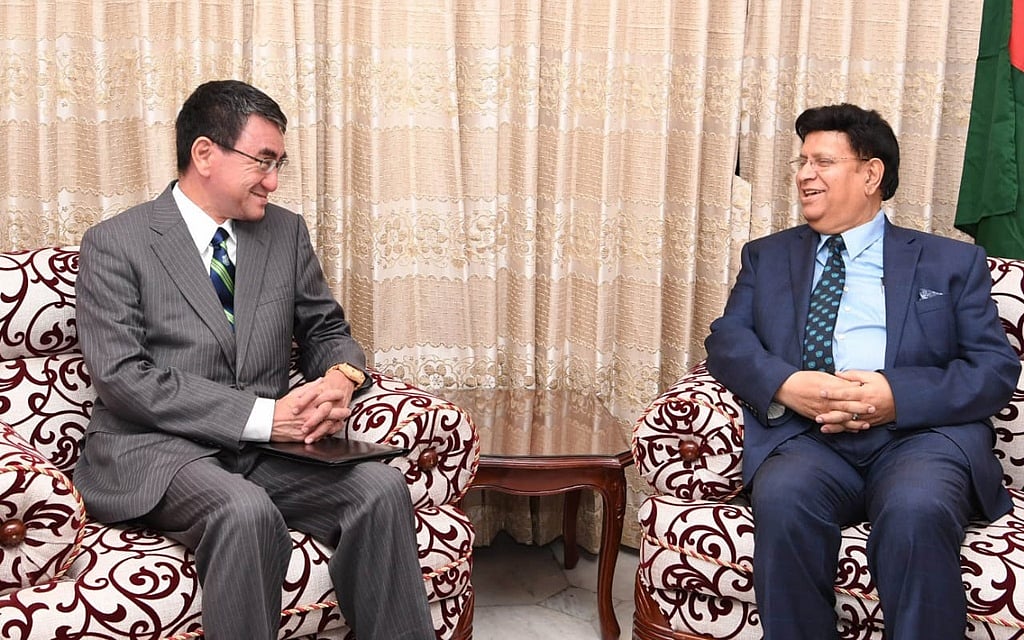
Jun Saito said his minister Taro Kono clearly mentioned that position during the bilateral talks with his counterpart AK Abdul Momen in Dhaka on Tuesday.
“Yes we don’t want prolongation of the situation. We do hope that the repatriation will be expedited. And Mr Kono wants to play certain role in expediting the situation,” Saito, deputy press secretary at the Japanese foreign ministry, told a group of journalists after the meeting.
This is the Japan foreign minister’s third visit to Bangladesh and second with particular focus on Rohingya after the massive exodus in Aug 2017.
Foreign Minister Momen said Japan proposed to hold talks between Bangladesh and Myanmar in Tokyo and that Kono will also convey Dhaka’s concerns to Myanmar during his visit on Wednesday.
The Rohingya crisis is being seen as a major security issue if remained unresolved for long as Momen used to say there might have pockets of radicalisation that can derail the development aspirations of the region.
Kono arrived in Dhaka on Monday night on an official visit to hold bilateral meeting and meet Rohingya people sheltered in Cox’s Bazar.
Soon after his arrival, like previous visits, he went to the site of the Holey Artisan Bakery where seven Japanese nationals were killed along with 20 people during the unprecedented terrorist attack in July 2016.
He visited the Rohingya camps on Tuesday and talked with those people who were forced to flee Rakhine State and take shelter in Cox’s Bazar.
Before the bilateral meeting, he visited the Bangabandhu Memorial Museum in Dhanmondi to pay homage to Father of the Nation Bagabandhu Sheikh Mujibur Rahman.
During the visit in Cox’s Bazar, the spokesperson Saito said Kono observed “great improvements” on the ground.
In the bilateral meeting, they discussed four aspects of the relations including security matters, economy and economic cooperation and human to human exchange and counterterrorism and security of the aid workers.
At present, 270 companies are working in Bangladesh which is almost twice the number five years ago.
Bangladesh has been the third largest recipient of Japanese yen loan in 2018, and he said in 2019 Bangladesh will be the second largest after India.
Both the ministers also welcomed the decision to start direct flight from Dhaka to Tokyo by Biman Bangladesh Airlines in December.
They also discussed the celebration of 50 years of diplomatic relations in 2022.
Asked about the mediation which the Bangladesh foreign minister had spoken of, the spokesperson said it’s only a “preliminary” proposal he “just floated” in the meeting.
“He did not use the specific word mediation. He spoke about dialogue that Japan can promote between the countries,” he said.
Saito said Japan has been telling Myanmar to demonstrate progress in a “visible way”.
“Every time he (Kono) comes in this region he visits both Bangladesh and Myanmar,” he said.
Asked what Japan is actually doing to resolve crisis, and how, and, whether it has any business interest since it has investments in Myanmar, the spokesperson said the Japanese government does not face any pressure from the private companies.
“Japanese companies themselves segregate this highly political issue of displaced people and their business."
But he explained why Japan wants to engage in the process of resolving the crisis.
“Bangladesh and Japan are very good friends. We have traditional ties. We both are countries located in Asia. To help a friend is totally natural.”
Saito said they are also working with “like-minded” countries to push in the way of resolving the crisis.
He said their efforts “cannot be reflected by any vote… cannot be quantified. I personally think that the foreign minister visiting the camp twice in three years already shows a very strong commitment".
But he said he understands that “there is no brilliant initiative or shining proposal” from the Japan side to end the crisis.
But Japan and the foreign minister, Kono, will remain involved and be trying to facilitate and expedite the dialogue, he said.
This is a bilateral issue which “needs involvement and engagement and commitment of international society".













