Published : 08 Mar 2019, 02:01 AM
Updated : 08 Apr 2022, 02:04 PM


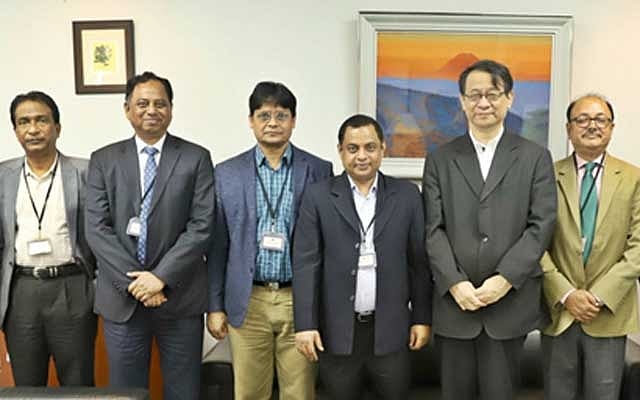
Ambassador Hiroyasu Izumi signed ‘Grant Contracts’ for Grass-roots Human Security Projects (GGHSP) at the Embassy of Japan with the representatives of these NGOs on Thursday, the embassy said.
Md Golam Mostofa, executive director of Community Initiative Society (CIS), Md Feroz Salah Uddin, secretary general of Bangladesh Red Crescent Society (BDRCS), and Khondkar Anisur Rahman, executive officer of PRISM Bangladesh Foundation, led their organisations.
CIS was awarded the grant for “The Project for Procurement of medical equipment to support displaced people from Myanmar and host community in Cox’s Bazar”.
CIS, in collaboration with Dhaka Community Hospital Trust (DCHT), have constructed a healthcare centre at Camp-15, Jamtoli of Ukhiya in Cox’s Bazar with the aim of providing the refugee community with medical services.
Due to lack of medical equipment, CIS is unable to provide advanced treatments to the patients, especially women and children of the camp area.
Upon receiving the equipment from GGHSP, CIS will be the first of its kind to provide ultra-sonogram, pathology tests and monitor cardiac conditions based inside the camp.
Through this project, about 252,000 people from Camp-15 will be benefitted annually from CIS’s healthcare centre for 24/7 service free of cost, the embassy said.
BDRCS was awarded the grant for “The Project for Construction of the Primary Health Care Clinic in the Camp of Displaced People from Myanmar in Cox’s Bazar” to construct one healthcare centre in Camp 12 at Ukhiya.
BDRCS, in association with Japanese Red Cross Society (JRCS), started delivering medical services to the people from Camp 12, but due to infrastructure and hill slope weakness, the centre is planned to be reconstructed with GGHSP grant while hill slopes will be reinforced with the support of JRCS.
After completion of the construction, BDRCS will be able to serve at least 32,200 patients annually.
PRISM was awarded the grant for its “The Project for Medical Waste Management in Rangpur District” in the Rangpur City Corporation area of Rangpur District.
Even though medical waste management in Bangladesh is a growing concern, no separate focus has been given to address the problem nationally.
PRISM has been working on medical waste management in Bangladesh since 2004, successfully operating 5 plants including in Dhaka South City Corporation.
With the support from Japanese grant, PRISM will install equipment in their 6th medical waste management plant based in Rangpur City Corporation.
Through this project, PRISM can collect 8.62 metric tons medical waste, and sterilise them per day, ensuring safety of all citizens of Rangpur City Corporation area (796,556 people), the embassy said.
Japan has supported 193 NGO projects through its Grant Assistance for Grass-roots Human Security Projects (GGHSP) since 1989 aiming to enhance economic and social human security at the grass-roots level.
The total sum of these GGHSP grants extended to NGOs in Bangladesh to date amounts approximately to $14.95 million.