


Published : 28 Jun 2021, 08:49 PM
Updated : 14 Oct 2022, 06:54 PM


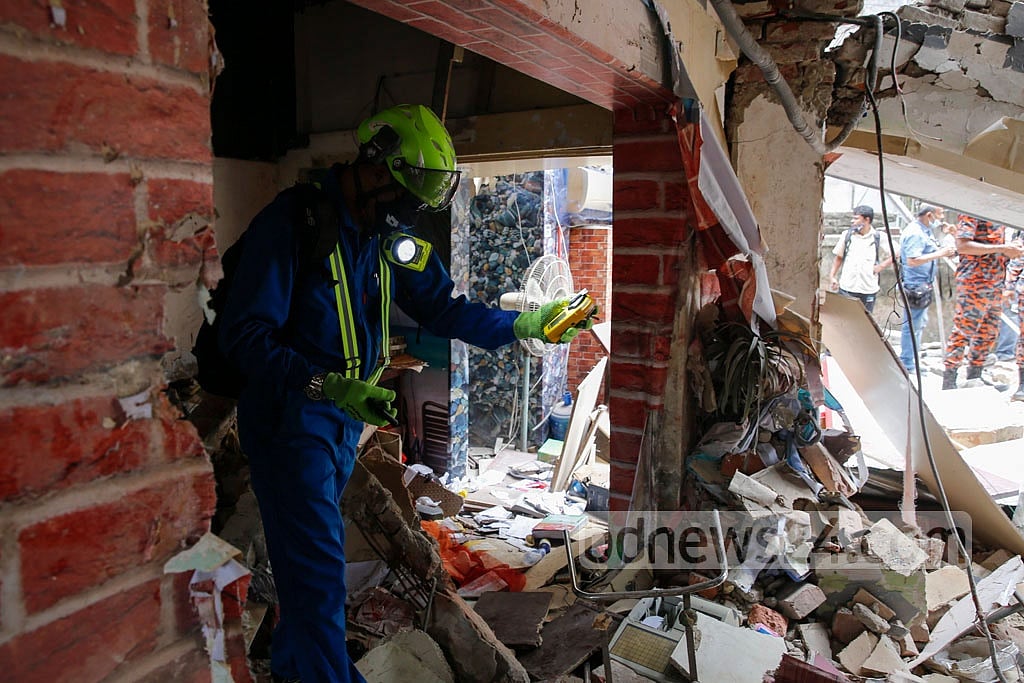
Abul Kalam Azad, chief inspector of explosives, revealed the information after the investigators used gas detector in the building on Monday.
The goal to use the machine was to find out whether natural gas played a role in the explosion. Natural gas and crude oil are mixtures of different hydrocarbons.
Fire Service and Civil Defence also suspects that gas from leaks accumulated in the building, leading to the explosion. The authorities, however, are not ready to jump to a conclusion before the investigation is complete.
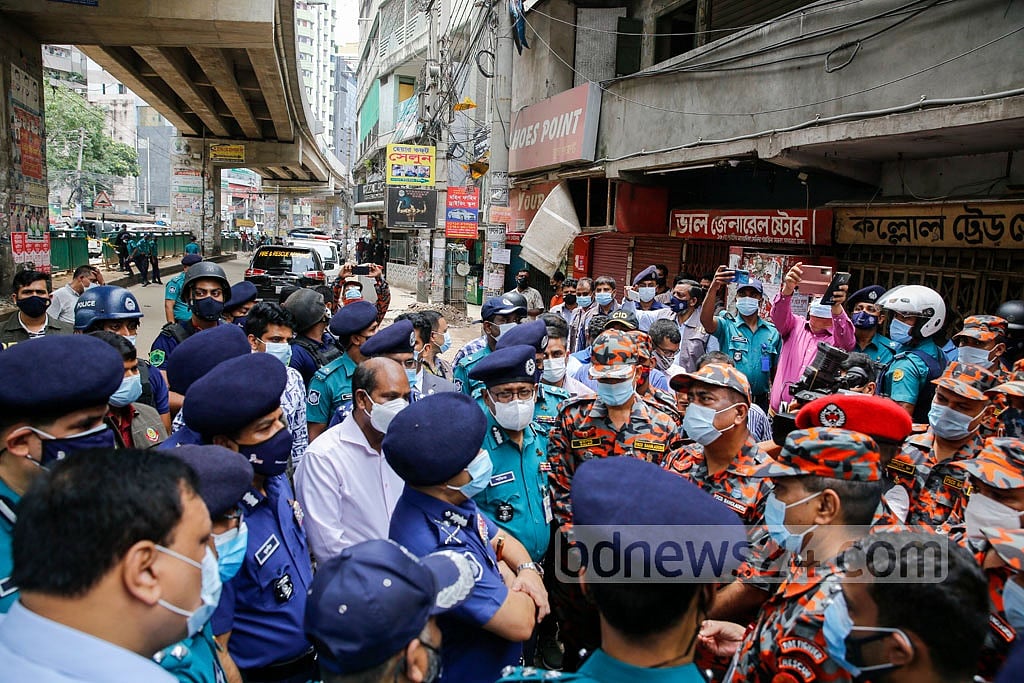
“It can’t be said for sure that the explosion occurred from the gas. It’s not that a leakage in the pipeline must be the cause of the blast,” said Azad, after officials from the Department of Explosives visited the building.
“It cannot be confirmed from the rubble. Everything is connected. One thing is damaged due to another. If an electric circuit catches fire, the nearby cylinders or natural gas lines can also be affected.”
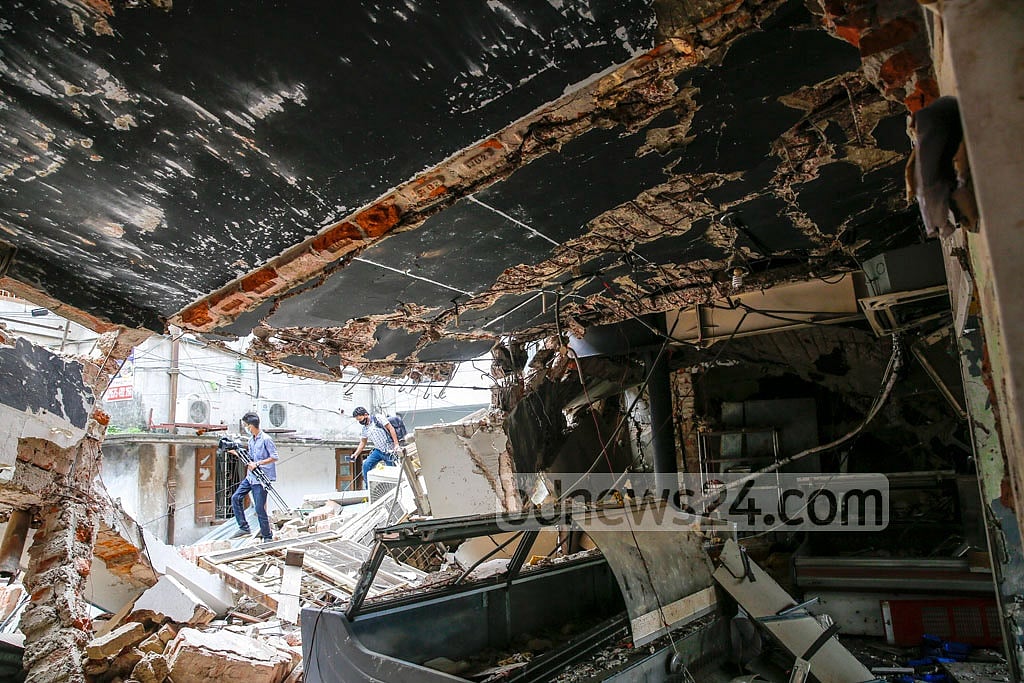
He said it was difficult for them to move in the building because it was extensively damaged. Pieces of concrete flew to the street during the explosion, causing parts of the three-storey building to come down.
Besides its own investigation committee, the Department of Explosives will send its representative to another committee to be formed by the police.
Benazir Ahmed, the inspector general of police, earlier said they do not believe it was a bomb blast or there was a foul play behind the incident. However, the police will use their explosives experts in the investigation.
At least seven people were killed in the incident, which rocked the Wireless Gate area around 7:30pm on Sunday. Hundreds, including many pedestrians and commuters, were treated for their injuries at different hospitals in the capital.













