


Published : 13 Jul 2017, 02:18 AM
Updated : 11 Apr 2022, 09:12 PM


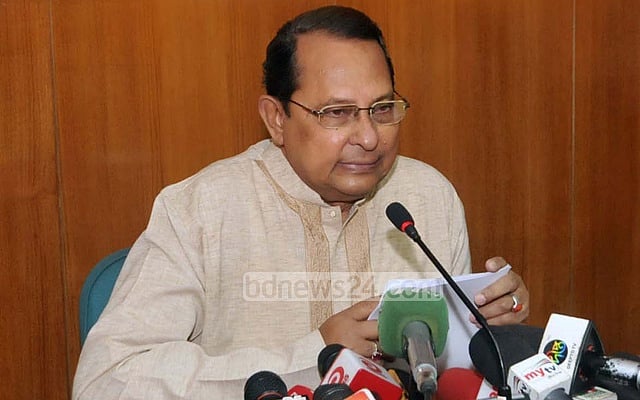
His remarks, amidst calls for the annulment of the provision from different quarters including journalists, came on Wednesday in parliament.
He was responding to a query from Jatiya Party MP Fazlur Rahman.
Several organisations of journalists have been demanding cancellation of Section 57 after several newsmen were sued and some others arrested under this provision in recent times over news reports and Facebook posts.
But the information minister said a ‘very small number’ of journalists have been arrested under Section 57 across the country.
He said there were more than 2,800 newspapers and over 1,800 online portals currently operating in Bangladesh. “We’ll find out how many thousands of journalists are working in these organisations even if we consider 10 journalists work in each of them.
“From that point of view, the number is very small... one or two have been arrested. Also, those arrested have secured bail from court within a couple of days.”
Offences under Section 57 include electronic posts containing information that defame an individual or the state, and cause deterioration of law or hurt religious belief.
They are punishable with jail term from seven to 14 years and maximum Tk 10 million fine.
The ICT Act, passed in 2006, was amended in 2009 and 2013. The last amendment raised the maximum jail term for violation of Section 57 from 10 to 14 years, and described the offences as non-bailable.
Inu on Wednesday said, “This law has been made to ensure safety of the general people, women’s honour, children’s security and the sacredness of the state and the religion, along with the security of the religious programmes. This law is exercised only if something wrong happens.”
He added that the law targeted prevention of misuse of information technology and mass media. “The notion that it applies only to journalists is wrong. This law is for the 160 million people of this country.”
Any regular citizen would be tried under this law if that person uses social media to tarnish anyone’s image, the minister said.
He pointed out that people arrested under Section 57 had secured bail from the High Court. “So calling the offences non-cognisable is wrong. The arrestees are allowed bail until a certain point. All those arrested under this law have been granted bail.”
Inu also said he did not think Section 57 was violating human rights. “The High Court would have ordered its repeal if it was in conflict with the Constitution.”













