


Published : 27 Apr 2021, 02:37 AM
Updated : 14 Oct 2022, 06:33 PM


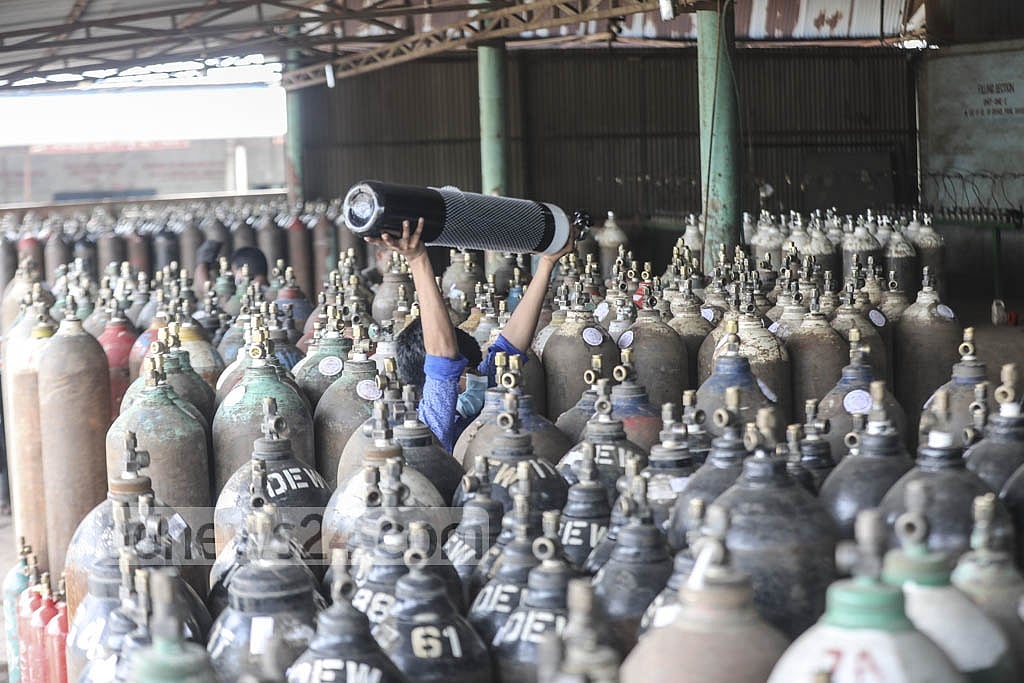
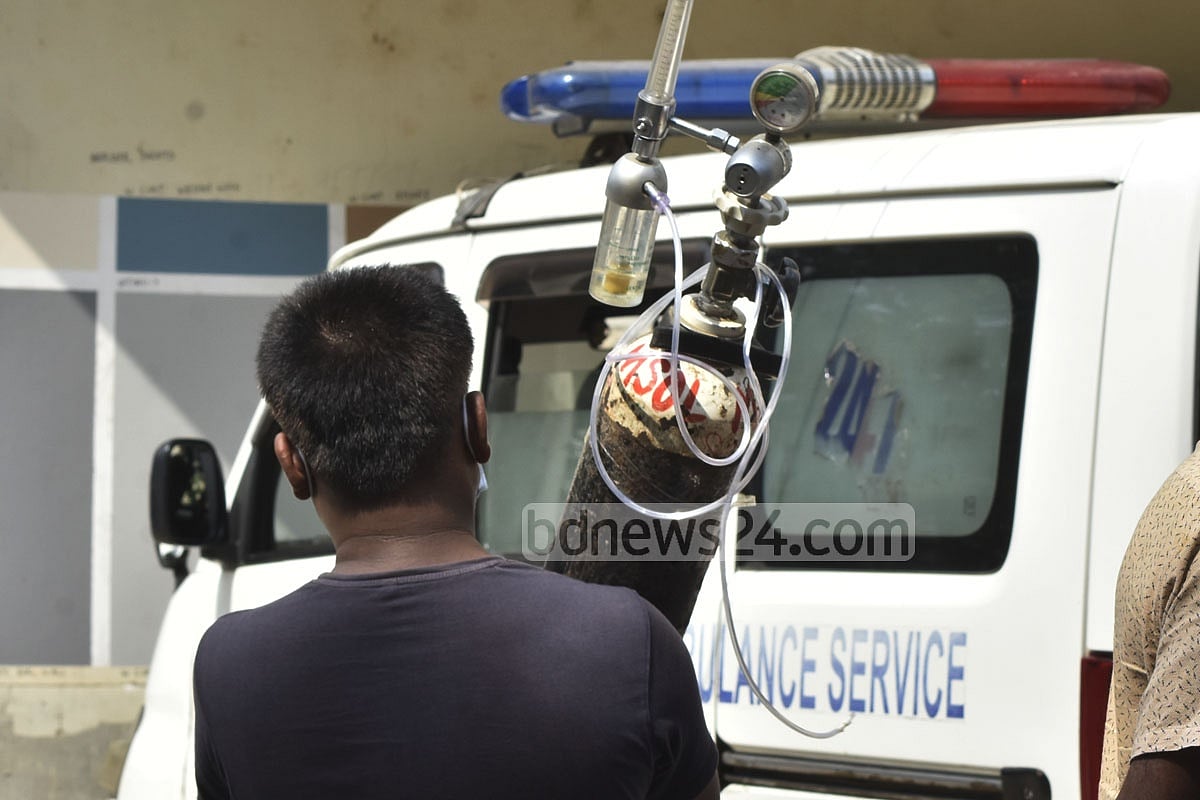
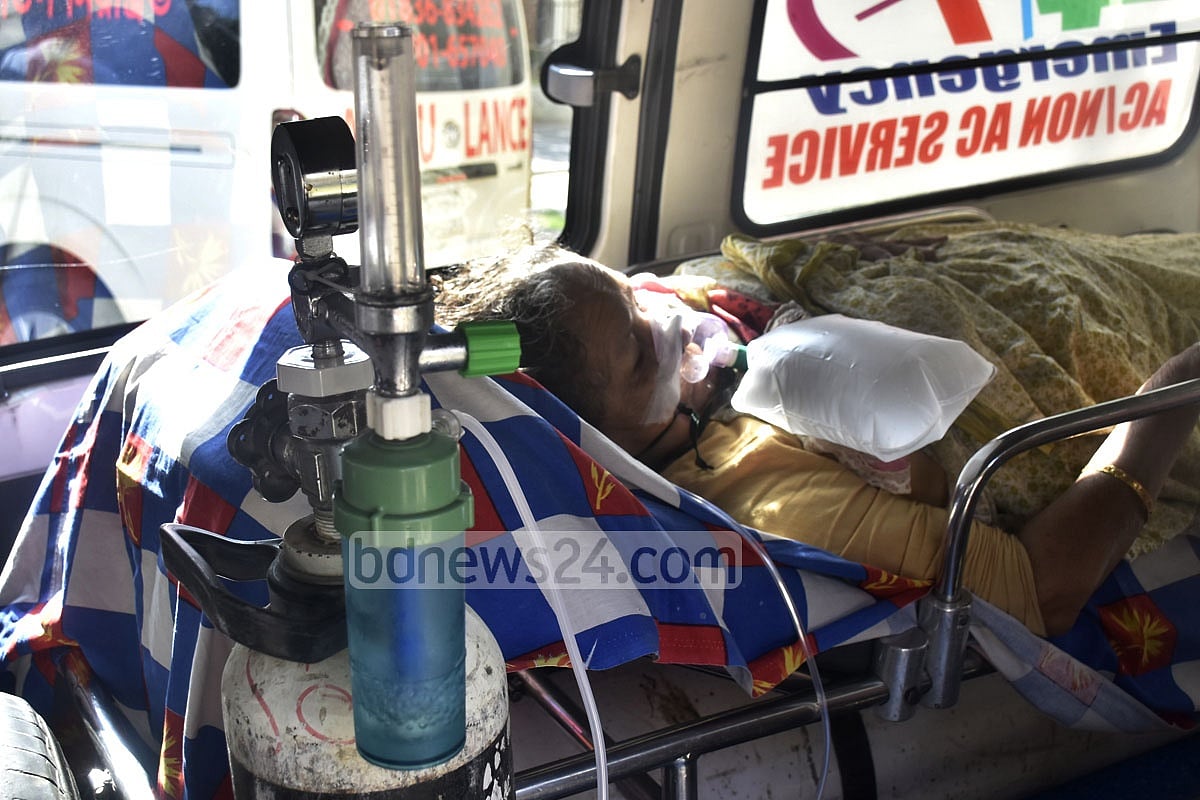
Bangladesh gets some of its oxygen from across the border but imports have now been suspended in light of the crisis in India.
Bangladeshi officials are confident that the domestic output of the lifesaving element will be adequate to cope with the ongoing wave of coronavirus infections if it maintains its current trajectory.
However, things could get dicey if the situation worsens, they warned.
This has been the problem plaguing New Delhi in particular, where scores of COVID-19 patients are dying due to lack of oxygen as the whole world watches.
WHAT IS THE PRESENT DEMAND?
Officials of the health directorate say that the demand for oxygen increased in the beginning of April but it is now on the decline.
Farid Hossain Miah, director (hospitals and clinics) of the health directorate, said the maximum daily demand for oxygen stood at 150 to 160 tonnes during the second wave of the pandemic. With a slight drop in the number of patients, hospitals are now taking 140 to 150 tons of oxygen for treatment purposes.
Based on the accounts of health officials, the country's hospitals have a demand of 100-120 tons of oxygen under normal circumstances. This demand is currently being met in the country.
Public hospitals are currently receiving 90 tons of oxygen from Linde Bangladesh while Spectra Oxygen Limited is providing 20-30 tons. Islam Oxygen Limited provides oxygen to private hospitals, with a few more organisations also contributing to the supplies.
With the onset of second wave of the coronavirus, the infection rate in Bangladesh as well as in India began to increase rapidly in early April. Bangladesh also registered a record daily count of more than 7,000 COVID-19 cases during that period.
However, the daily case tally has dropped down to the 3,000-mark after the government imposed a nationwide lockdown to contain the crisis.
Dhaka has the highest concentration of hospitalised patients in the country. And hospital officials say the demand for oxygen, which was moderate between the end of March and mid-April, has now decreased a bit as the number of patients has come down.
Khalilur Rahman, director of Shaheed Suhrawardy Medical College Hospital said, “The number of inpatients has decreased. That's a good sign. So far there has been no crisis of oxygen.”
Mugda General Hospital now has 160 to 180 empty beds, according to its Director Asim Kumar Nath. “The demand for oxygen was high until the second week of April. The number of patients has decreased a lot over the last one week. As a result, the demand for oxygen has also decreased. Now we are getting as much oxygen as we need. The current production level is sufficient," he said.
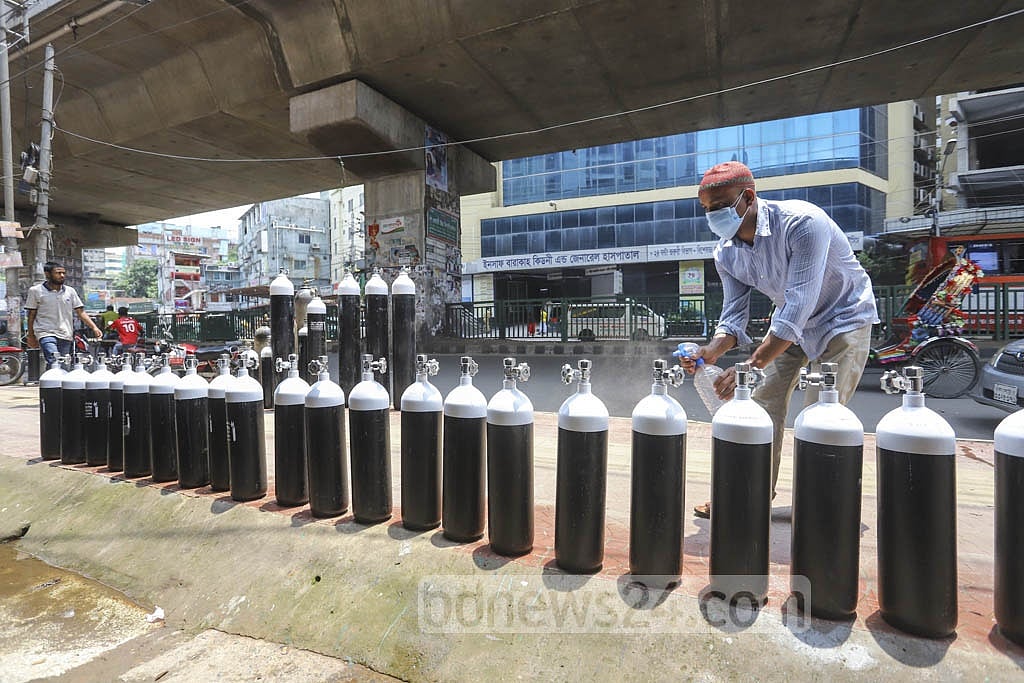
Oxygen cylinders are ready for sale in a shop in Mogbazar, Dhaka. Photo: Asif Mahmud Ove
While oxygen supplies would regularly arrive in the country from India, imports through the Benapole land port increased on April 13 amid a spike in coronavirus infections in Bangladesh. By the time imports stopped on Apr 21, four companies had imported about 500 metric tons of liquid oxygen through the port.
It is not clear when oxygen imports will resume considering the worrisome situation in India. But local manufacturers believe the pause in imports is unlikely to affect the supply of oxygen due to the drop in COVID-19 patients in the country.
However, Linde Bangladesh, the country's largest oxygen producer, had to cut off its supply to factories in the wake of the suspension of imports from India.
As the demand for oxygen increased by 40 per cent in the last six to seven weeks, the entire 90 tonnes of Linde's daily output has to be delivered to public and private hospitals, said Saika Majed, head of the company's human resources department.
"The industry is suffering but there's nothing we can do about it. Medical needs will get first priority."
According to her, the current production level is sufficient to meet the demand.
Mustain Billah, chief executive officer of Islam Oxygen Limited, which is supplying about 30 tonnes of oxygen to hospitals, said the demand had dropped and was now being met.
"We are going to meet the demand with the production we have now. We are giving about 30 tons of oxygen to the hospitals. We have a capacity of 40 tons. ”
Islam Oxygen has been importing oxygen from India for almost 10 years without any hitches until now. The company itself produces about 30-32 tons in the country. It also supplies some oxygen to the industrial units but the attention has now turned to the healthcare sector after imports hit a snag during the pandemic.
Even if the demand for oxygen supplies drop, if the situation reverts to that in the beginning of April, then Bangladesh will have a crisis on its hands, according to health officials.
Mugda General Hospital's Director Asim Kumar Nath said, "If the number of patients increases as it has since the second week of March, then there should be no oxygen crisis. But we have more patients than this, there will be a crisis. ”
"If the infection rate gets too high, there could be a crisis," said Farid Miah, director of the health directorate.
Saika Majed of Linde Bangladesh also believes that meeting the demand for oxygen would be a big challenge if the situation worsens as the two factors are interlinked.
“When the demand was high, we used to import 15 to 20 tonnes of oxygen from India. If it (imports) remain on hold and infections increase, then there will be an oxygen crisis,” said Mustain Billah.
On April 12, the number of active cases in the country exceeded 100,000. It has since dropped to the 76,000-mark.
According to the data released by the health directorate on Monday, there are currently 7,488 vacancies out of 12,298 common beds for COVID-19 patients in hospitals across the country. Of the 1,069 ICU beds, only 364 are vacant.
Noting the improvement in the coronavirus situation during the lockdown, the government has decided to extend the restrictions for another week from Apr 28. However, there is also an apparent indifference about the lockdown curbs after shops and malls were allowed to open.
The situation has sparked widespread anger with many netizens taking to Facebook to vent their frustrations over the situation.
Health Minister Zahid Maleque also warned that the situation would be dire if a third wave of infections hits the country.
“Many are roaming around callously. They are going to different places without wearing masks or maintaining physical distancing norms. This is why the second wave has transpired. If we keep doing the same thing again, the third wave will hit the country,”
Health experts said that in order to prevent such a situation, there is no alternative but for everyone to pay heed to the health directives.
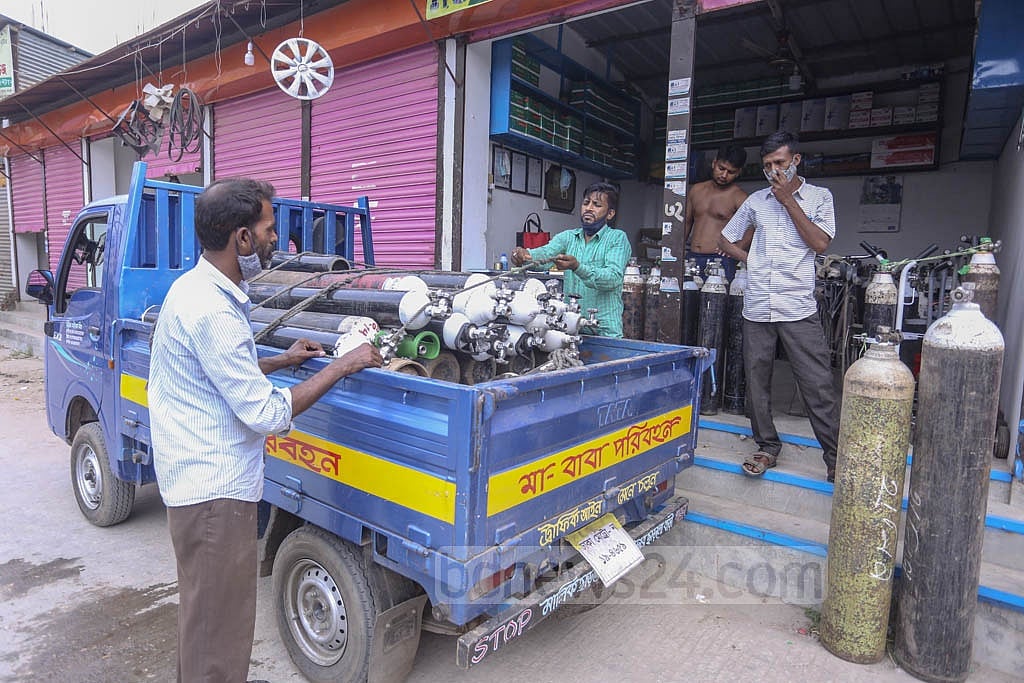
Workers load a pick-up van with empty oxygen cylinders outside a shop in Dhaka’s Agargaon for refilling at a factory as the demand shoots up amid a surge in coronavirus cases. Photo: Asif Mahmud Ove
Farid Miah, director of the health directorate, said the authorities are taking steps to ensure adequate oxygen supplies are available in case the situation deteriorates.
"We are meeting with various oxygen producers throughout the day. We have asked small companies to increase production. We have asked them to produce oxygen for medical services instead of industrial units.”
Saika Majed said Linde is also prepared to import oxygen if the government wants it.
"We have informed the government about everything -- from our current production capacity to what we can produce. The cost of importing oxygen from other parts of the world may double. But if the government asks us to get it (from abroad) then we can. We have that ability.”
(Written in English by Turaj Ahmad)













