


Published : 14 Sep 2015, 05:43 PM
Updated : 19 Oct 2022, 06:57 PM


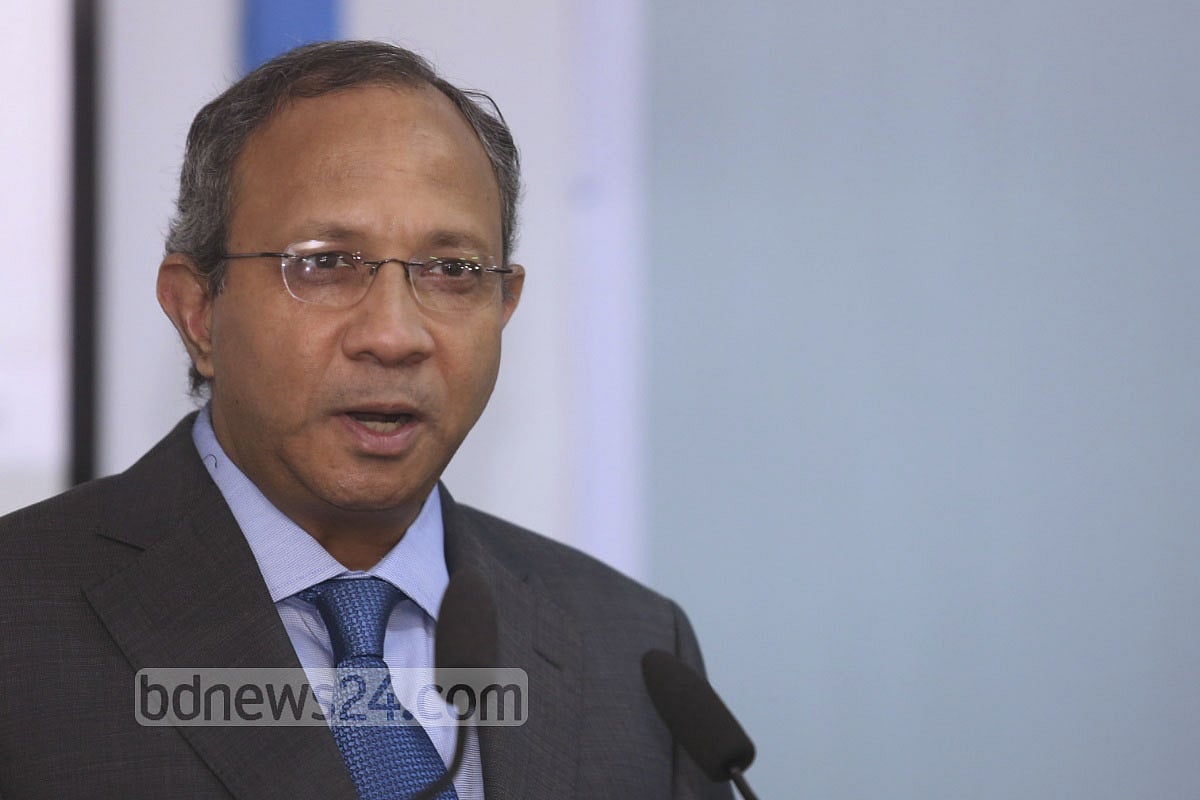
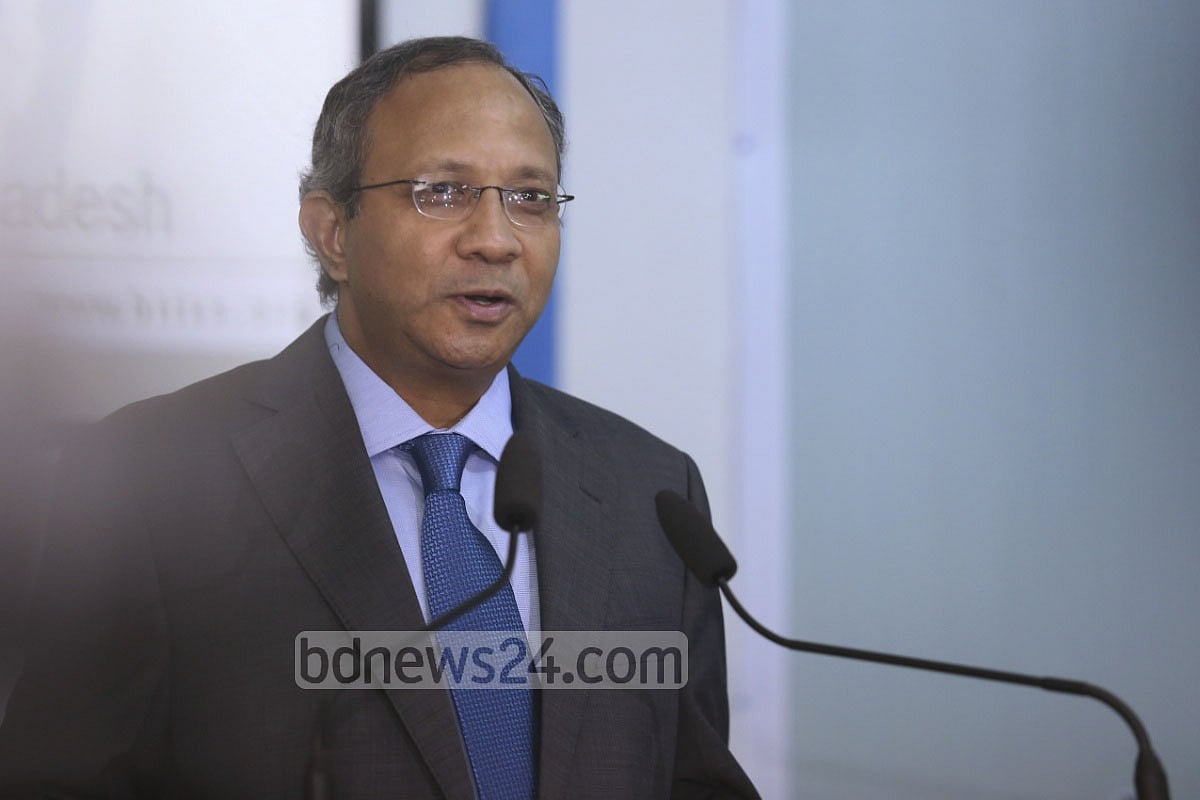
Saran was delivering a lecture on the recent developments in Dhaka-New Delhi relations against the backdrop of Modi’s June visit, and its prospects on Monday at the Bangladesh Institute of International and Strategic Studies (BIISS).
He characterised the relations now as “an active, dynamic and wide ranging”, which he said was marked by “goodwill and a problem solving approach”.
Referring to the LBA implementation within a year of Modi government coming to power, he said, “It’s not words that matter to us, its action.”
The High Commissioner also gave a long list of engagements between the neighbours during his more than two-hour interactions to prove that the relations went beyond the continuity after Modi came to power last year.
But he faced the familiar questions over border killings, water management particularly Teesta, and visa issues from former ambassadors and journalists who attended the lecture.
He termed the border killings “unfortunate” and said they were committed to bring down the number to “zero”.
Replying to a question, he said after the Felani incident vigorous measures were taken that significantly brought down the killing on the border in the last three or four years.
But he said border management was also an issue of “joint responsibility”.
“We should both try to reduce any activity which leads to illegal activity,” he said.
“It is a well-known secret that smuggling of cattle and cow is perhaps the single biggest source of illegal activity… it leads to illegal monetary transactions, counterfeit currency, trafficking of drugs and weapons."
He said efforts had to be made so that “India and Bangladesh can reduce the scale of illegal activities and shift as much of these activities as possible to the legal domain from the illegal domain”.
“Unless and until we migrate from illegal activity to legal activity we continue to confront problems neither sides want."
He once again said work was on progress on the Teesta water sharing issue. “It is better to work quietly behind the scene rather than advertise the progress. That is the approach of India. Work is in progress."
He said, given the large populations and limited water resource, the management had to be done in a way that “both sides feel comfortable”.
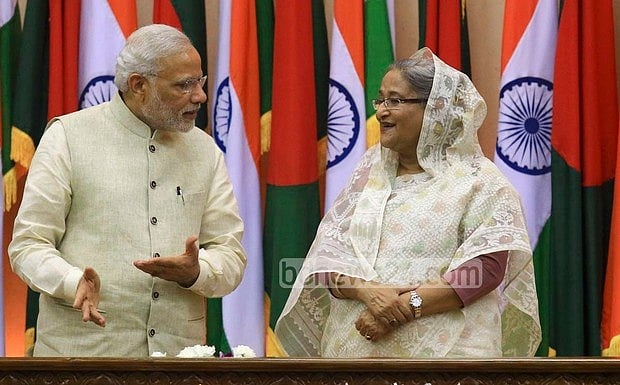
File Photo
He also said that they were working on making the visa process even easier. “We are taking multiple steps."
He continued new centres have been opened and the appointment dates system had been lifted for all categories except for tourist visas.
He also referred to issuing of business visa for Bangladeshis for four or five years and expected that Bangladesh missions in India would reciprocate.
Saran said India had ‘properly’ reached out to Bangladesh when Modi government came to power last year with its neighbourhood first policy.
He said the joint declaration during the June visit for the first time was issued with a title ‘Notun Projonmo, Naya Disha’.
“We have gone beyond the mechanically rolling the ball forward,” he said, adding that Prime Minister Sheikh Hasina had shown courage to reach New Delhi within hours of India’s first lady’s death.
“She set an example for the rest of the region."
Saran said the LBA ratification and resolving maritime boundary issues showed that “we can resolve all our problems."
“We need to be proud of (those implementation)," he said.
The quick implementation of the LBA after ratification “infused a new sense of confidence that it’s not difficult to solve the problem”, he added.
He said significant progress had been made in all areas including cooperation in the energy sector, security, trade, connectivity, and people-to-people contacts.
India despite being a resource starved country, he said, rolled out line of credits, which constitutes “fundamental shift towards Bangladesh”.
He said the duty-free regime has increased Bangladesh’s exports to India and Bangladesh’s allocation of land for India’s economic zone was “a paradigm shift, a new dimension to the relations”.
The crossings at the Petrapole--Benapole border had doubled in 2014 than in 2013. “You can imagine the impact of relations among the common people."
“I did not see any major backlash in Bangladesh over the outcomes of the prime minister’s June visit,” he said.
“If that is accurate assumption, then I feel optimistic about the future. If I am wrong, then obviously it means that we have to be much slower in moving forward”.
He, however, said no relationships could be taken for granted. Prospects would continue to be good as long as there was political will and public support, he added.
He said with the changing world as well as Asia, “India and Bangladesh for the first time are the masters of their destiny”.
“The prospects of the future very much depend on how we deal with not just each other, but with our wider neighbourhood. And how we react to developments outside or within borders.... How we develop frameworks for cooperation which go beyond the bilateral,” he said.
“If we today are masters of our own destiny, then we should be able to decide what to do with ourselves. Who are our friends, who are our partners? And how to take this journey forward in a broader level?”
He said the implicit message of the June visit was that “we have wasted a lot of time. Let us try to catch up”.
The relations with Bangladesh have been getting “the highest level attention today in India,” the High Commissioner said.













