


Published : 07 Dec 2012, 06:38 PM
Updated : 09 Aug 2022, 04:35 PM


With its high-rise buildings, apartment blocks, elevated highways, rush-hour traffic and natural beauties, it is hard to see Kobe was wrecked by one of the worst earthquakes in Japan's history nearly 18 years ago.
But the residents of Japan's fifth largest city, just about 30 km away from Osaka, have not forgotten the day, Jan 17 in 1995 when 6,434 people were killed under the rubbles of flattened buildings by 20-second jolts.
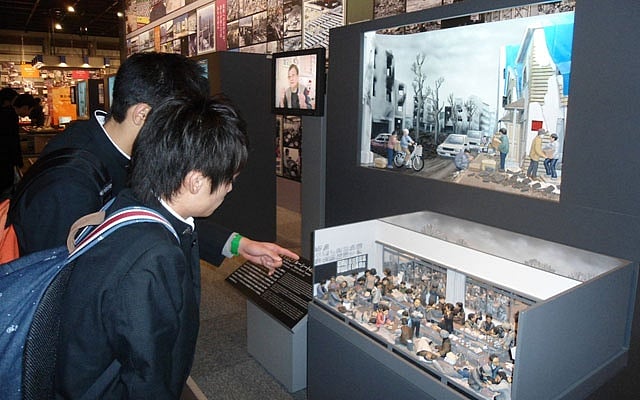
As new office blocks and shopping malls have been built in the port city to restore normal life, they have also constructed a memorial centre-cum-Disaster Reduction and Human Renovation Institution at the heart of their city.
Reliving the earthquake using sounds and dramatic images in theatre, rebuilding streets just after the earthquake, and storytelling by experienced citizens, the centre hands down to generations the experiences and lessons gathered from the 'Great Hanshin Awaji Earthquake.'
"I learnt the importance of being kind and helping each other," Hasegawa Aoi told bdnews24.com on Friday as she had watched the devastation in her teens.
Japan's schools bring their pupils to the institute as they take them to other places as part of their study to make them prepare for disaster risk reduction while people from many countries come to bring the model to their homes.
One of the most earthquake-prone countries in the world, Japan experiences thousands of minor tremors every year.
But the Kobe people were not prepared for the biggest one.
"We learnt many things after that day," said Toshiharu Kanehara who in his 80s volunteers at the institute and tells visitors stories.
"We learnt how to test the strength of buildings," he said and switched on a video that showed with the same size and same design and on a same plane, one house collapsed while another survived earthquake.
"It's because the house (that survived) was reinforced," he showed a group of journalists who visited the institute on Friday.
"Even we can save a wooden house if we can reinforce it in its basement and pillars with metals," he said.
With its technologies, the institute developed a special food for emergencies using 'exothermic agent' without fire and water that remains hot in all weather conditions.
In a post-disaster camp, the institute even showed how mothers can continue breastfeeding their kids in a private corner just made of paper boards.
As the centre gives lessons on earthquake from real-time experience to rehabilitation within one and a half hours, children can learn about the technical aspects of earthquake like impacts of different epicentres and distances by playing games.
"We get more than 1,000 visitors a day on the average," said Takanofu Kimura, 78, who also volunteers by storytelling.
He said Kobe people were not prepared that time. "Now they've preparations. They're making strong houses. They've 31 items like food, water, toilet, and medicines for emergencies that we suggest in their preparations."
Takumi Enoue, 16, a second grader of Kikuchi High School of southern Japan's Kumameto prefecture who came to visit the institute in group as part of their study, said he would prepare himself from now on.
"I was not born that time (1995). Today I felt so scared…it was really horrific. I'm going to prepare myself so that I can run to save lives (during earthquakes)," he told bdnews24.com after he saw the devastation at theatre.
As a resilient nation, Japan has the history of rebuilding from the rubbles since World War II that devastated its cities Hiroshima and Nagasaki.
Even on Friday, when a 7.3 magnitude earthquake near the last year's Fukushima disaster shook buildings as far away as Tokyo and triggered a one-meter tsunami ahead of a crucial election on Dec 16, the Osaka dwellers were busy with their life.
One visitor, Kohei Takimoto, said he also grew learning about the devastation of Hiroshima that he visited as part of his school study.







