


Published : 08 Nov 2026, 12:57 AM
Updated : 08 Nov 2026, 12:57 AM


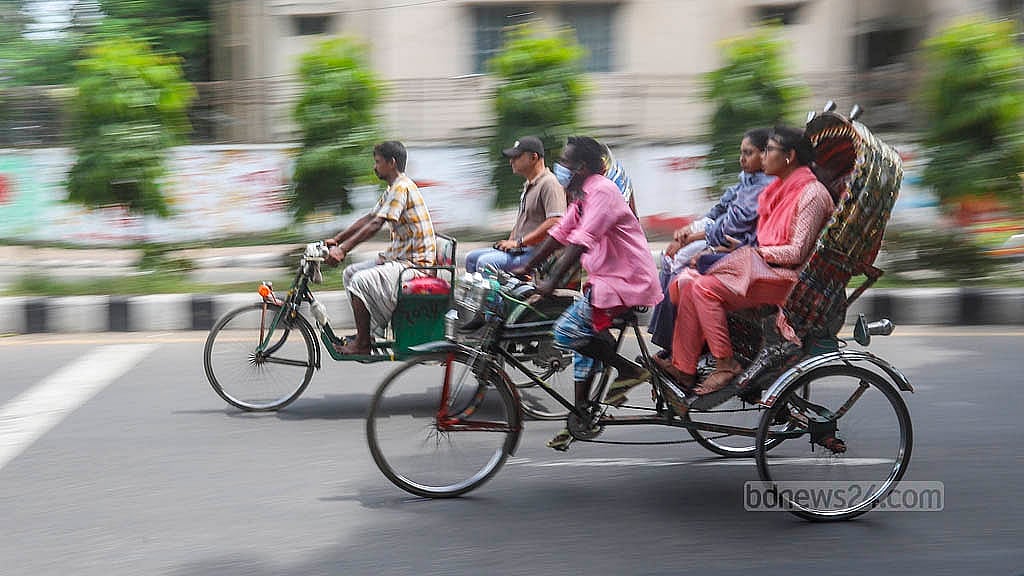
Dhaka South City Corporation (DSCC) has started selling registration forms for battery-run rickshaws after new rules were issued to bring them under regulation.
Questions have been raised over how many will be allowed in the capital, how approved vehicles will be sourced and verified, and what happens to old ones.
The DSCC began selling forms on Tuesday, days after the Local Government Division issued the rules on Oct 29.
The Bangladesh University of Engineering and Technology (BUET) sets the technical standards, but which manufacturers will be allowed to build e-rickshaws is not final.
The boundaries of the eight zones planned for the two Dhaka city corporations are undrawn, and how movement will be controlled is unclear.

Officials say a vast number of battery-run rickshaws cannot be removed or replaced overnight, so authorities plan to start flexibly and bring the system under the legal framework step by step.
Raihan Uddin, an organiser of the Rickshaw, Battery-Powered Rickshaw-Van, and Easybike Sangram Parishad, an association of drivers and owners, told bdnews24.com the rules have inconsistencies, including in licence fees, and make no provision for driving licences for drivers.
He called the Tk 8,000 registration fee “too high”, saying it will burden drivers.

What New Rules Say
The rules apply in all city corporation areas. Titled the Three-Wheeled Low-Speed Battery-Run Rickshaw Movement Rules in City Corporation Areas, 2026, they define the vehicle as a battery-run e-rickshaw carrying two to four passengers at up to 25kph.
No rickshaw can ply without registration. Applicants must submit a national identity (NID) card, passport-size photo, fee receipt and fitness certificate, and the authority will issue registration within 30 working days.
A two-passenger e-rickshaw carries a one-time registration fee of Tk 8,000 and annual renewal of Tk 4,000. For a four-passenger vehicle, the figures are Tk 10,000 and Tk 5,000.
The fitness certificate costs Tk 10,000.
Each registered vehicle will get a unique QR-coded registration number and a number plate showing the city corporation’s name, zone code and vehicle number in white on a set background colour.
Registration lasts five years, while economic life is fixed at 12 years.
One NID can register up to five e-rickshaws across one or more city corporations, but a vehicle registered in one city cannot run commercially in another.

E-rickshaws are barred from national highways, expressways, elevated expressways and bus rapid transit (BRT) roads.
The authority and traffic department will jointly set routes by zone, and a rickshaw cleared for one zone cannot enter another. Drivers must keep to the left lane.
Speed is capped at 15kph near schools, hospitals, places of worship and crowded areas. Beyond the driver, only the designated two or four passengers may be carried, with no commercial goods except hand luggage.
Batteries can be charged only at approved points or garages. The rules say net metering, solar panels and renewable energy will be made mandatory at charging stations in phases.
Manufacturers must obtain a licence. A committee convened by an additional secretary of the Local Government Division (urban development wing), with representatives of BUET, police and district administration, will make recommendations.

How BUET Clearance Works
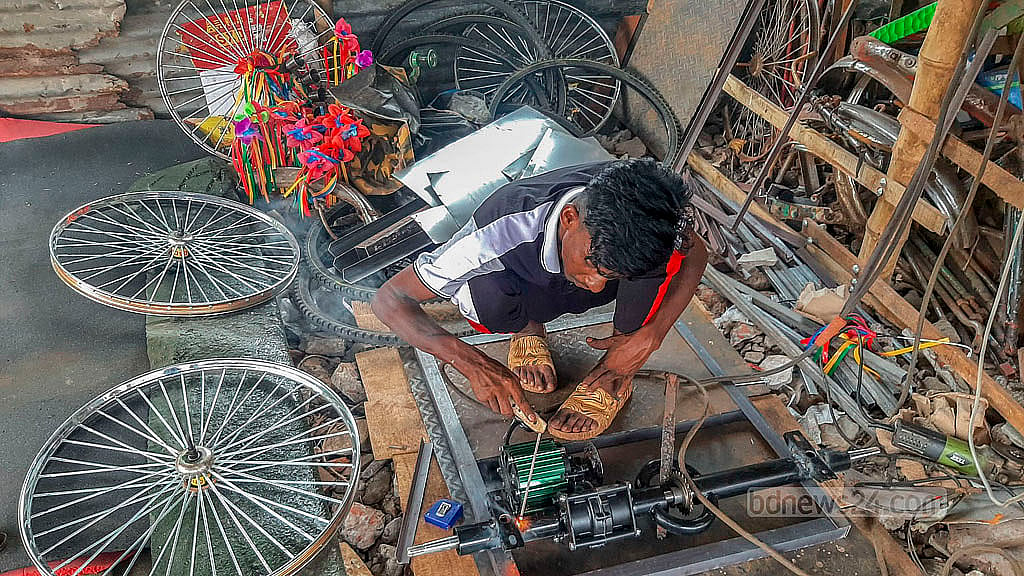
Many drivers and owners assumed each rickshaw needs separate BUET clearance. BUET engineers say they issue “type approval” for manufacturers’ models, not individual vehicles.
Prof Md Ziaur Rahman Khan of BUET’s electrical and electronic engineering department, part of the design team, told bdnews24.com: “We sent a report to the ministry, which approved it through a schedule last December.
“Several companies built vehicles to that design, had them tested at BUET’s mechanical engineering department and took type approval.”
Prof Md Ehsan, head of the six-member design team, said BUET only drew up technical guidelines. A model that passes its tests gets clearance, which the maker takes to the city corporation for final approval.
“We are not testing each rickshaw, nor are we supposed to,” he said.
Between 10 and 12 manufacturers, including Dynamic Cars, Akij Motors, BivaTech and New Grameen Motors, have taken clearance, he added.
How Many Registrations Per ID, How to Check?
The rules allow five rickshaws per NID, but no central database exists to check. The city-wide cap, and whether everyone meeting the conditions will be registered, are undecided.
Md Yunus Chowdhury, an administrative officer at the Local Government Division’s City Corporation-1 branch, said the city corporations have no deadline. “They will start implementation from the gazette publication.”
Asked how anyone would be stopped from registering more than five, he replied: “There is no central database for now, and no specific instruction on numbers or on whether everyone meeting the conditions will get registered.
“We will decide these in a review meeting within about a month.”
Measures for old e-rickshaws that do not get or take registration will also be raised at that meeting, he said.

8 Zones Not Yet Fixed
Police and the city corporations plan to divide Dhaka into eight zones, with e-rickshaws of eight colours.
Yunus said which area falls under which zone is not yet specific. A draft is being prepared with traffic police.
Md Anisur Rahman, additional commissioner (traffic) of Dhaka Metropolitan Police (DMP), told bdnews24.com there will be four zones in the north and four in the south.
According to him, Traffic Police do not want Gulshan rickshaws reaching Uttara or entering Motijheel, as control would otherwise be hard.
Some “unavoidable corridors” between zones will be kept.
“The question may arise whether the boundary will be entirely rigid. Our answer is no,” he said. With permission, rickshaws could cross through these in a controlled way, though most would stay in their own zone.
GPS and geo-fencing are planned, but not overnight, the officer said. “We are starting on a trial basis.”
What Happens to Old Rickshaws?
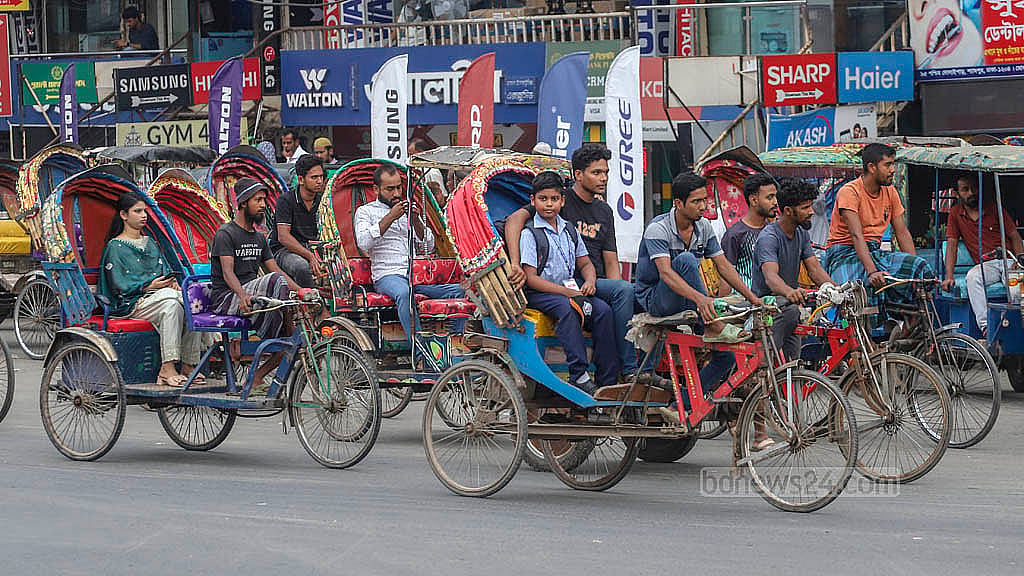
Anisur outlined a phased plan to bring in new rickshaws against the surrender of old ones. “Even if someone wants to, nobody can suddenly mass-produce BUET-designed rickshaws. The capacity is not there.”
Under his outline, an owner with five rickshaws on one NID would initially surrender two old ones, take two new ones and keep running three old ones. Beyond a certain stage, the traffic department will move to control or seize illegal rickshaws.
Surrendered rickshaws will be scrapped, and the owner will keep all the proceeds to buy two new ones.
There will be no compensation. “We cannot keep the huge number of rickshaws now running. We actually have to reduce them,” the officer said.
Council Wants 2 Years
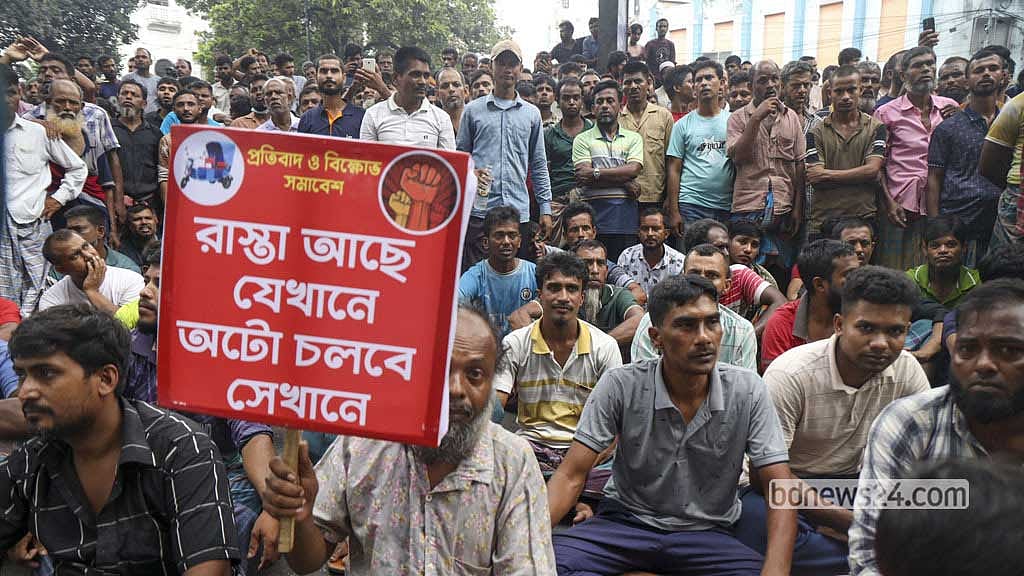
The owners’ council says redesigning a vast number of rickshaws within a month or two is impossible and wants at least two years.
Raihan said it will hold a rally on Nov 11 and submit a memorandum to the administrators of both city corporations.
What Is DSCC Saying?
DSCC Administrator Md Abdus Salam said, “Rather than shutting down all rickshaws suddenly, we want to bring them under rules and registration step by step.”
Whether 1,000, 2,000 or 5,000, those meeting the conditions will be approved in phases.
The DSCC earlier planned designated workshops and charging stations at ward or Thana level, but none has been fixed.
Chief revenue officer Zonayed Kabir Sohag said applications for refurbishing old rickshaws will be valid only with government-approved technical standards, prescribed colour and fitness certificate. Applicants must source or prepare vehicles themselves.

Forms on Sale in South, North Still Preparing
The DSCC began selling Tk 100 application forms on Tuesday, from 10am to 3pm daily except public holidays, at Nagar Bhaban and all zonal offices. One person can buy up to five.
About 700 forms had been sold by Wednesday, but no rickshaw has been registered, Sohag said on Thursday. “We have only started selling forms. Registration will follow scrutiny, which is a matter of time.”
The DNCC is still stuck in preliminary preparations, and officials could not say when registration will start.
Deputy chief revenue officer Md Monowar Hossain said forms have gone for printing, but discussions continue on how to arrange the process, including fixing four zones.






