


Published : 04 Sep 2017, 07:48 PM
Updated : 19 Oct 2022, 03:45 PM


Following are some details on the crisis gathered from UN sources working in the Cox's Bazar district of Bangladesh, on the Myanmar border.
>> About 20,000 people are grouped at various entry points along the border. Unlike last week, new arrivals over the past day or two did not report any push back in their attempts to cross the border.
>> New settlement clusters are being set up spontaneously and are quickly expanding, with support from communities despite cautioning by authorities against any attempt to provide refugees with materials. Materials most urgently needed would be for shelters, such as tarps, bamboo and rope.
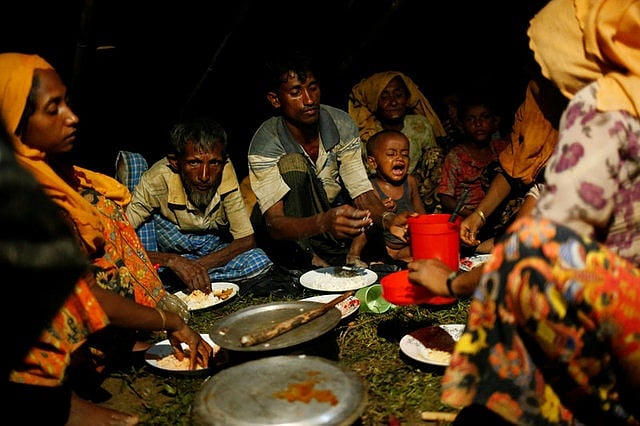
>> A stock of high-energy biscuits will only last two weeks. Rice supplies for both the refugees who crossed the border last year as well as this year's arrivals "may be problematic".
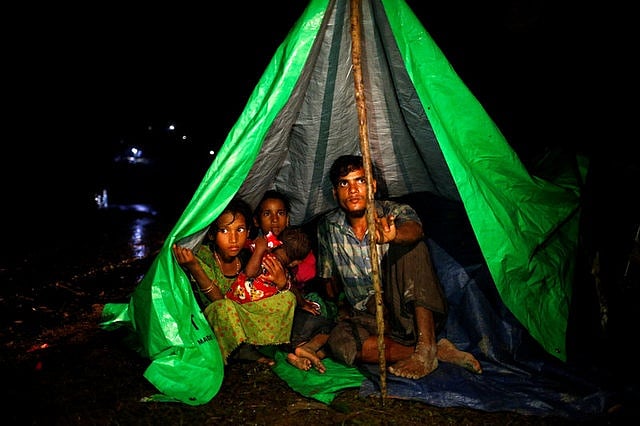
Rohingya refugees sit inside a makeshift tent near Gundum in Cox's Bazar, Bangladesh, September 3, 2017. Reuters
>> Safe sanitation and hygiene can be provided for 500 people with an additional 1,000 kits available. There are 400 emergency latrine chambers with 60 more under construction.
>> Overcrowded camps and a lack of knowledge of available medical facilities hamper the mobility of women in labour or those experiencing an emergency.
>> Vaccination for children under five has started at the Kutupalong settlement area with 285 children vaccinated for oral polio, measles and rubella and given vitamin A shots.
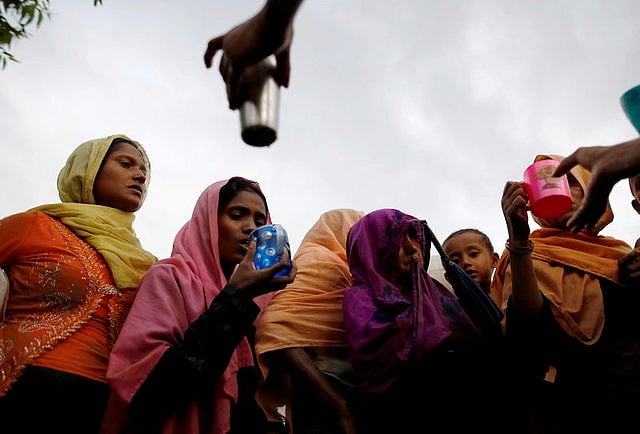
Local Bangladeshi people offer water as Rohingya refugees arrive in Teknaf, Bangladesh, September 1, 2017. Reuters
>> Many children have been found without clothes and are at risk of abuse and trafficking. A total of 487 refugees have received psychological first aid sessions since Aug 25. Some women and children who have lost family members are traumatised after spending two nights in the open during heavy rain at the border area, and need psychosocial counselling in addition to basic survival needs.













