


Published : 22 Feb 2022, 01:52 AM
Updated : 21 Oct 2022, 03:36 PM


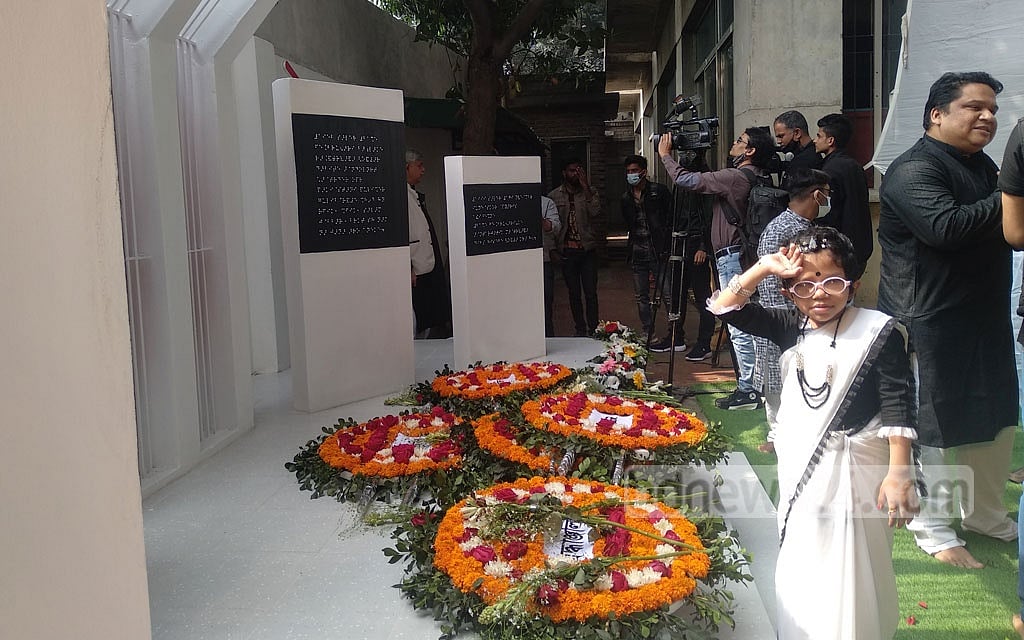
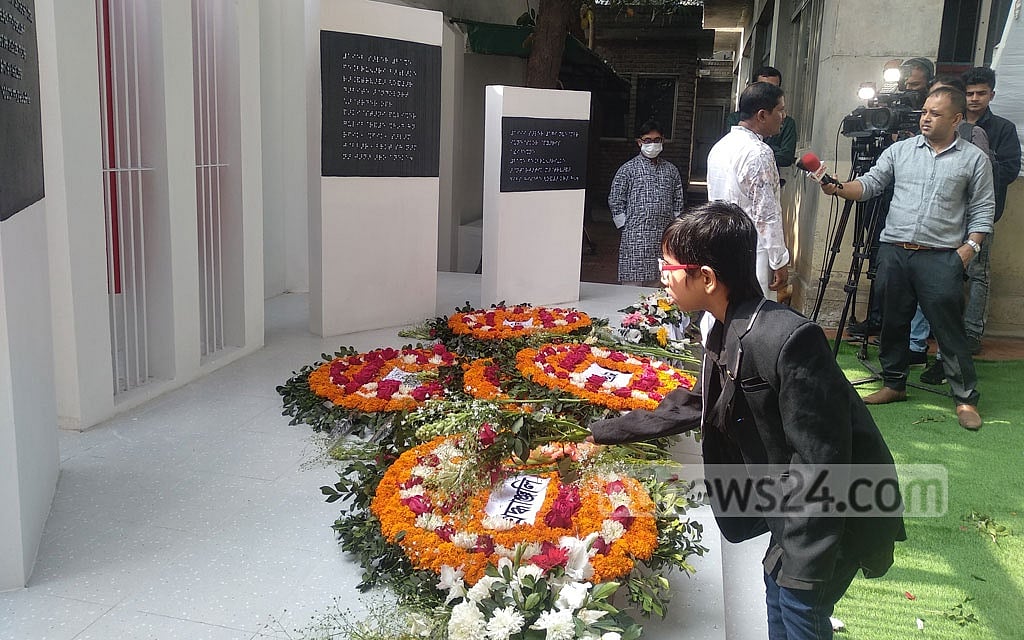
Donning a white saree with black lace to mark the occasion, the little girl arrived in her school with her parents and placed a flower on the monument. She also stood there in silence for some time and gave a salute.
Many children, along with adults, visit the Shaheed Minar monuments across Bangladesh on Martyrs Day on Feb 21 to pay respect to those who sacrificed their lives in demanding Bangla as a state language in 1952, when Bangladesh was yet to be freed from the subjugation of Pakistan.
But the day was different for Muskan and other students of her school this year.
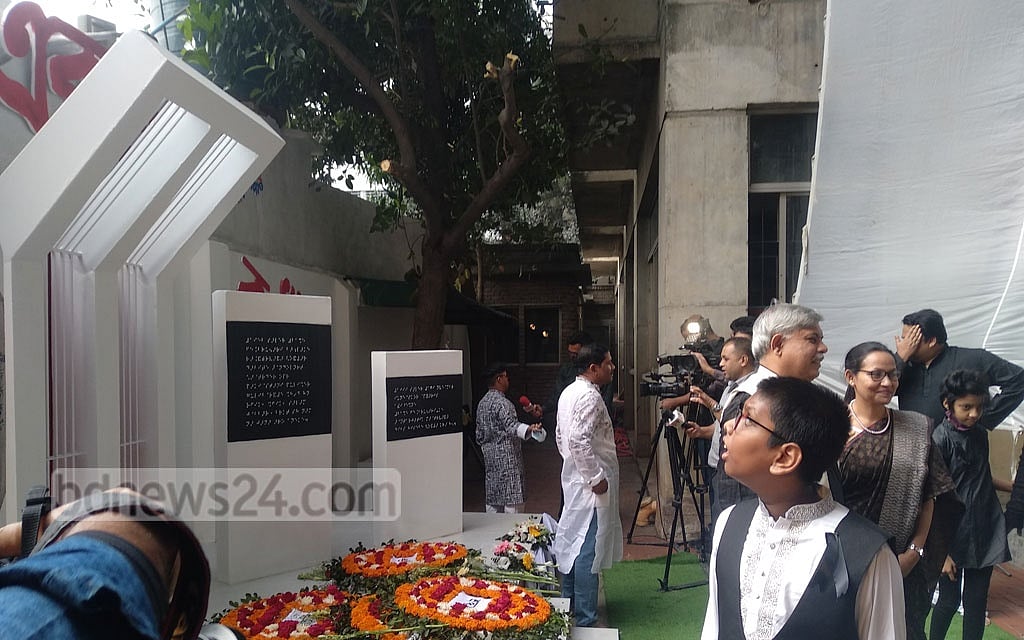
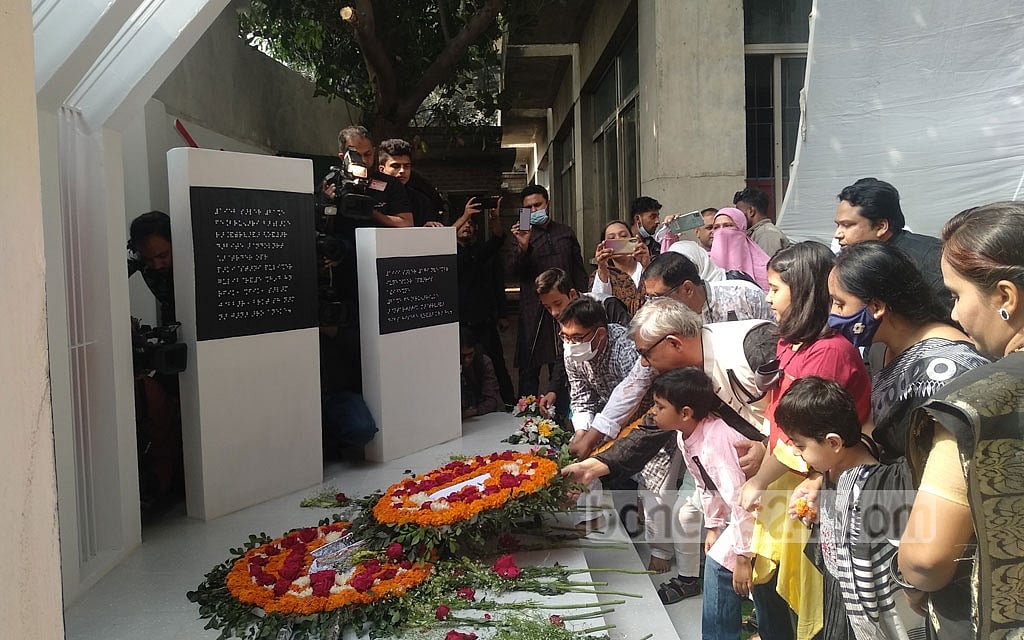
They were able to read the immortal line -- “‘Amar Bhaier Rokte Rangano Ekushey February, Ami Ki Bhulite Pari’ (Can I forget the twenty-first of February/ incarnadined by the blood of my brother?), carved on the Shaheed Minar in braille.
They stretched out their arms to feel the spirit of the occasion with their fingertips, reading a brief history of the Language Movement engraved on the memorial structure.
Kalyani Inclusive School in Dhaka’s Mirpur set up the special monument with assistance from Fresh Cement for children like Muskan who have visual impairments.
“The teachers had been saying that a Shaheed Minar will be constructed here and I was waiting for Feb 21. I feel great showing respect with flowers,” said Muskan.
Her mother, Ishita Sultana, said she was always keen to know more about Shaheed Minar.
“They’ll now understand that it is a great achievement for us. She’s fluttering with joy today.”
Ishita thinks that children without proper sight easily get away from the mainstream of the society.
“We keep them away and that creates a feel of inferiority among them. If we create more engagement for them at all sections of society, they’ll feel more confident and move forward.”
Shahir Azfi Ariz, a 12-year-old who also touched a Shaheed Minar for the first time on Monday, said he impatiently waited throughout the night.
“I feel so happy after paying tribute with flowers at the Shaheed Minar. There are braille writings as well. I’ll read them once everyone leaves.”
“He couldn’t wait to come to the programme and talk to everyone. He wanted to feel the Shaheed Minar with his hands,” his mother Jannatul Sultana Monica said.
“He’s very happy after coming here. Such initiatives are truly commendable.”
Monica thinks it is better not to let such children with special needs feel inferior about their disabilities. They should rather be provided with all sorts of opportunities and support, she said.
“I try to allay his feelings of not having sight. I let him do whatever he shows interest in and give him as much time as I can.”
Priyanka Priya took her 5-year-old girl Faiza and 10-year-old son Zarif, both born blind.
“I feel so happy. I never went to the [Central] Shaheed Minar as it is very crowded, but I really wanted to pay my respects to the martyrs. It is now fulfilled,” Zarif said.
“We keep children with special needs behind curtains. But they, too, have the right to lead a normal life. We may not be able to take them to the Central Shaheed Minar due to various reasons, but now they’re remembering the martyrs with flowers here,” said his mother.
“This is igniting the spirit of the Language Movement in them. And through this, they are feeling as a part of the society.”
She called on the government to put efforts in increasing such participation of children with special needs in all sects of society.
Mehfuza Islam, who has been teaching children in the school for 22 years, said, “We used to take the students to a makeshift Shaheed Minar every year to pay respect to the martyrs with flowers. But they had no idea how the Shaheed Minar actually was. Now they do. They are all delighted.
“Such arrangements will make these children confident and allow them to mix with people without discomfort.”













