


Published : 14 Nov 2013, 04:19 PM
Updated : 09 Aug 2022, 11:19 AM


Despite finance minister AMA Muhith once saying the country will be free from dependence on rental power plants by 2015, but his government seems to think otherwise.
On Thursday, the Power Development Board (PDB) is likely to propose renewal of contract for three rental power plants for five years.
The proposal will be placed before the Parliament committee that deals with purchases.
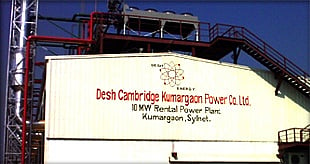
Among the three plants are Desh Energy’s 100 Mw plant owned by garment tycoon Anisul Huq, which faced allegations of delay in project implementation, frequent plant shutdowns and high fuel consumption.
The Desh Energy has, however, managed to get a stay order from court on the $ 15 million fines imposed on it by the PDB.
Similar allegations have surfaced against the 55 MW plant owned by Energies - but like Desh Energy’s plant, its contract is also proposed to be renewed for five years.
Precision’s 55 MW plant is also likely to benefit, as the PDB has proposed to renew its contract for another five years as well.
The last caretaker government started encouraging purchase of power from private-run rental power plants.
The 32 such plants in Bangladesh now produce 2,169 MW of power – and PDB statistics indicate one-third of power consumed in Bangladesh is now purchased from these plants.
But almost two-third of the expenditure incurred for purchase of power is guzzled up by these ‘rental’ plants.
That’s because power purchased from them cost several times more.
Analysts blame these rental power plants for a huge rise in government subsidies, which was TK 60 billion in 2011-12, and a higher burden on consumers.
Power from Desh Energy’s 100MW plant at Siddhirganj cost the government TK 19.57 per unit.
The rate was fixed in a 2011 deal that expires in February 2014.
PDB’s performance statement reveals a part of this plant is often not functioning.







