


Published : 08 Feb 2013, 06:09 PM
Updated : 09 Aug 2022, 10:12 AM


Jamaat-e-Islam kingpin Ghulam Azam has reportedly been ‘indifferent’ to the ongoing protests at Shahbagh demanding death sentences for the 'war criminals'.
Azam is currently standing trial at the International Crimes Tribunals on a raft of war crimes charges as are several top leaders of the Islamist party. The government is currently keeping him at the prison cell of the Bangabandhu Sheikh Mujib Medical University.
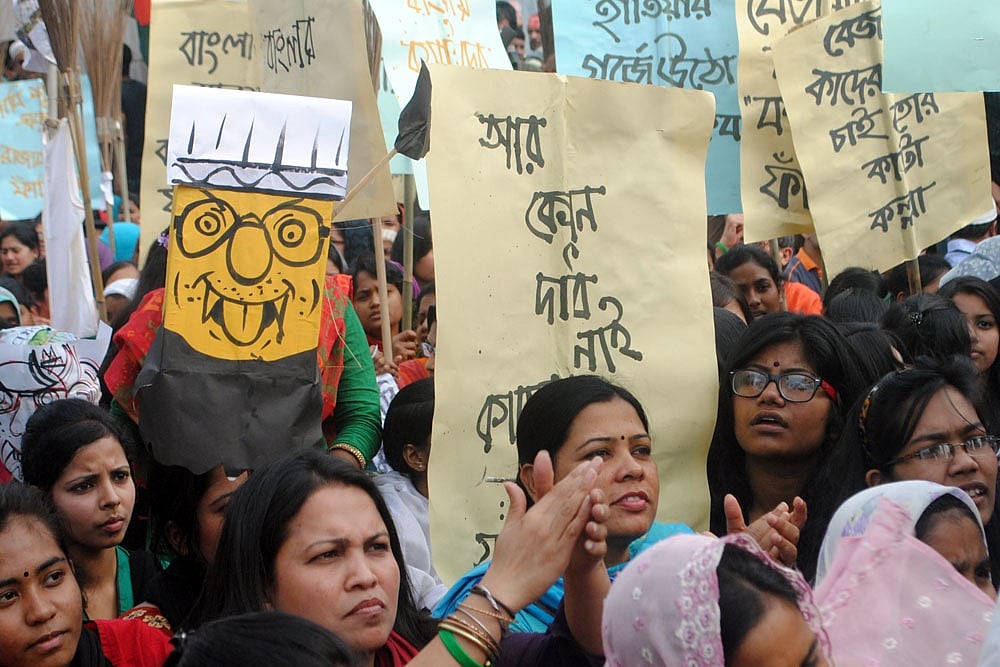
Thousands have been holding candle-lit vigils, demanding death penalty for the suspected war criminals. At Friday’s ‘grand rally’ they vowed to continue their demonstrations until Jamaat, which opposed Bangladesh’s War of Independence in 1971, was outlawed.
The two verdicts by the International Crimes Tribunal-2 have proved that members of the Islamist party were involved in war crimes during the nation’s struggle for independence from Pakistan.
People in their drove poured onto to the streets across Bangladesh ever since Jamaat’s Assistant secretary General Abdul Quader Molla, known as the ‘Butcher of Mirpur’ during the war, was sentenced to life in prison by the ICT-2 for on war crimes charges. Angered by the sentence, the people hit the streets demanding that Molla hang.
Demonstrators shouted death penalty for Ghulam Azam, indicted on five war crimes charges including complicity, incitement and abetment last year. The prison cell where the Jamaat guru is being kept is not far away from the Shahbagh intersection and presumably he had heard the slogans.
Bangabandhu Sheikh Mujib Medical University Director Mohammad Abdul Majib Bhuiyan told bdnews24.com that the former Jamaat chief was apathetic to the ‘grand rally’. “He is doing well and taking meals regularly.”
He said duty doctors and nurses gave him feedback like other days. “There’s no change in him,” Bhuiyan said.
The maiden verdict of the ICT on Abul Kalam Azad alias ‘Bachchu Razakar’ on Jan 21, underlined Jamaat’s role in carrying out war crimes. The tribunal’s second verdict provided a more vivid account of the party’s complicity with the Pakistani forces in 1971.
ICT’s first verdict described as to how the party set up “armed forces” to “save Pakistan”, and in the process helped the Pakistani forces against “unarmed Bengalis”.
The Jamaat guru, who had opposed the nation’s struggle for freedom, had led the formation of auxiliary forces like the ‘Peace Committee’, Razakar, Al Badr to assist the oppressing Pakistan army. The auxiliary forces carried out a vendetta against the innocent citizens of Bangladesh, then East Pakistan. Allegations have it that Azam was the mastermind behind mass killings, tortures on pro-liberation supporters and the innocent Bangalees.
It is also alleged that Ghulam Azam, then the chief of East Pakistan Jamaat-e-Islami, had openly campaigned in the Muslim-dominated Middle East countries to take stance against Bangladesh’s independence in 1971.
He stayed in London for seven years after Bangladesh emerged in the world map as an independent nation. Azam came back in 1978, during the rule of military-strongman and BNP-founder Ziaur Rahman. He led his party until 2000.
The former Jamaat chief, however, did not have Bangladeshi citizenship for a long time. A court order during the past BNP-led government granted him citizenship of Bangladesh, a country whose struggle for freedom he had tried to suppress.
The International Crimes Tribunal took cognisance of the charges against the Islamist party’s former chief on Jan 9 last year. Azam presented himself before the court on Jan 11 and sought bail. The court denied him bail and ordered him to jail. The nonagenarian was sent to the prison cell of Bangabandhu Sheikh Mujib Medical University for health check-ups and has been there since.







