Published : 02 Jul 2017, 02:58 PM
Updated : 11 Apr 2022, 09:11 PM


His remarks came on Sunday, when the Supreme Court granted the state two more weeks to publish it, saying it was the 'last chance'.
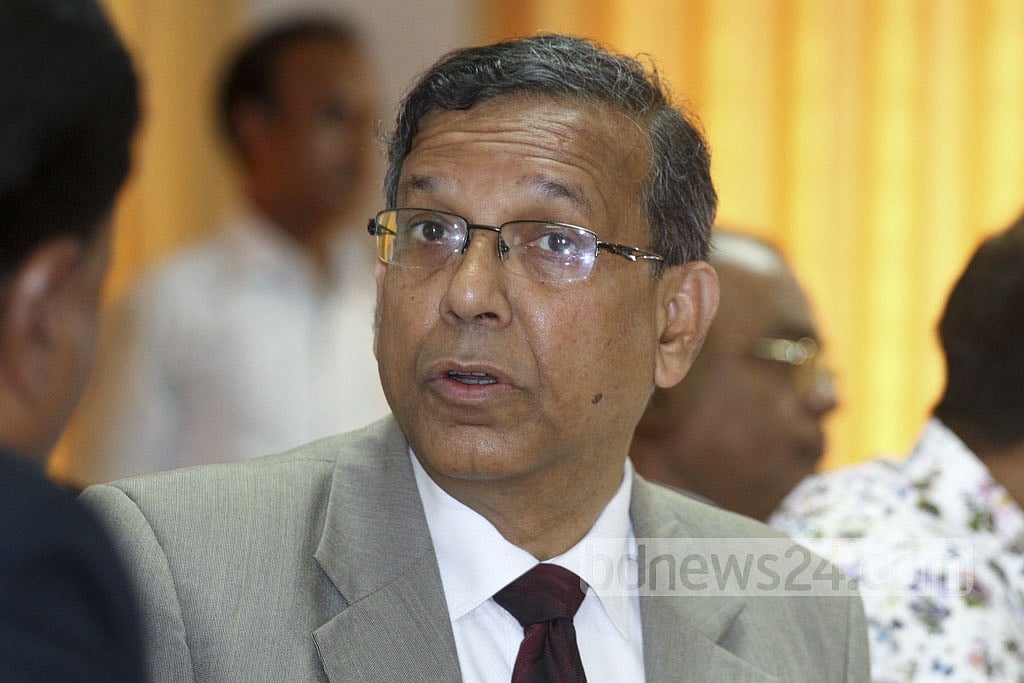
Speaking to reporters after addressing a workshop at the Judicial Administration Training Institute, Huq said that they were being extra cautious to avoid any controversial matters.
"It's being scrutinised meticulously. I expect the gazette to be issued before the 15th of this month."
Following the 1999 Supreme Court verdict separating the judiciary from the executive, the law ministry prepared a draft of the service rules in May last year.
The top court, however, declared it contradictory to the 1999 verdict. It ordered the government to amend it and issue a gazette notification.
In December last year, the court set the deadline to publish the gazette on Jan 15, 2017.
Since then, the top court has extended the time for the government to issue the gazette several times.
Responding to a question regarding the Digital Security Act, Huq said the law and ICT ministries would meet on the topic on Jun 9.
“I believe the home ministry will take the lead. A final draft will be made after taking everyone’s opinions into consideration,” he said.
Asked whether the new Digital Security Act would be a replacement for Section 57 of the ICT Act, the minister said: “The discussion is premature. We haven’t even finished the draft yet.”
Section 57 criminalises ‘publishing fake, obscene or defamatory information in electronic form.’
Offence under this provision of the ICT Act is punishable by at least seven years in prison and 14 years imprisonment at the most. Fine can be as high as Tk 10 million.
The ICT Acr was passed in 2006 and was amended twice in 2009 and 2013. In the last amendment, offence under the Section 57 was made non-bailable and the maximum penalty was extended to 14-year imprisonment.
Rights activists have been vocal against this legal provision, saying this effectively muzzles the freedom of speech and expression.
The law minister had said the new Digital Security Act would allay all ‘concerns’ over the matter.