


Published : 03 Sep 2018, 10:35 PM
Updated : 05 Aug 2022, 06:43 PM


“Funding gap needs to be closed and also there is the need to recognise that there is a continuous funding need and it's huge,” Mia Seppo told bdnews24.com on Monday on the sidelines of a photo exhibition inauguration.
“Just imagine the cost of food for a one million people a month,” she said, urging international community to step up their efforts.
She said the principle of global burden sharing and not leaving Bangladesh alone to bear the costs of hosting all these refugees “has to mean something”.
“…that has to translate into concrete commitments in terms of funding and continued engagement.”
Seppo also stressed “sustainable response” to the crisis in Bangladesh until the safe, dignified return of the Rohingya refugees.
One year on, they remain dependent on humanitarian aid for their survival in Cox’s Bazar. Over 700,000 of them have crossed the Myanmar border since Aug 25 last year fleeing ethnic cleansing.
There is no progress of their repatriation in sight, despite Bangladesh signing deals with Myanmar.
The Joint Response Plan for Rohingya humanitarian crisis urged for $951 million funding. But it could manage only 34 percent of that.
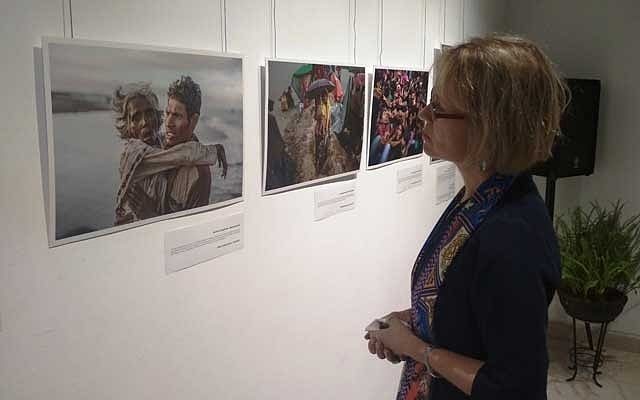
The photo exhibition – the Rohingya Crisis: 1 Year On – is presented by the government of Bangladesh, the Inter Sector Coordination Group and the United Nations. It will remain open on Sept 4-5 at Bay’s Edgewater, Gulshan-2.
A collection of photographs, shared by the Bangladesh government and over 40 humanitarian agencies that are responding to the Rohingya crisis in Cox’s Bazar, are being displayed.
The photographs bring to life last year’s initial influx, the resilience of the Rohingya, the host community, emergency mitigation measures and international support to the Rohingya people.
“It’s a collaborative effort,” the UN chief in Bangladesh said, adding that the purpose is to highlight two issues – saving lives of the refugees and social cohesion in Cox’s Bazar that includes support to host communities.
Seppo said Bangladesh has shown the humanity, but the pressure on the host community is "very big". “We need to make sure they are not left behind.”
She also highlighted the role of the development partners for bringing their ideas and experiences on board and in terms of advocacy for political solution to the crisis.
But the number one priority should be to create conditions for a return to Myanmar, she said.
“This started in Myanmar and solution remains in Myanmar, no matter how much we talk about better and more sustainable responses in Bangladesh."
Explaining ‘sustainable response’, the UN official said, “Rohingyas cannot continue to rely on humanitarian assistance for long. It's not sustainable. It's not possible.
"It'd not either dignified for them. People need to be active. They need to be able to take charge of their lives. And humanitarian aid for a long time is not the solution.”
“But that plan has to be home-grown and something designed to serve the circumstances here,” she said, adding that international partners can help the government with the experiences of other countries.
Curator of the exhibition, Patrick Shepherd, told bdnews24.com that there are six sections in the exhibition to tell the whole story of the crisis.
Those include influx which is Rohingyas crossing the border, the host community response, how the different agencies are working here, resilience of Rohingya community drawing upon their own skills and assets for a vision for the future for building their life, international response, and impacts of monsoon, and dealing with the potential disease outbreak.
One section is related to what happens when the money runs out. “People can die,” Shepherd said.













