Published :
17 May 2011, 09:18 AM
Updated :
10 Aug 2022, 04:49 PM
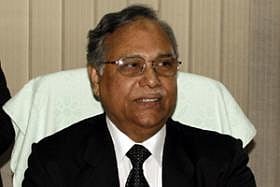
Dhaka, May 17 (bdnews24.com)—The outgoing chief justice has pointed out some hurdles to the judiciary working independently in Bangladesh.
Speaking at a function in the city on Tuesday before he retires, Justice A B M Khairul Haque said everyone is looking for the independence of judiciary, which is like chasing after the elusive 'golden deer'.
"But no one knows what independence is."
"Judges have to be independent in their minds. No one will hand them independence," he said, emphasising some factors for working independently.
Bangladesh Institute of Law and International Affairs organised the discussion on 'Budgetary allocation for the judiciary' at the CIRDAP auditorium.
About the funding for the judiciary, Justice Haque thinks the judiciary should be at liberty to independently spend the money allocated for it.
In this vein, he stressed removing bureaucratic tangles. "Now we need to ask the law ministry even for little expenses. The money comes when the law ministry asks the finance ministry," he said
"It should be left to [the judiciary] how the money will be used so they can spend on their own. Bureaucrats cannot understand it," the top judge added.
The outgoing chief justice mentioned that the discussion was the last for him as a chief justice. Justice Mohammad Muzammel Hossain takes over on Wednesday.
'NO SAINTS'
Justice Haque, who was appointed a judge to the Appellate Division in 2009, admitted that erosion of social values has its impact even on the judges.
"I am not saying that our judges are saints. When values in society erode it is not unusual that it will affect the judges. Yet, I will say Allah is the greatest judge," he said.
As for problems in the judiciary, he said, "Many criticises it. I say diagnosis is needed here as patients need in order to resolve problems."
"It is true that many judges are preoccupied with other business and so they do not do their job. But it is not the overall scenario," he said.
'NOT GOOD JUDGES'
Justice Haque said the number of High Court judges is 97 now, which was 28 when he was sworn in as High Court judge in 1998.
He went on: "But cases are on the rise. I have been thinking about the matter since then."
The number of on-trial cases was 353,000 when he was appointed the chief justice on Sep 30 last year, he noted.
"The number decreased to 291,200 until May 12," Justice Haque said.
"And yet, it is said that I destroyed the judiciary," he said, referring to pro-BNP lawyers' allegations.
"There is no popular judge in the world. Popular judges are not good judges," he added.
The chief justice urged the judges to write verdicts in Bengali. "Please write verdicts in Bengali. The people have the right to know what verdict you are delivering."
POWERFUL JUDICIARY
Justice Haque, who received his Bar-at-Law degree from Lincoln's Inn, London, said Bangladesh needs a powerful judiciary.
"It is discussed in the whole world. The country's trade and business do not function properly, law and order does not exist in the absence of a powerful judiciary.
"Nobody will care to file cases if it takes 30 years for a case to complete. People will take law in their own hands," he said.
The outgoing chief justice emphasised resolving manpower crisis to tackle the problem.
He proposed 100-150 judicial magistrates be appointed every year. "But not many [should be appointed] at a time."
It is not possible for the chief justice sitting in Dhaka to know what is happening in the judiciary across the country, he said.
"I have no such mechanism. Article 116 to the 1972 constitution will have to be restored for this," Justice Haque suggested.
The article had authorised the Supreme Court to control (deciding workplace, promotion and leaves) and discipline the magistrates and the people working in the judiciary.
The Fourth Amendment to the constitution had transferred the authority to the president to make these decisions.
The Fifth Amendment added the president will have to discuss with the Supreme Court before taking any decision.
The president regained the full power to control and discipline the workforce and magistrates in the judiciary when the bench that Justice Haque headed had declared the Fifth Amendment unconstitutional.
bdnews24.com/sn/ost/sht/bd/1621h