Published :
24 Jul 2013, 09:40 AM
Updated :
09 Aug 2022, 10:57 AM
As India's incumbent government rues lack of political support for the land boundary agreement with Bangladesh, which needs to be ratified by Parliament, Bangladesh Foreign Minister Dipu Moni is making a last-ditch attempt to salvage the LBA protocol by directly approaching the BJP, says the 'Times of India'.
Moni will try to enlist BJP support for the bill in the Rajya Sabha (Upper House of Indian Parliament) where it will be introduced in the monsoon session beginning Aug 5.
'Times of India' said officials have confirmed Moni will meet Leader of Opposition in the Upper House, BJP's Arun Jaitley, to win his party's support for the bill later this week.

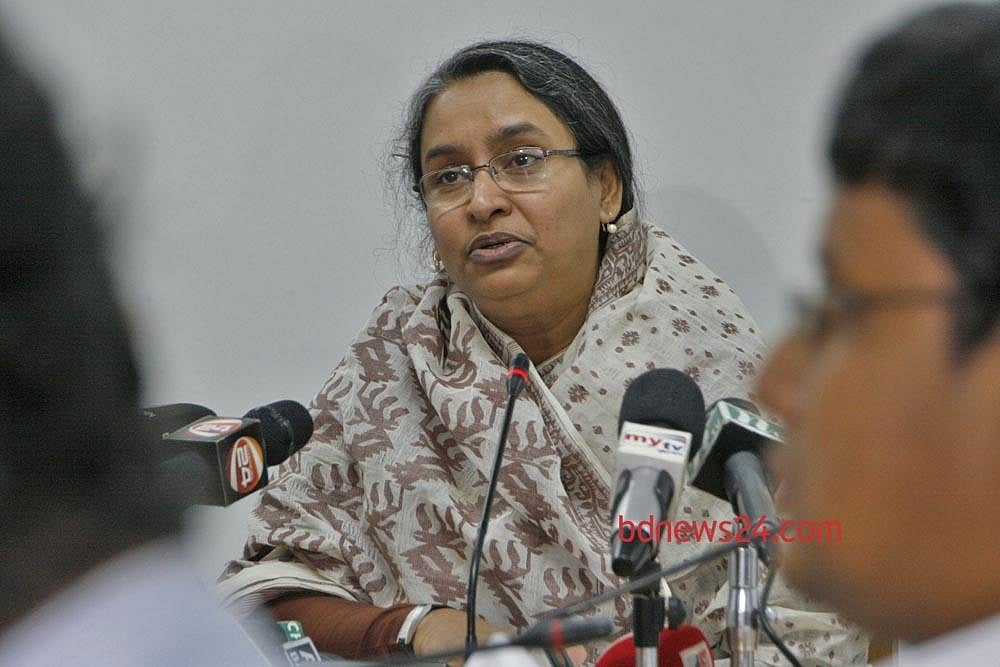
Foreign Minister Dipu Moni briefs the press at her office on Friday. Photo: asaduzzaman pramanik/ bdnews24.com/ Dhaka, October 19, 2012
Foreign Minister Dipu Moni briefs the press at her office on Friday. Photo: asaduzzaman pramanik/ bdnews24.com/ Dhaka, October 19, 2012
The agreement can only be ratified through a Constituent Amendment Bill as it involves exchange of territories. The Bill needs to be passed by a majority in each House of no less than two-thirds of the members present and voting.
Dipu Moni will be here on Thursday for the R K Mishra Memorial Lecture and is expected to meet both Jaitley and foreign minister Salman Khurshid the next day, says the 'Times of India'.
The main Opposition party - along with other outfits like Asom Gana Parishad (AGP) that prevented the government from introducing the Bill during the Budget session - continues to oppose the agreement insisting that India is ceding too much territory to the neighbouring country.
The additional protocol for the 1974 LBA was signed in September 2011 during PM Manmohan Singh's visit to Dhaka.
The Indian government is concerned that if the agreement is not cleared by Parliament in the next session, New Delhi's chances of settling the long pending boundary issue will be scuttled as both India and Bangladesh will soon go to polls.
The Indian government believes that this is the right time for implementing the agreement because of the manner in which the Sheikh Hasina government has taken care of India's interests, especially those related to security.
The agreement envisages transfer of 111 enclaves with a total area of 17,160.63 acres to Bangladesh while Dhaka will transfer 51 enclaves with an area of 7,110.02 acres to India.
While on the face of it India does seem to be losing some territory, the government has in fact only converted a de-facto reality into a de-jure situation as these enclaves are located deep inside the two countries with little physical access to these by both.
The government maintains that it did not just take the concurrence of the states involved (Assam, Meghalaya, Tripura and West Bengal) in writing but also the "will of the people'' directly impacted.
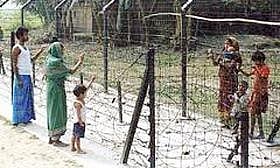
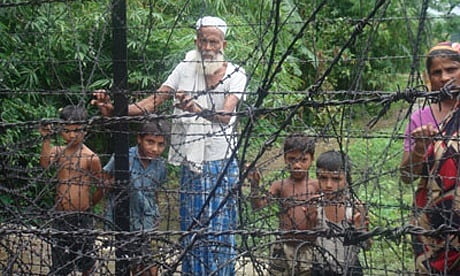
The protocol's implementation through the exchange of enclaves, says the government, will mitigate a major humanitarian issue as the residents of the enclaves have had to endure the absence of basic amenities for many decades in the absence of any such settlement.
The Indian ministry of external affairs has published a booklet highlighting the features of the Land Boundary Agreement to drive home the point that it will not adversely affect Indian interests.
Senior officials of this ministry have been holding regular interactions with opposition lawmakers to convince them of the need to support the bill that will formalise the Land Boundary agreement with Bangladesh.
The Awami League government, once before, has directly approached Indian political parties not in power to push through an agreement between Delhi and Dhaka.
In 1996, when it first came to power after 21 years, the government headed by Sheikh Hasina directly sought the support of the Left coalition then ruling West Bengal for its support for the proposed Ganges water sharing deal.
Late Jyoti Basu, then chief minister of West Bengal, came forward to support the deal whole-heartedly , giving the-then Prime Minister Y Devegowda , heading an United Front government, the confidence to go ahead with the Ganges water sharing deal.
But a similar deal on the Teesta river water sharing was scuttled in 2011 by current West Bengal chief minister Mamata Banerji who says it will adversely affect her state's interest.
Banerji has raised the issue again during campaigning for the panchayat polls in West Bengal, saying she will allow a deal on Teesta water sharing only if "people of North Bengal agreed".