
Published : 01 Oct 2026, 11:59 AM
Updated : 01 Oct 2026, 12:49 PM


Coffee production and cultivation are expanding in Bangladesh, with farming spreading from the hills to the plains, but a range of problems are preventing the sector from fully benefiting from this growth.
The import of seedlings without quality checks, lack of irrigation, diseases and pest attacks, inadequate field monitoring and problems with processing are among the challenges facing coffee growers and producers.
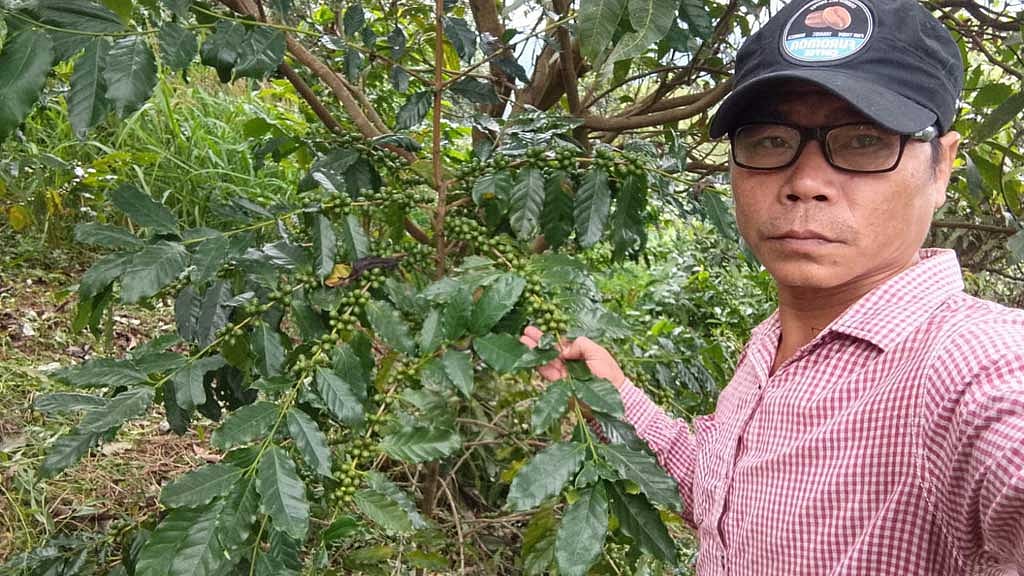
A decade ago, Si Aung Khumi began cultivating coffee in Bandarban with seeds brought from India’s Tripura. He later encouraged more than 100 farmers in the Chimbuk hills to take up coffee cultivation by providing them with free seeds and training.
Si Aung initially struggled with cultivation methods, irrigation, diseases and other problems. He gradually learned the techniques and began training others.
“I brought Robusta seeds from Tripura state in 2014. Then I brought Arabica from Mizoram. That is how I started cultivating coffee here,” Si Aung told bdnews24.com.
“When I started, local farmers were not very interested. In 2016, I distributed free seedlings to farmers in Chimbuk. I trained 116 people at the time. Now they are running their own nurseries and planting coffee on their own land.”
Over the past 12 years, Bangladesh's coffee imports have increased sixfold, while domestic production has also risen over roughly five years.
Production Growing
According to data from the Department of Agricultural Extension (DAE), Bangladesh imported 264 tonnes of coffee in 2012. The figure rose to 1,745 tonnes in 2025, a sixfold increase in 12 years.
Coffee is imported from 40 countries, with major supplies coming from India, Indonesia, Malaysia, Brazil and Vietnam.
As demand increased, the government launched the Cashew and Coffee Research, Development and Extension Project for 2021-2025 to expand coffee cultivation.
The project aimed to increase cashew and coffee production by 50 percent and expand the area under cultivation from 2,000 hectares to 6,000 hectares.
DAE data show that Bangladesh produced 35 tonnes of processed ground coffee from 120 hectares of land in 2021.
By 2025, the cultivated area had increased to nearly 2,000 hectares, while production of processed ground coffee rose to 95 tonnes.
Bandarban has the largest area under coffee cultivation.
According to the district DAE, 41 tonnes of coffee were produced on 436 hectares in Bandarban in the 2022-23 fiscal year.
Production rose to 54.79 tonnes from 493.61 hectares in the following fiscal year.
In 2024-25, coffee was cultivated on 544 hectares and production of raw cherries increased to 122.6 tonnes.
Khagrachhari currently has 179 hectares under coffee cultivation, with 1,094 small and large coffee plantations.
The government has set a target of increasing coffee production to 1,500 tonnes by 2030, with an estimated market value of around Tk 300 million. It also plans to create an export market worth $1 billion.
Coffee Moves Beyond the Hills
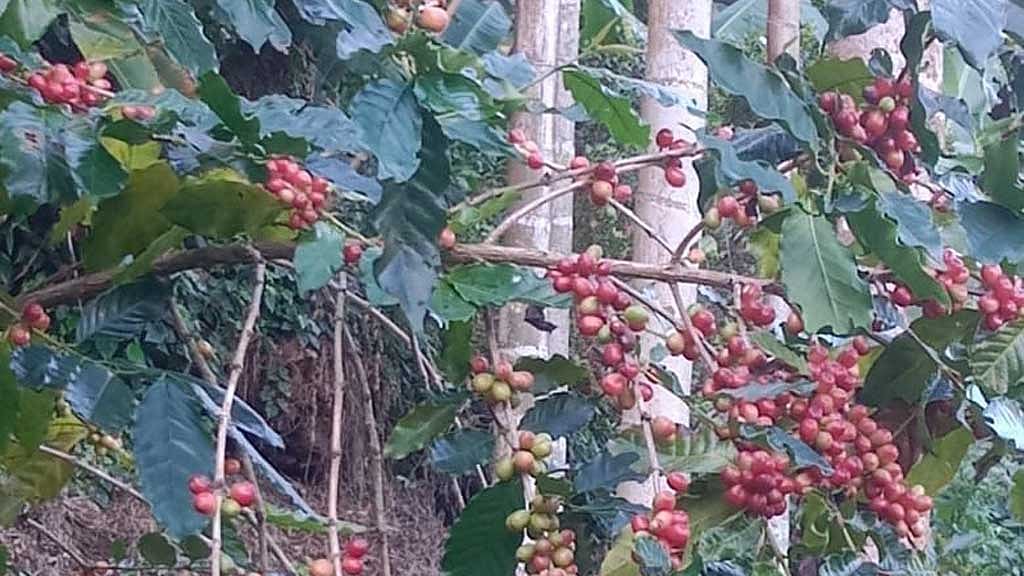
Coffee cultivation has also expanded to several districts outside the hill tracts.
According to the Madhupur Upazila agriculture office in Tangail, 120 farmers are cultivating coffee on 35 hectares of land there.
Commercial coffee cultivation began in Sylhet district in 2021, with both Arabica and Robusta varieties being grown.
Coffee has been planted on more than 20 hectares in Golapganj, Beanibazar, Fenchuganj and Jaintapur Upazilas.
The DAE has also identified Rangpur, Nilphamari and Sherpur as promising areas for coffee cultivation.
Farmers Struggle Despite Growth in Coffee Cultivation
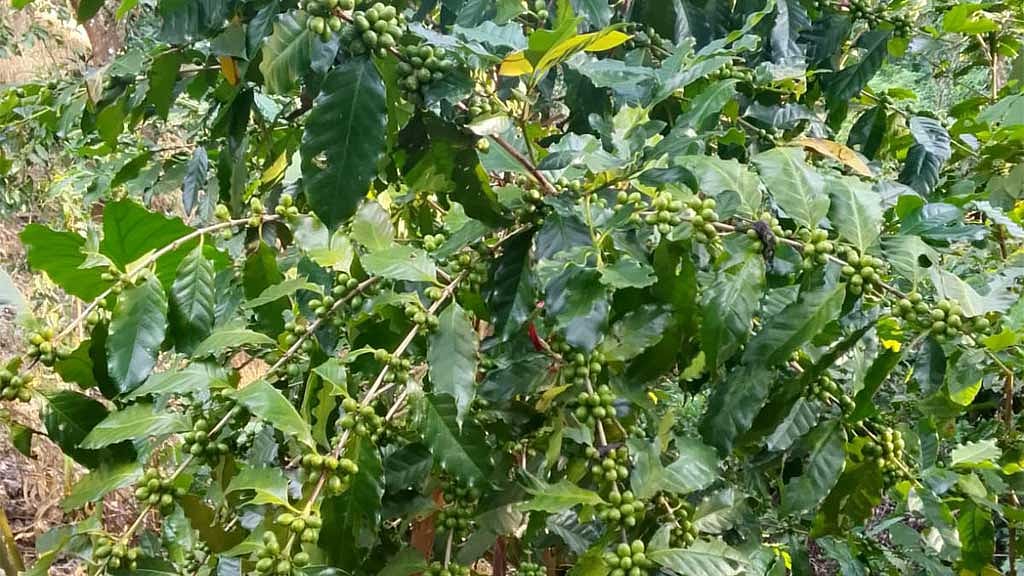
Despite government efforts to expand coffee production, farmers face a range of problems in the field, from irrigation and pest attacks to a lack of machinery and inadequate market infrastructure.
Bandarban farmer Si Aung Khumi has around 3,500 coffee plants on six acres of land and now trains new growers.
He said water shortages cause seedlings to die in summer, while high temperatures can kill plants within one or two years of planting.
“Various diseases and pest attacks are occurring. We are seeing mealybugs, dieback and root rot. Pest attacks are particularly severe in Arabica. I don't think the pesticides needed to control them are available yet,” he said.
Robusta requires less irrigation than Arabica and is therefore more suitable for the local conditions, he said, although both varieties can be grown in the hills.
About nine kilometres from Bandarban town along the Chimbuk Road are Mrolong Para, Noa Para and Basanta Para, where 15 to 20 families are involved in coffee cultivation.
Paring Mro began growing coffee in Mrolong Para after receiving seedlings from Si Aung Khumi.
“Sing Aung Dada gave us seedlings in 2016. At first, many people did not take it seriously. Three or four of us started cultivating seriously and are now getting yields,” he told bdnews24.com.
He grows coffee under mango and betel nut trees and now has around 6,000 plants. He harvested about two to 2.5 maunds of coffee last year and expects three to four maunds this year.
But Paring said growers are not getting a fair price for their produce.
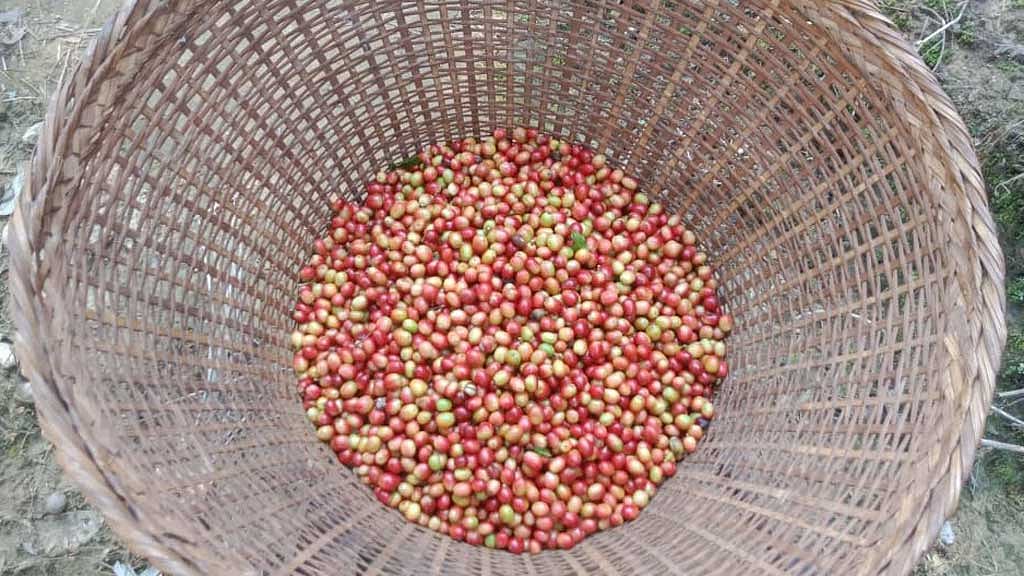
Fresh coffee cherries picked directly from the fields are sold for Tk 200 per kg, he said. After the outer skin is removed and the beans are dried, the product is known as parchment.
“Four kilogrammes of fresh cherries produce about one kg of parchment. So four kg of cherries cost Tk 800. On top of that, there is the labour involved in sun-drying and processing. But we have to sell the dried parchment for Tk 600 to Tk 700 per kg,” he said.
“If the price of parchment were Tk 1,000 to Tk 1,200 per kg, our hard work would be worthwhile.”
Paring said Arabica has a higher market value but is more vulnerable to diseases and pests, while Robusta is more disease-resistant and produces higher yields.
Of the seedlings he planted in 2016 or 2018, around 200 to 250 died, he said, adding that other growers in the area face similar problems.
“We have no training on which pesticides to use and when, how to care for the plants, or when and how to prune the branches,” he said.
Electricity shortages are another problem.
“The government has pulping, drying and parchment machines, but there is not enough solar power to operate them properly. Because of the lack of electricity, we cannot use them properly,” Paring said.
“A powerful solar system would help us. We could process and grind the coffee here and get a better price.”
Khagrachhari's Panchhari farmer Rumel Marma faces similar problems. He grows coffee alongside mango trees on three acres of land.
Rumel, who began cultivating coffee with government assistance in 2021, said irrigation becomes difficult during the hot summer months.
“If deep tube wells could be installed and operated with solar power, the problem could be reduced,” he said.
Irrigation and Pest Problems
The Bangladesh Agricultural Research Institute recently prepared an evaluation report on the government's Cashew and Coffee Research, Development and Extension Project.
The report identified irrigation shortages as a major challenge to coffee cultivation.
It said irrigation is essential to achieve the expected yield from coffee plants, particularly in the hills, where more solar-powered pumps and rainwater harvesting facilities are needed.
Mealybug attacks and dieback were also found in several areas, while root rot was reported in some locations.
The report said farmers have limited knowledge of pest and disease management and lack adequate knowledge of physical and chemical methods to control problems such as mealybugs and dieback.
It recommended introducing integrated pest management and providing farmers with practical training.
Field observations in the report also found that imported seeds and seedlings had been distributed in the field without laboratory testing.
This creates a risk of pest and disease attacks and lower-than-expected yields because of adverse agricultural and climatic conditions, it said.
The report also noted that 80 to 85 percent of project activities are in hilly areas, exposing coffee cultivation to risks from landslides and soil erosion.
Abdus Sattar, chief scientific officer at the Bangladesh Agricultural Research Institute's Hill Agriculture Research Centre, said the project was the country's first such initiative and there was limited experience with coffee cultivation.
“We had to bring seedlings from outside, and that created some problems. There will be some shortcomings at the beginning,” he said.
“Later, we produced seedlings suited to the country's environment. In 2023 and 2025, after conducting research, BARI developed two varieties -- BARI Coffee-1, a Robusta variety, and BARI Coffee-2, an Arabica variety. Using these varieties should ensure better yields and reduce disease problems.”
He advised new entrepreneurs to use the two varieties.
“If an entrepreneur wants to enter coffee cultivation and produce on a large scale, they can contact us. We will produce and supply seedlings suited to Bangladesh's environment. We recommend using the local varieties. They are producing good yields,” Sattar said.
He said a guideline had also been prepared to help farmers deal with pest attacks.
“If farmers contact us, we will give them the guidebook. If treatment is applied according to the type of pest or disease, the problem can be brought under control easily,” he said.
Hills Offer Greater Potential
The evaluation of the Cashew and Coffee Research, Development and Extension Project found that the climate, altitude, soil composition and rainfall of the Chattogram Hill Tracts are suitable for coffee cultivation.
Both Arabica and Robusta can be grown there, while BARI Arabica is producing good yields in all three hill districts. BARI Robusta is also performing well in Khagrachhari.
The report said the potential for coffee cultivation is greater in hilly areas than in the plains. Coffee can also be grown as an intercrop with mango, pineapple, banana, taro and drumstick, creating further opportunities for farmers.
The distribution of Robusta and Arabica seedlings among farmers has also begun.
Coffee is a long-term crop that starts producing fruit about three years after planting.
Sattar said a coffee plant begins producing from its third year and can continue producing for around 18 to 20 years.
The evaluation report said crops such as coffee and cashew require a long period for their full production and economic outcomes to be assessed.
It therefore recommended launching the second phase of the project from 2027 to 2032.
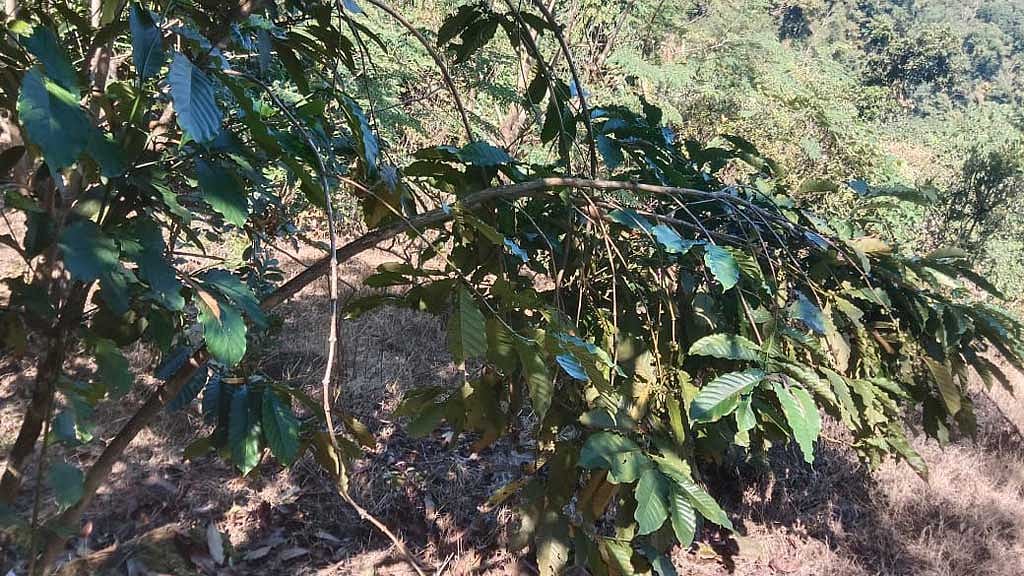
Processing and Pricing
Coffee cultivation is increasing in Bangladesh, but many growers have limited knowledge of how to process the crop after harvest.
As there are no coffee-processing facilities in Bandarban, Si Aung Khumi takes the beans to Dhaka for processing.
“The beans sell for Tk 150 to Tk 200 per kg. Since there is no processing facility in Bandarban, I take them to Dhaka, process them and grind them. I sell ground coffee for Tk 3,000 to Tk 3,500 per kg, and sometimes the price reaches Tk 4,000. But not everyone here can take their coffee to Dhaka,” he said.
Field-level data from the DAE show that fresh coffee berries are selling for Tk 120 to Tk 200 per kg in some areas.
Dried coffee is selling for around Tk 600 per kg, while processed coffee cherries can fetch up to Tk 1,300 per kg as green coffee beans, according to the data.
Some farmers are also selling their products at higher prices after developing their own brands. Some farmers in Madhupur are selling coffee pulp and dried coffee as safe food products for Tk 2,000 to Tk 2,200 per kg.
The project evaluation found that processing infrastructure remains inadequate despite production having begun.
“Farmers are selling raw or minimally processed products at low prices, while processed and value-added coffee commands much higher prices,” it said.
There are shortages of pulping, drying and parchment machines, as well as removers, roasters and grinding equipment, the report said.
Coffee is still produced in a scattered manner in many areas. The lack of designated collection centres may therefore prevent farmers from getting proper market prices.
The report recommended further field-level testing and research on complete coffee-processing technology, along with initiatives to establish local and district-level markets and processing facilities.
It also said poor communication and market management pose a risk to farmers receiving fair prices.