


Published : 05 Sep 2020, 11:19 PM
Updated : 17 Oct 2022, 11:12 AM


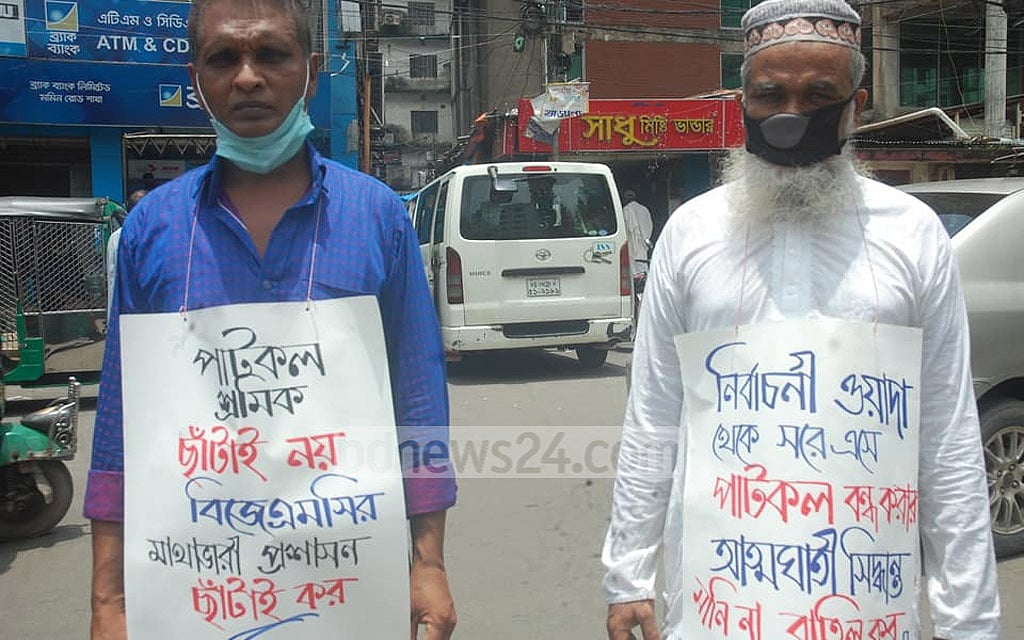
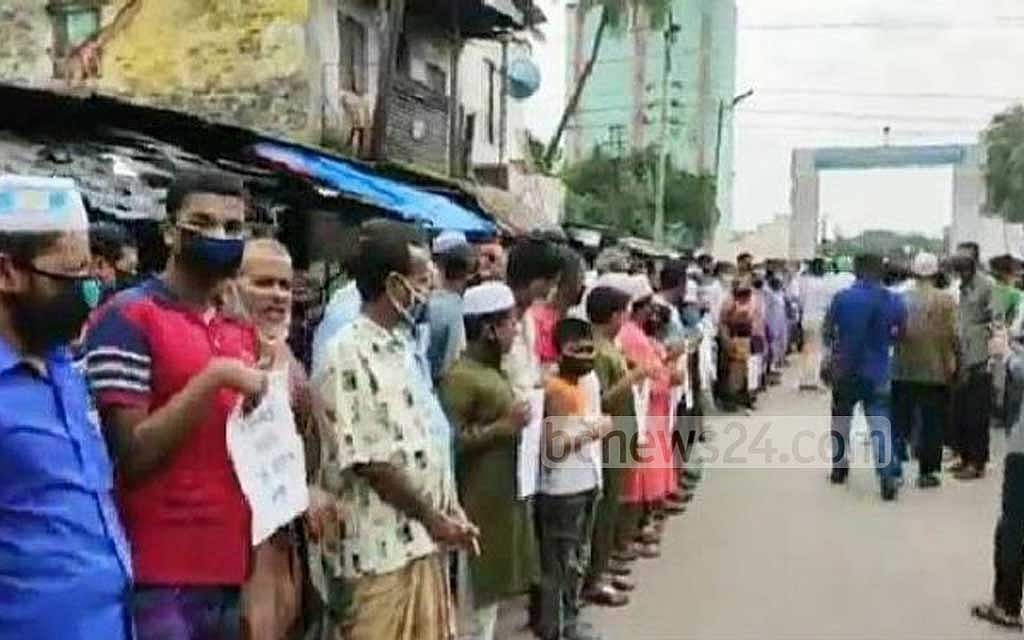
The decision aroused widespread concern as it meant about 25,000 workers would be sent into an early retirement in a precarious economic climate induced by the coronavirus pandemic.
The Ministry of Textiles and Jute sought to allay fears by assuring workers that all their dues would be cleared by September.
As the first week of the month winding down, labour leaders criticised the failure to pay off the workers, with the authorities at risk of falling foul of the labour laws.
The authorities are yet to finalise the sums due under provident fund, gratuity, death insurance claims and other arrears payable to the workers, they complained.
The lack of clarity about the timing and method of payment has left workers even more disgruntled and frustrated.
The government had said it would pay half the arrears in cash and the rest through interest-based savings certificates.
Under the early retirement scheme, euphemistically termed a golden handshake, each worker is likely to be paid anywhere from Tk 1.3 million to Tk 5.4 million, according to the initial calculations. Also, 8,956 workers who retired between 2013 and 2020 will receive a lump-sum payment of their dues.
As the arrears will be paid in cash and three-month interest-based savings scheme, the workers will be required to keep some of their savings under an economic protection programme, according to the Ministry of Textile and Jute.
Most of the workers, however, demanded the authorities pay them in one go. Savings certificates will be of no use to them, they claimed, but a lump-sum payment would allow them to secure their livelihoods by starting their own businesses.
"We don't expect to get a job in a jute mill again, even if they are reopened. In that case we can start a business with the money we get."
Nur Islam, who worked in Platinum Jute Mill in Khulna, believes saving certificates could complicate matters for many workers. "They may not get their dues if it is paid in savings certificates," he said.
Labour leader Shahidullah Chowdhury on the other hand, believes that paying the workers in savings certificate is a better option.
"They may spend the money on nothing if they receive the entire amount in cash. It's better to pay half the amount in savings certificate," he said.
LITANY OF COMPLAINTS
Mahbubul Alam, president of Bangladesh Sramik League, claims the provident funds of some BJMC-run jute mills are virtually empty after they failed to repay their debts on time.
He cites Chattogram's Hafiz Jute Mill, of which he is the president, as an example. The mill has racked up Tk 340 million in debt against 1 percent profits.
Unfortunately, the authorities are paying the 2 percent interest on the loans from the provident fund, while Janata Bank is paying 13 percent loan interest, he said.
“If you check the final bills of PF from July 1, 2013 to 2020, you’ll find that 1 or 2 percent of the profits were paid from PF. This has resulted in a financial loss for the PF members," said Alam.
As per the Bangladesh Labour Act 2006, gratuity means wages payable on termination of employment of a worker, equivalent to at least 40 days' wages for every completed year of service. It should be in addition to any compensation or payment in lieu of notice due to termination of a worker on different grounds.
But the BJMC wants to calculate the gratuity amount based on a worker's attendance at the mill, according to Yasir Rashid, member of the citizens council formed to oversee the jute-mill workers' movement in Khulna.
"Now they're saying that a worker can't get his gratuity if they don't have an annual attendance of 120 days. But we calculate bonus based on the attendance, not gratuity. If a worker works for 80 days a year, they get half of their monthly salary as festival allowance. They will get a full monthly wage as a bonus if they work 160 days. We didn't receive any festival allowance for Eid," said Mahbubul Alam.
The BJMC is defying the labour law and creating complications over gratuity payments, Alam complained.
"The workers were given an annual holiday without complying the requirements of section 117 of Labour Act 2016. Therefore, a worker who didn't get a seven-day annual leave was deprived of gratuity for that year. Many workers were deprived in this way," he said.
Eastern Jute Mill in Khulna had published a list of workers who received their dues, but later removed it in the face of protests against the irregularities in it, said Yasir.
"They found a discrepancy between the amount published in that list and the amount the authorities owed to the workers under the PF and gratuity bill. We approached the BJMC repeatedly but they never gave us a clear outlook. They prepared two or three types of bills," he said.
Although the labour law bars the authorities from making any pay deductions from the workers' wages if they fail to provide residence facilities to them, many jute mills are relying on loopholes in the Act to take off as much as 10 percent of the wages, said Mahbubul Alam.
"Sometimes they provided a tin roof over the thatched rooms built by the workers themselves and then deducted 10 percent of their wages. This is totally wrong," he said.
The jute mill authorities are also failing to comply with the law on work hours, wages and leave, alleged Shahidul Islam, convener of Sirajganj Jute Mill Temporary Worker Coordination Committee.
"Jute mills make the workers work more than eight hours a day without adequately compensating them, which is against the law," he said.
The workers' leaders also lamented the alleged irregularities in the piece-rate payment process.
The Labour Rules 2015 stipulates that in case of partial works, if there is any deficit in the minimum wages of the workers, the authorities are required to fulfil the deficit.
"The authorities are not calculating the workers' wages based on the minimum base rate under the national pay scale of 2015. This irregularity should be addressed," said Mahbubul Alam.
BJMC Chairman Abdur Rouf and Jute Secretary Lokman Hossain could not be reached for comment despite repeated attempts.













