


Published : 21 Feb 2016, 03:08 PM
Updated : 08 Aug 2022, 03:35 PM


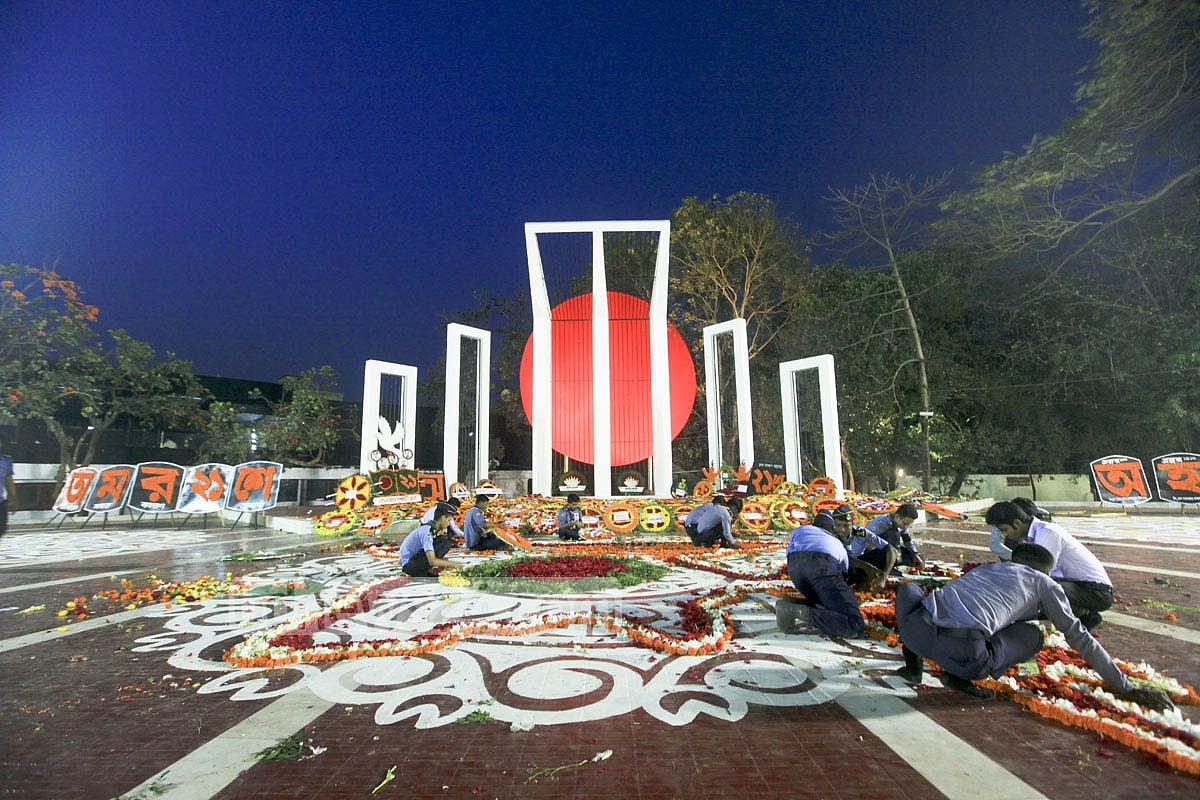
"We have a shortage of judges and the backlog of cases continue to pile up," he told journalists at the Shaheed Minar after paying respects to language martyrs.
Chief Justice Sinha said apex court judges have often to write around 100 verdicts a day.
"If all of them have to be written in Bengali, that would make things very difficult," he said, pointing out that many judges have been pronouncing verdicts in Bengali.
The chief justice said that normal judicial work is often delayed. "We are trying our best to get over the laidback work culture."
He added that writing verdicts in Bengali is a complex issue in many cases as many laws and references were often in English.
The Bangladesh Supreme Court (High Court Division) Rules of 1973 stipulated that any petition with the top court would have to be in English.
It was later amended to ‘either in English or Bengali’, but most of the apex court’s documents are still done in English.
The Bangladesh High Court has issued several orders over using Bengali as the official language in State and administrative matters as well as on license plates for vehicles, signboards and television commercials.
Former chief justices Muhammad Habibur Rahman and ABM Khairul Haque as well some High Court judges had written some verdicts in Bengali.
A 150-year old verdict, kept at the Supreme Court Museum, is written in Bengali on a paper with the top court’s logo in Persian.
“The general practice is to write verdicts in English. Many laws as well local and foreign references are also in English.
“The shortage of manpower needs to be addressed first. Then it might be considered,” Chief Justice Sinha told reporters on Sunday.













